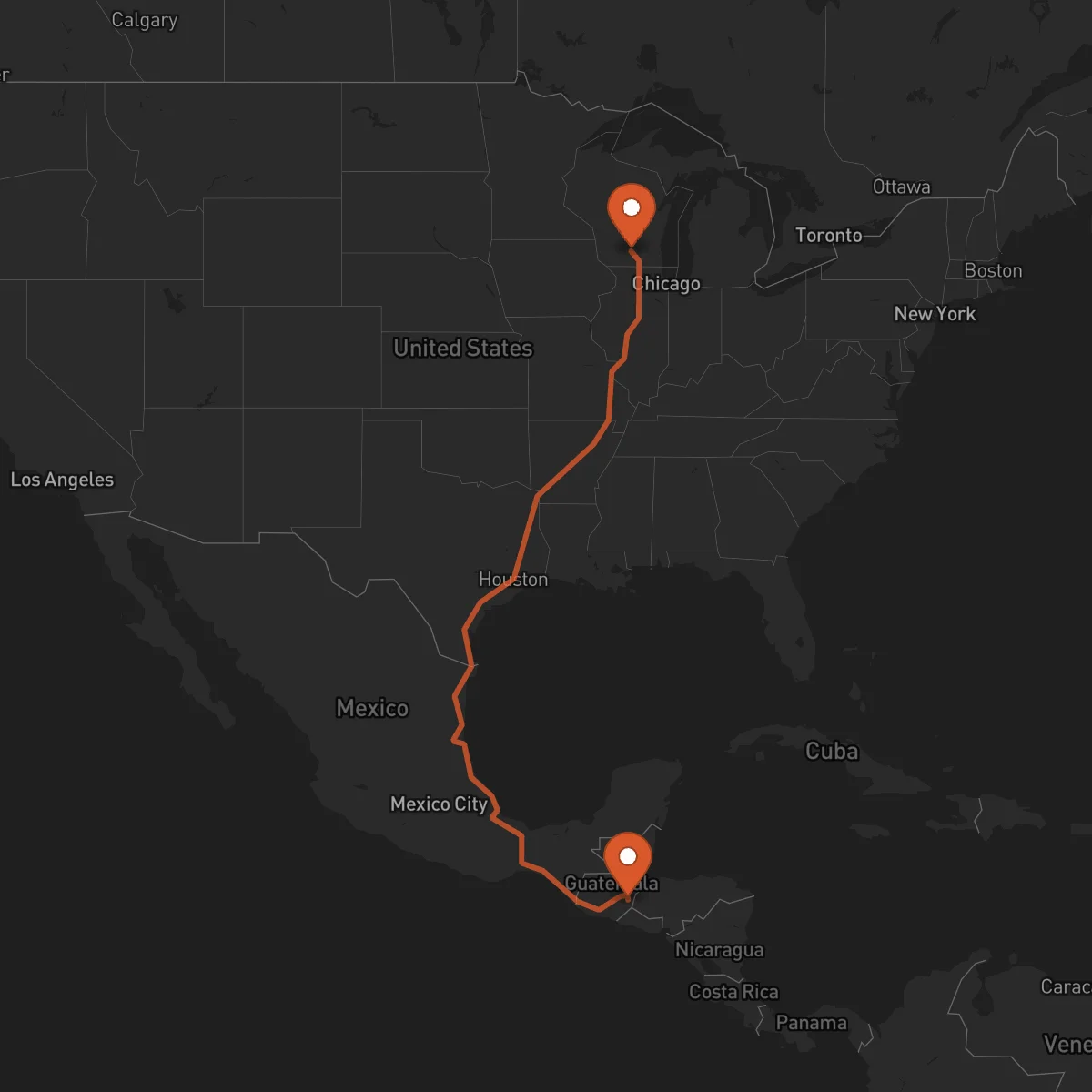
Madison to Chiquimula
Chiquimula → MadisonFTL freight transportation service between Madison and Chiquimula. Reliable logistics solutions for your business.
Route Description
Everything you need to know about the corridor Madison - Chiquimula
The Madison, Wisconsin to Chiquimula, Guatemala corridor is a vital cross-border artery connecting the U.S. industrial heartland with Central American markets. This strategic route facilitates the flow of goods between a major manufacturing and agricultural hub in the Upper Midwest and a key economic gateway in eastern Guatemala, serving as a critical link for supply chains spanning North and Central America. The corridor underpins trade in machinery, agricultural commodities, manufactured goods, and consumer products, supporting the integrated economies of the region.
Economically, the corridor bridges the robust industrial base of Wisconsin—renowned for dairy, machinery, and paper products—with the agricultural and textile sectors of Guatemala, particularly the eastern regions. Chiquimula serves as a distribution point for goods entering Central America, while Madison acts as a consolidation origin for products destined for this southern market. The primary industries utilizing this route include agricultural equipment suppliers, food and beverage producers, textile manufacturers, and companies involved in construction materials and consumer goods distribution.
Transportation infrastructure relies on a sequence of major highways. The journey begins on the U.S. Interstate system, primarily I-90 and I-94, heading south through Illinois. Upon reaching the U.S.-Mexico border, typically via the Laredo, Texas, or El Paso, Texas, crossings, the route continues south on Mexican Federal Highway 57 and 150 through the interior to the Mexico-Guatemala border. The final leg traverses Guatemalan Highway CA-1 to Chiquimula. Key border crossings, such as Laredo (for U.S.-Mexico) and Tecún Umán (for Mexico-Guatemala), are critical nodes requiring meticulous customs documentation and compliance with both nations' regulations.
Control Terrestre facilitates seamless operations on this complex corridor through our alliance of certified transportation providers. Our partners hold essential credentials like C-TPAT and FAST for expedited U.S.-Mexico processing and BASC for security standards, ensuring efficient border crossings. We match your specific cargo—whether in dry vans, reefers, or flatbeds—with specialized carriers experienced in this international route. Our focus on full truckload (FTL) services means we manage the entire journey door-to-door, providing a single point of contact for a process that spans three countries, eliminating the complexity of consolidating multiple handlers for your dedicated, oversized, or standard freight needs.
Services for this Route
Available services for the corridor Madison - Chiquimula
 Origin
Madison
Madison, Wisconsin, is a strategic logistics origin due to its central location in the U.S. Upper Midwest and its excellent multimodal connectivity. The city is a major economic engine for Wisconsin, with a diverse economy anchored by strong agricultural, manufacturing, and technology sectors. It is globally recognized as a center for dairy production and food processing, but also hosts significant machinery, biotechnology, and educational industries. The area's infrastructure is robust, featuring direct access to Interstates 90 and 94, which provide efficient east-west and north-south corridors across the continent. Additionally, the Dane County Regional Airport and extensive rail networks support multimodal options, making Madison an ideal consolidation point for freight destined for Mexico, Central America, and beyond.
 Destination
Chiquimula
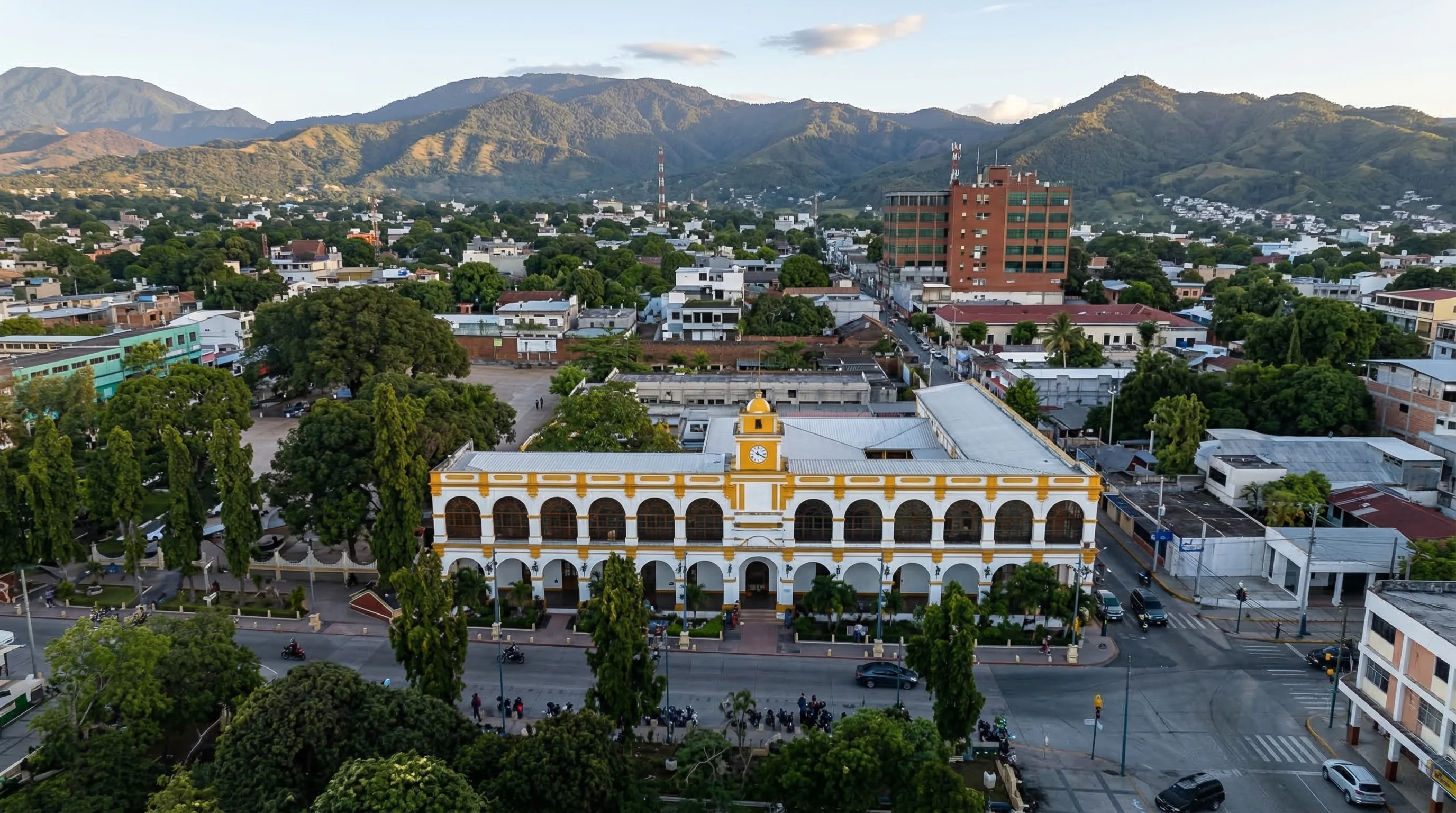
Chiquimula, located in eastern Guatemala near the borders with Honduras and El Salvador, is a strategic logistics destination as a primary gateway to the Northern Triangle of Central America. Its economy is driven by agriculture (coffee, bananas, maize), livestock, and a growing textile industry. The department serves as a commercial and transportation hub for the region. Key infrastructure includes Guatemalan Highway CA-1, the main east-west artery connecting to major ports like Puerto Barrios on the Atlantic coast and to the capital, Guatemala City. This highway network facilitates distribution not only within Guatemala but also to neighboring countries, making Chiquimula a crucial node for regional supply chains and cross-border trade into Central America.










