Louisville to Denver
Denver → LouisvilleFTL freight transportation service between Louisville and Denver. Reliable logistics solutions for your business.
Route Description
Everything you need to know about the corridor Louisville - Denver
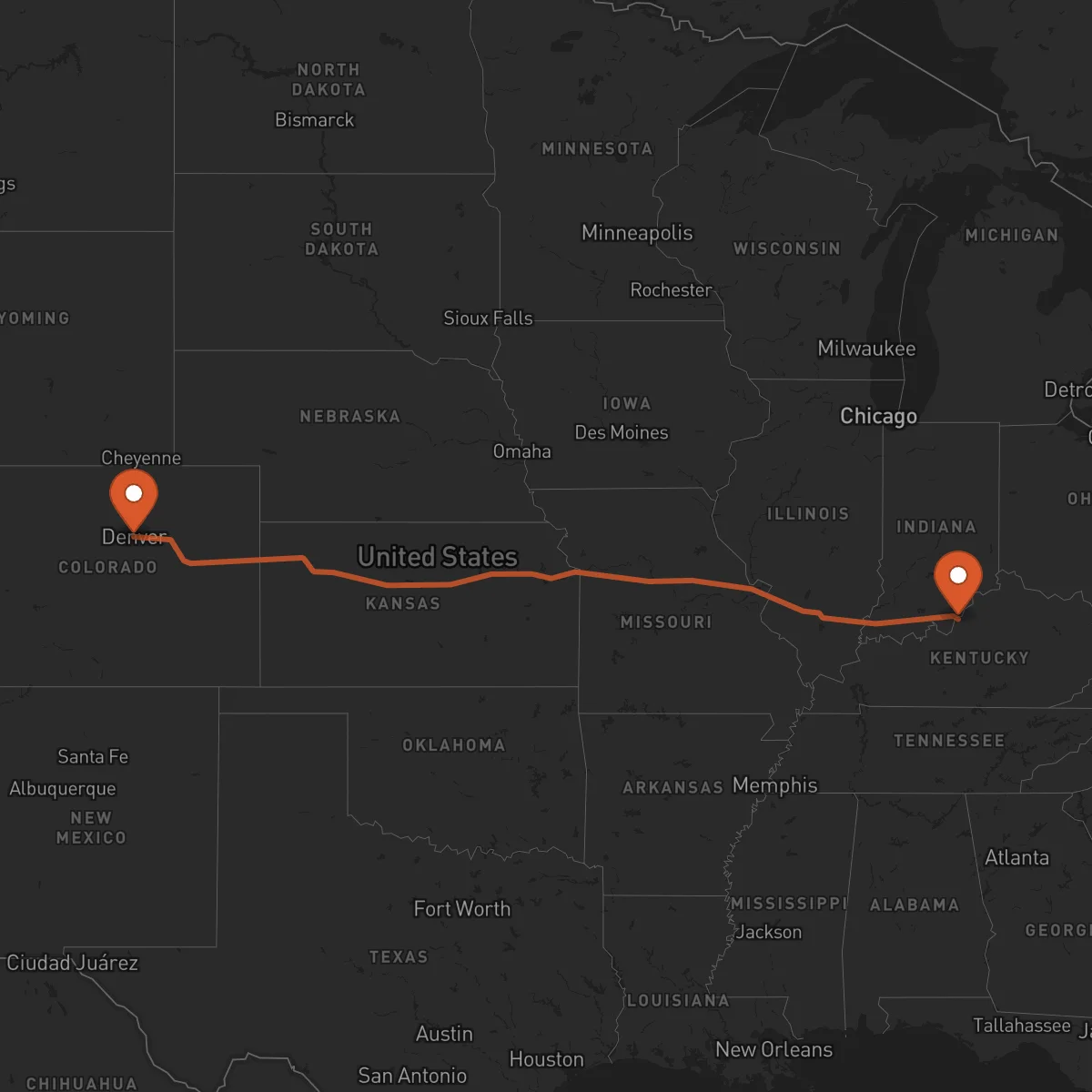
The logistics corridor connecting Louisville, Kentucky to Denver, Colorado represents a vital transportation route across the heart of the United States. Spanning approximately 1,666 kilometers, this domestic corridor links the industrial Midwest with the growing Rocky Mountain region, facilitating the movement of goods between two economically significant markets. This route traverses multiple states including Kentucky, Indiana, Illinois, Missouri, Kansas, and Colorado, crossing diverse geographic and economic regions that create unique logistics opportunities and challenges.
The corridor serves as a critical link between Louisville's established manufacturing and logistics hub and Denver's expanding technology, energy, and aerospace sectors. Louisville's strategic location along the Ohio River and its proximity to major Midwestern markets makes it an ideal origin point, while Denver's position as a gateway to the Western United States and its booming economy create substantial demand for inbound and outbound freight services. The route connects major economic centers and industrial zones, supporting supply chains that range from automotive and manufacturing to high-tech and renewable energy sectors.
Control Terrestre provides comprehensive FTL transportation solutions along this corridor, leveraging our extensive network of certified carriers and specialized equipment. Our services ensure reliable, efficient freight movement between these key markets, with dedicated support for time-sensitive shipments, specialized cargo requirements, and consistent capacity availability. We understand the unique demands of this cross-country route and offer tailored solutions that address everything from weather considerations in mountainous regions to the specific handling requirements of different cargo types.
Services for this Route
Available services for the corridor Louisville - Denver
 Origin
Louisville
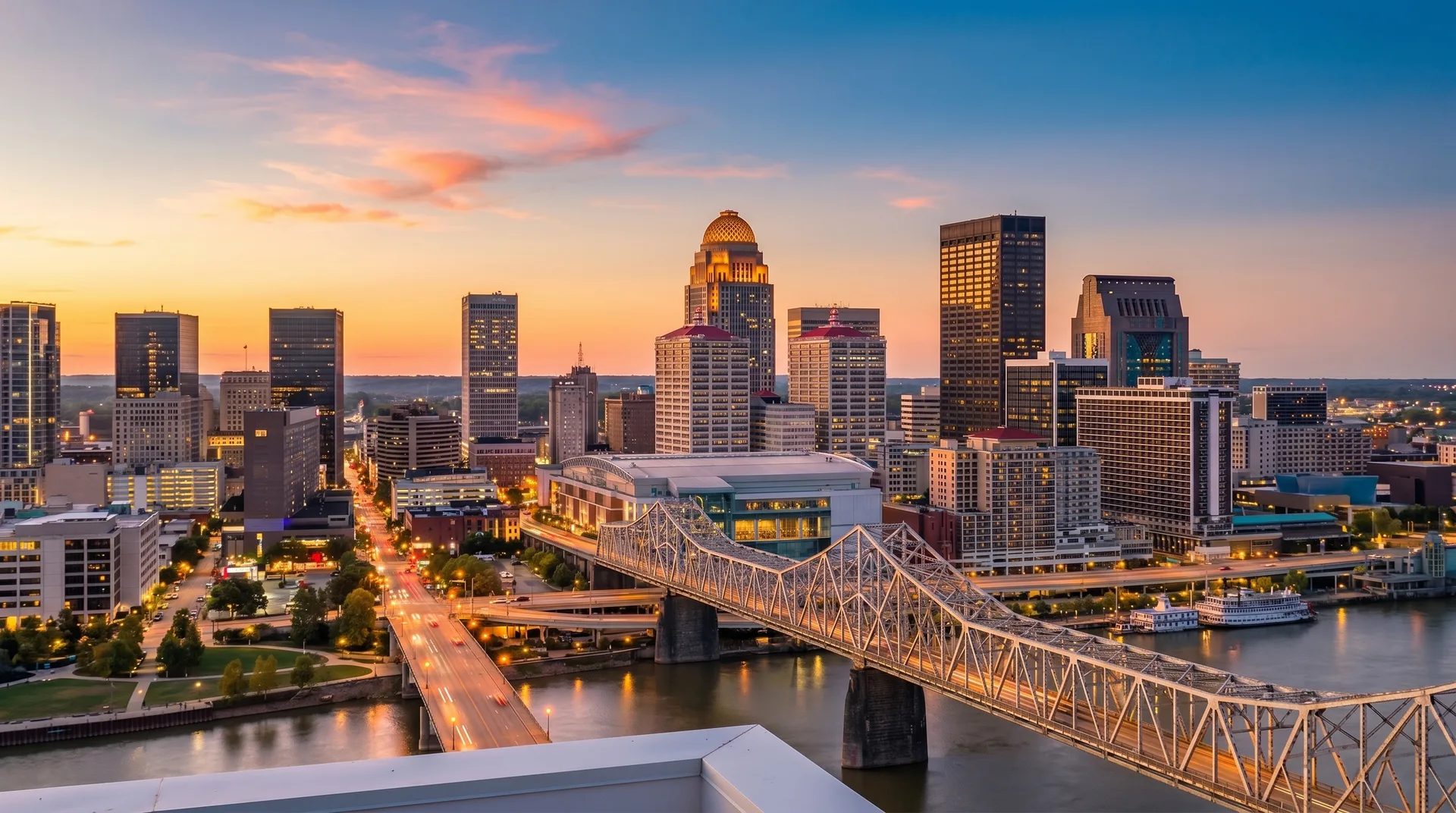
Louisville, Kentucky serves as a strategic logistics hub in the eastern United States, offering exceptional connectivity for freight transportation. Located along the Ohio River and at the intersection of major interstate highways including I-65, I-64, and I-71, Louisville provides seamless access to both river and road transportation networks. The city is home to the UPS Worldport, one of the largest air freight hubs globally, and boasts a robust intermodal infrastructure that includes rail connections through CSX and Norfolk Southern railroads. Louisville's central location within a day's drive of two-thirds of the U.S. population makes it an ideal origin point for nationwide distribution.
The Louisville metropolitan area has a diverse economic base with strong presence in manufacturing, healthcare, logistics, and bourbon production. Major employers include Ford Motor Company, GE Appliances, and numerous healthcare systems. The city's logistics infrastructure is particularly well-developed, with multiple warehousing and distribution centers, cross-dock facilities, and specialized handling capabilities. Louisville's Foreign Trade Zone and proximity to major automotive assembly plants in Kentucky and neighboring states create additional freight movement opportunities, making it a strategic starting point for shipments heading west to Denver and beyond.
 Destination
Denver
Denver, Colorado stands as a critical logistics and economic center in the Western United States, offering unique advantages for freight transportation and distribution. Situated at the eastern edge of the Rocky Mountains, Denver provides access to both the Front Range corridor and the vast Western territories. The city is served by major interstate highways including I-25, I-70, and I-76, creating multiple north-south and east-west transportation corridors. Denver International Airport, one of the largest airports by land area in the world, provides extensive air cargo capabilities, while the city's rail connections through Union Pacific and BNSF offer additional intermodal options.
The Denver metropolitan area has experienced significant economic growth, particularly in technology, aerospace, renewable energy, and outdoor recreation industries. The region is home to numerous federal agencies, major corporations, and research institutions, creating diverse and sophisticated freight demands. Denver's location as a gateway to mountain states and the West Coast, combined with its growing population and business environment, generates substantial inbound and outbound freight traffic. The city's logistics infrastructure includes modern warehousing facilities, specialized handling capabilities for high-tech and sensitive cargo, and a strategic position for distribution to surrounding mountain states and the broader Western region.










