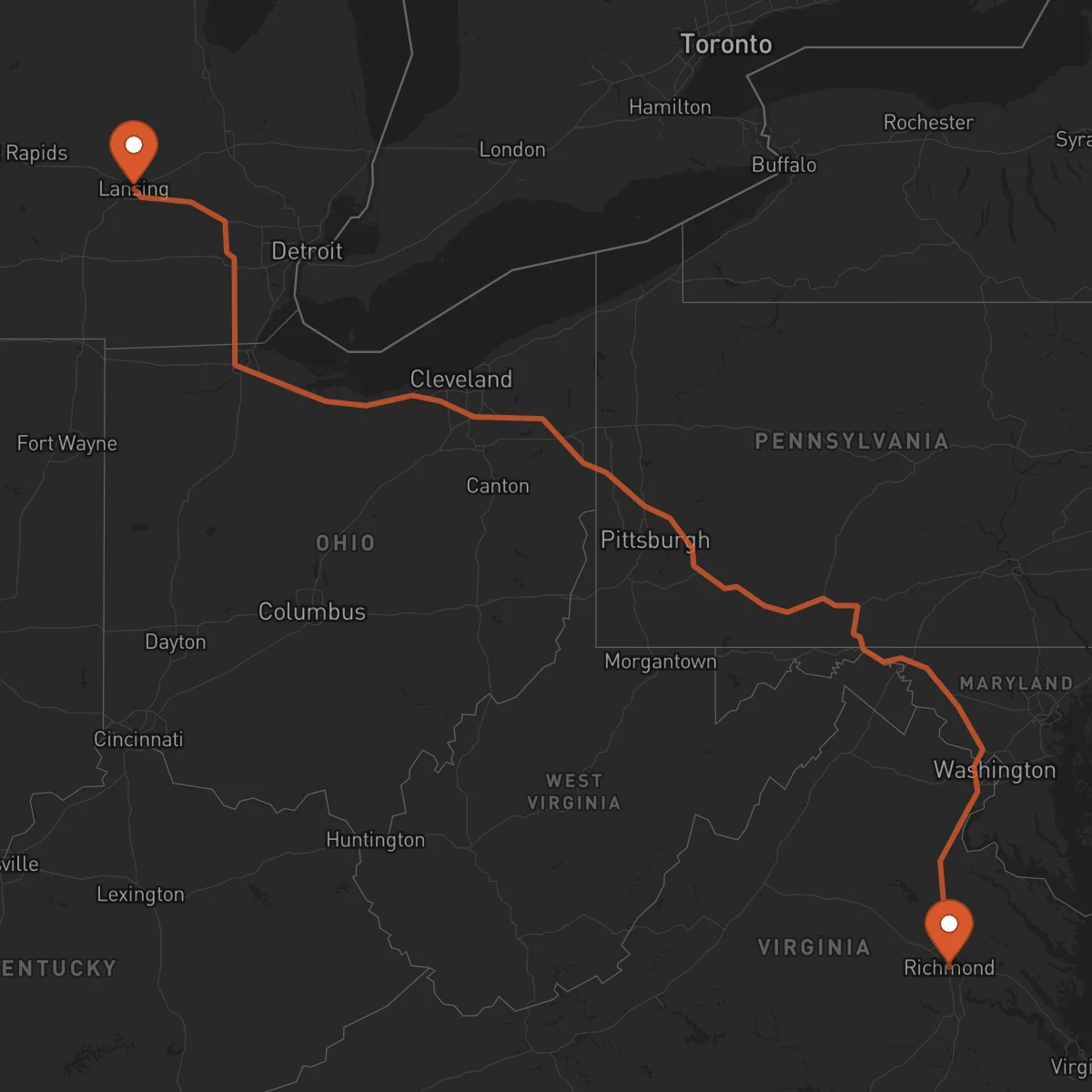
Lansing to Richmond
Richmond → LansingFTL freight transportation service between Lansing and Richmond. Reliable logistics solutions for your business.
Route Description
Everything you need to know about the corridor Lansing - Richmond
The Lansing to Richmond corridor represents a vital domestic freight transportation route connecting the Great Lakes region with the Mid-Atlantic. This 836-kilometer journey traverses key industrial and agricultural zones, linking Michigan's manufacturing heartland with Virginia's growing logistics hub. The corridor serves as a crucial supply chain artery for companies operating across the eastern United States, facilitating the movement of goods between two strategically positioned economic centers.
The route primarily follows major interstate highways, including I-69, I-70, and I-64, providing reliable and efficient transportation infrastructure. This well-established network ensures consistent transit times and multiple route options for freight carriers. The corridor passes through diverse economic regions, from Michigan's automotive and manufacturing centers to Ohio's industrial corridor, West Virginia's resource-rich areas, and finally into Virginia's bustling port region.
Control Terrestre specializes in full truckload (FTL) services along this corridor, offering dedicated transportation solutions for companies requiring exclusive use of trailers. Our extensive network of certified carriers ensures that shipments from Lansing to Richmond are handled with the utmost care and efficiency. We understand the unique requirements of this route and provide tailored services to meet the specific needs of industries ranging from automotive to consumer goods, ensuring your cargo reaches its destination safely and on schedule.
Services for this Route
Available services for the corridor Lansing - Richmond
 Origin
Lansing
Lansing, Michigan serves as a strategic logistics hub in the Great Lakes region, positioned advantageously for freight distribution throughout the Midwest. The city benefits from its location near major manufacturing centers and agricultural regions, making it a crucial point for both inbound raw materials and outbound finished products. Lansing's economy is anchored by the automotive industry, healthcare, and education sectors, creating consistent freight movement patterns that support regional supply chains.
The transportation infrastructure in Lansing is robust, featuring direct access to major highways including I-96, I-69, and I-496. The city is served by several freight carriers and logistics providers, with facilities capable of handling diverse cargo types. The nearby capital region airport and rail connections further enhance Lansing's position as a multimodal logistics center, providing shippers with flexible transportation options for their freight needs.
 Destination
Richmond
Richmond, Virginia stands as a strategic logistics gateway to the Mid-Atlantic and Southeast regions, offering exceptional connectivity for freight distribution. The city's location provides direct access to major East Coast markets, with proximity to the Port of Virginia enhancing its role in international trade. Richmond's economy encompasses a diverse mix of industries including manufacturing, healthcare, government, and technology, creating substantial freight transportation demands throughout the year.
The transportation infrastructure in Richmond is comprehensive, featuring excellent highway access via I-64, I-95, and I-295. The region boasts multiple intermodal facilities, warehousing centers, and distribution hubs that support efficient freight handling. Richmond International Airport and the nearby Port of Virginia complement the road network, offering shippers multiple transportation options. The city's strategic position within Virginia's logistics corridor makes it an ideal destination for companies seeking reliable access to East Coast markets.










