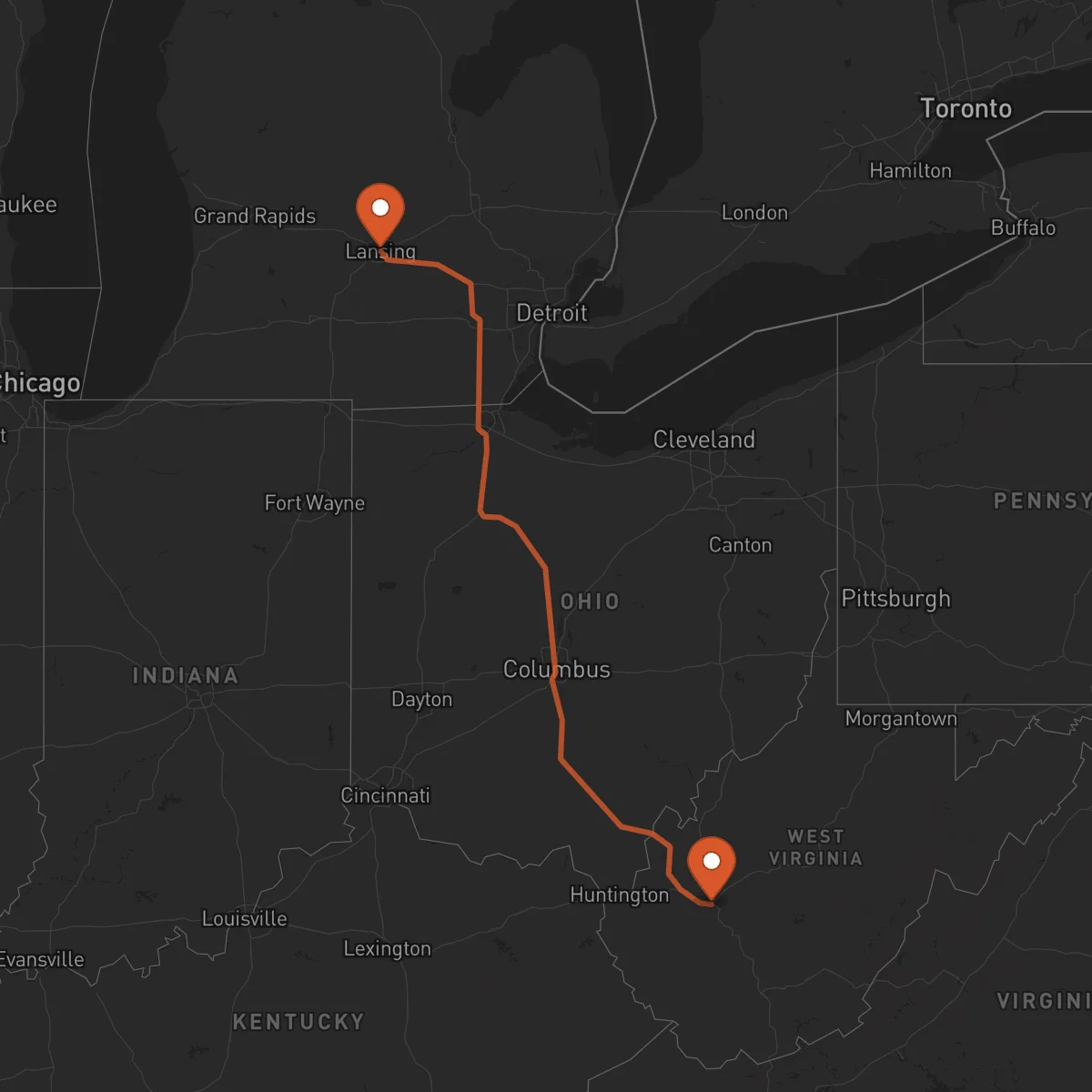
Lansing to Charleston
Charleston → LansingFTL freight transportation service between Lansing and Charleston. Reliable logistics solutions for your business.
Route Description
Everything you need to know about the corridor Lansing - Charleston
The Lansing to Charleston corridor represents a vital domestic freight transportation route connecting the industrial Midwest with the Appalachian region of West Virginia. This approximately 546 km route traverses through key economic zones, facilitating the movement of goods between Michigan's manufacturing heartland and West Virginia's resource-based economy. The corridor serves as a critical link for businesses requiring reliable full truckload (FTL) transportation services across the Great Lakes and Mid-Atlantic regions.
The economic significance of this route is underscored by the complementary industrial profiles of both regions. Lansing, as Michigan's capital, hosts a diverse manufacturing base including automotive suppliers and technology firms, while Charleston serves as West Virginia's commercial hub with strong presence in energy, healthcare, and chemical industries. This creates a balanced flow of raw materials, finished goods, and specialized equipment moving in both directions.
Major transportation infrastructure along this corridor includes Interstate 64 and Interstate 75, providing efficient north-south and east-west connectivity. These highways offer multiple routing options to accommodate different cargo types and delivery requirements. The route also connects with several regional distribution centers and intermodal facilities, enhancing logistics flexibility.
Control Terrestre specializes in optimizing freight movements along this corridor through our extensive network of certified carriers. Our dedicated FTL services ensure that your cargo moves directly from origin to destination without intermediate handling, reducing transit times and minimizing risk. With our strategic partnerships and deep understanding of regional logistics requirements, we provide tailored solutions that address the specific needs of manufacturers, distributors, and industrial clients operating between these important economic centers.
Services for this Route
Available services for the corridor Lansing - Charleston
 Origin
Lansing
Lansing, Michigan serves as a strategic logistics hub in the Great Lakes region, offering exceptional connectivity for freight transportation. Located in the heart of Michigan's Lower Peninsula, Lansing provides direct access to major transportation networks including I-96, I-496, and I-69. The city's central location within Michigan makes it an ideal origin point for statewide distribution operations and connections to broader Midwest markets.
The economic landscape of Lansing is anchored by automotive manufacturing, with numerous suppliers and assembly operations supporting the industry. Beyond automotive, the region has developed strengths in healthcare, education, and technology sectors. Michigan State University's presence contributes to a skilled workforce and research capabilities that support advanced manufacturing and logistics operations. The city's industrial parks and warehouse facilities are equipped to handle various cargo types, from automotive parts to consumer goods.
 Destination
Charleston
Charleston, West Virginia stands as the state's primary commercial and transportation center, offering strategic advantages for freight logistics. Situated at the confluence of the Elk and Kanawha Rivers, Charleston provides unique access to both road and water transportation options. The city's location in the Appalachian region positions it as a gateway for freight movement throughout the Mid-Atlantic and Southeastern United States.
The Charleston metropolitan area hosts a diverse industrial base centered around energy production, chemical manufacturing, and healthcare services. The presence of major energy companies and chemical plants creates consistent demand for specialized freight services, including hazardous materials transportation and oversized equipment movement. The region's natural resources, particularly coal and natural gas, drive significant freight activity. Charleston's Yeager Airport and rail connections through Norfolk Southern and CSX further enhance the multimodal capabilities available to businesses operating in this market.










