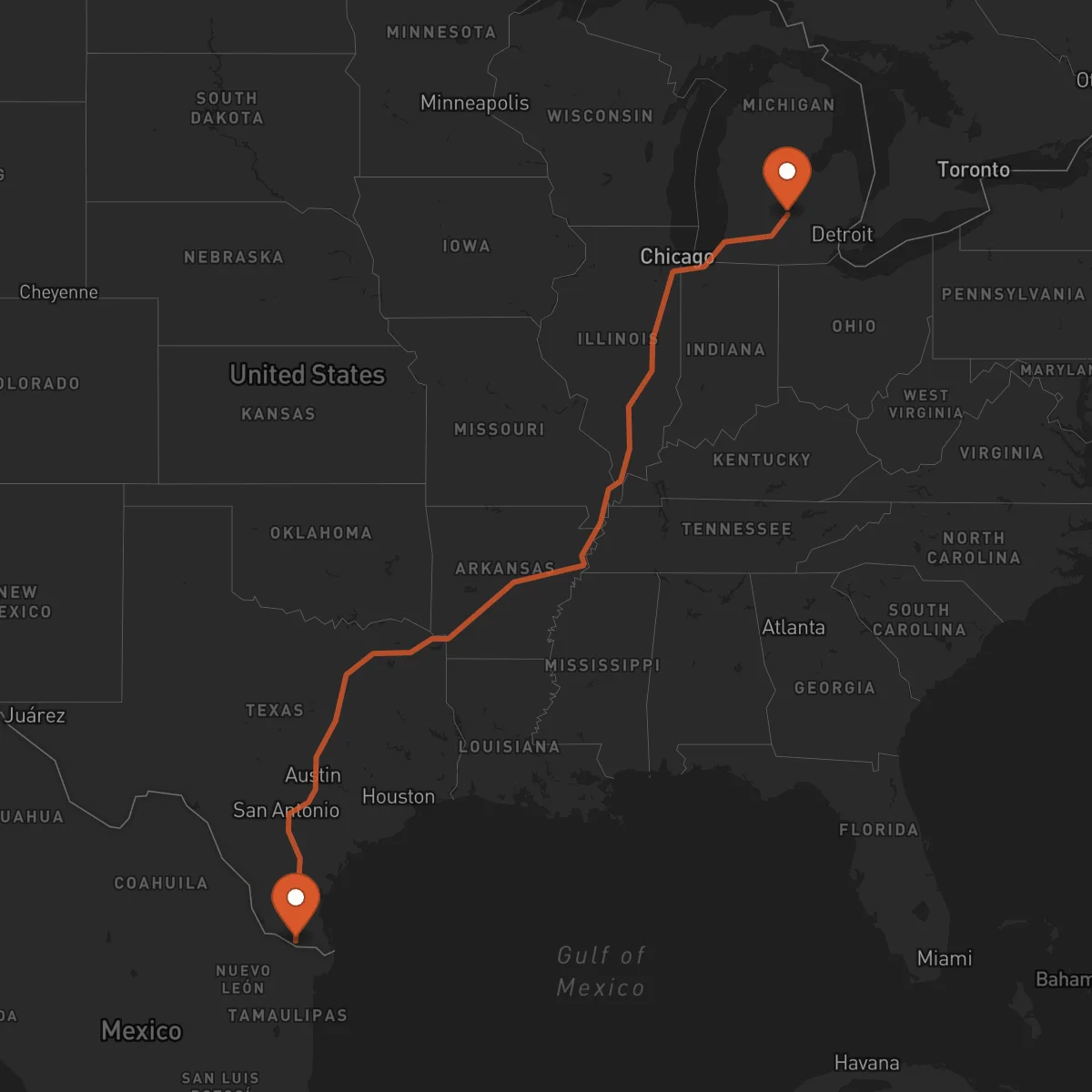
Lansing to McAllen
McAllen → LansingFTL freight transportation service between Lansing and McAllen. Reliable logistics solutions for your business.
Route Description
Everything you need to know about the corridor Lansing - McAllen
The logistics corridor between Lansing, Michigan, and McAllen, Texas, represents a crucial freight transportation route connecting the industrial Midwest with the southern border region. This 2,218 km domestic corridor traverses key economic zones across the United States, facilitating the movement of goods between Michigan's manufacturing heartland and Texas's dynamic border economy.
The route follows major transportation arteries including I-69 South and I-35 South, connecting through major logistics hubs such as Indianapolis, Louisville, Nashville, and San Antonio. This strategic path links automotive manufacturing centers in Michigan with the international trade gateways of South Texas, where cross-border commerce with Mexico creates significant freight demand.
Primary industries utilizing this corridor include automotive parts manufacturing, industrial equipment, agricultural products, and consumer goods. Lansing's automotive manufacturing base generates substantial outbound freight volumes, while McAllen's position as a major import/export hub creates inbound demand for various consumer products and industrial materials.
Control Terrestre optimizes this corridor through our network of certified transportation providers, offering dedicated FTL services that ensure reliable, direct transport between these key locations. Our strategic partnerships along the route enable us to provide consistent capacity, real-time tracking, and specialized handling for various cargo types, supporting the critical supply chain connections between Michigan and Texas.
Services for this Route
Available services for the corridor Lansing - McAllen
 Origin
Lansing
Lansing, Michigan, serves as a strategic logistics hub in the Great Lakes region, anchored by its strong automotive manufacturing heritage. The city's location provides excellent access to major freight corridors including I-96, I-496, and proximity to I-69, connecting to national transportation networks. Lansing's industrial base includes automotive manufacturing, aerospace components, and advanced manufacturing facilities that generate significant freight volumes requiring reliable transportation solutions.
The region benefits from Michigan's extensive infrastructure network, including multiple Class I rail lines and proximity to major ports on the Great Lakes. Lansing's economic diversity, including government operations, education, and healthcare sectors, creates varied freight demands throughout the year. The city's manufacturing facilities produce specialized equipment and components that require dedicated transportation services to reach markets across North America.
 Destination
McAllen
McAllen, Texas, occupies a strategic position in South Texas as a major gateway for international trade with Mexico. Located at the southern tip of Texas near the Rio Grande, McAllen provides direct access to the booming maquiladora industry and serves as a critical distribution point for goods entering and leaving the United States. The city's location near major border crossings creates significant freight movement between the two countries.
The region's transportation infrastructure includes excellent highway access via US-83 and proximity to major freight corridors. McAllen's economic base spans international trade, retail distribution, healthcare, and agriculture, creating diverse freight transportation needs. The city's proximity to the Mexican border generates substantial cross-border freight volumes, while its growing industrial sector requires reliable domestic transportation services to connect with markets throughout the United States.










