Lansing to Louisville
Louisville → LansingFTL freight transportation service between Lansing and Louisville. Reliable logistics solutions for your business.
Route Description
Everything you need to know about the corridor Lansing - Louisville
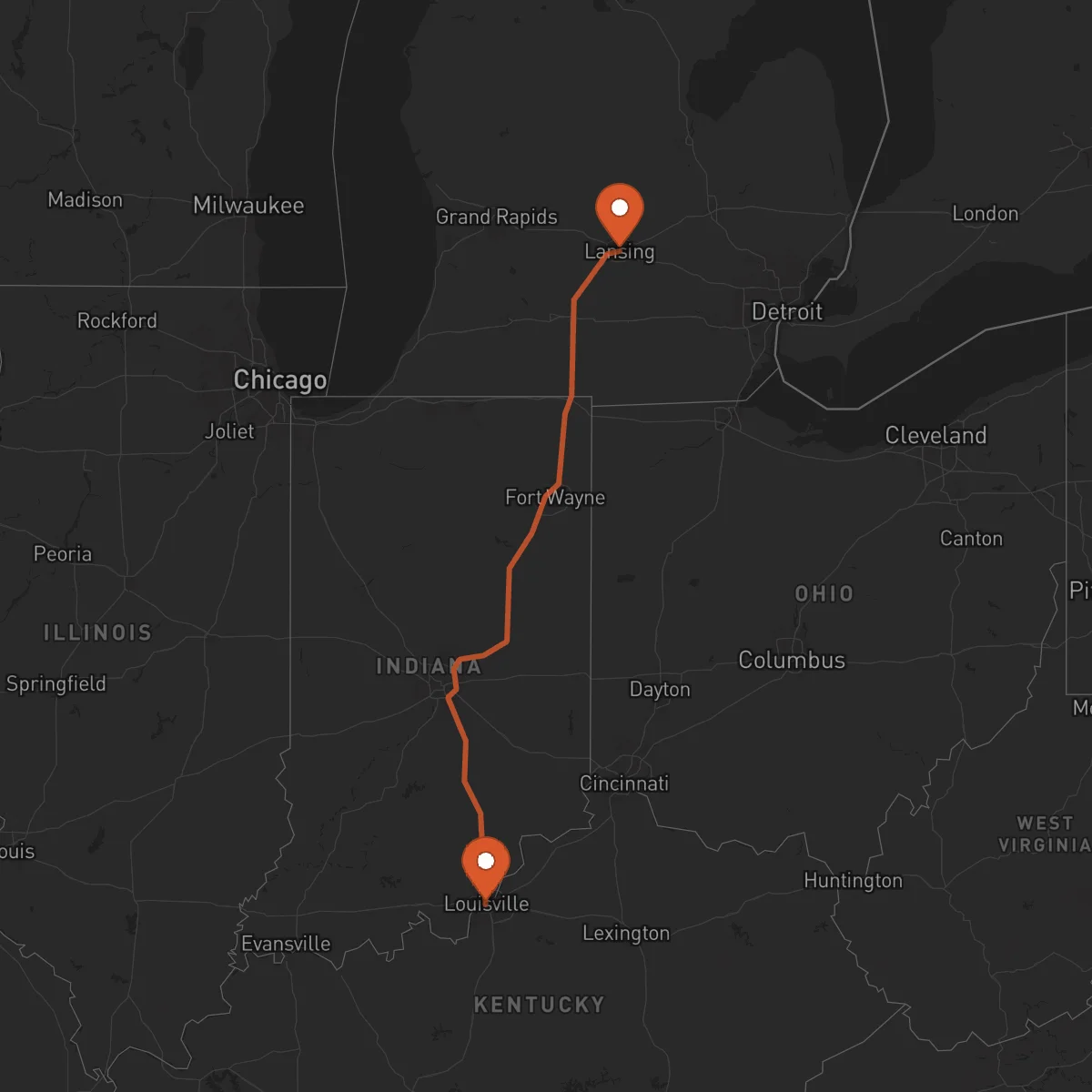
The Lansing to Louisville corridor connects two important industrial hubs in the Midwest and South of the United States, covering approximately 509 kilometers. This route traverses key states including Michigan, Indiana, and Kentucky, providing crucial connectivity for manufacturers and distributors between the Great Lakes region and the Ohio River Valley. The corridor serves as a vital link in the North American supply chain, facilitating the movement of goods between automotive and manufacturing centers in Michigan and the diverse industrial base of Kentucky.
The transportation infrastructure along this corridor includes major highways such as I-69, I-64, and I-65, which provide efficient north-south and east-west connectivity. These well-maintained interstate highways ensure reliable transit times and support the high volume of freight traffic moving between these economic centers. The route passes through several important logistics hubs, offering multiple options for strategic stops and distribution points.
Control Terrestre specializes in optimizing freight movements along this corridor, offering dedicated full truckload (FTL) services that ensure your cargo moves efficiently and securely. Our extensive network of certified carriers and strategic partnerships allows us to provide consistent, reliable transportation solutions tailored to the specific needs of shippers moving between Lansing and Louisville. Whether you're transporting automotive parts, industrial equipment, or consumer goods, our expertise in this corridor ensures your freight arrives on time and in perfect condition.
Services for this Route
Available services for the corridor Lansing - Louisville
 Origin
Lansing
Lansing, Michigan serves as a strategic logistics hub in the Great Lakes region, positioned at the intersection of major transportation networks. The city benefits from its proximity to major automotive manufacturing centers and its access to both road and rail infrastructure. Lansing's location provides excellent connectivity to Detroit, Chicago, and other industrial centers, making it an ideal origin point for freight distribution throughout the Midwest. The city's transportation infrastructure includes direct access to I-96, I-496, and other major highways that facilitate efficient movement of goods to regional and national markets.
The Lansing area is home to diverse industries including automotive manufacturing, healthcare, education, and technology. The presence of Michigan State University and numerous research facilities has fostered a growing tech and innovation sector. These industries create consistent demand for reliable freight transportation services, particularly for specialized cargo and time-sensitive shipments. The region's manufacturing base, particularly in automotive components, requires robust logistics solutions to support just-in-time production schedules and supply chain efficiency.
 Destination
Louisville
Louisville, Kentucky occupies a strategic position at the crossroads of the eastern United States, making it a critical logistics and distribution center. The city's location at the Falls of the Ohio River has historically made it a natural transportation hub, and today it maintains that status with extensive infrastructure including the Louisville International Airport (home to UPS Worldport), multiple interstate highways, and direct rail connections. Louisville's central location provides access to over half the US population within a day's drive, making it an ideal destination for distribution and warehousing operations.
The Louisville metropolitan area hosts a diverse economic base including healthcare, manufacturing, logistics, and bourbon production. The city is home to major companies such as Yum! Brands, Humana, and Ford Motor Company, which operates a significant manufacturing plant in nearby Shelbyville. Louisville's logistics infrastructure includes the UPS Worldport facility, one of the largest automated package handling facilities in the world, and the Louisville Port Authority, which manages extensive river transportation capabilities. These assets, combined with the city's central location, make Louisville a crucial node in the national supply chain, particularly for time-sensitive and high-value freight shipments.










