Louisville to Lansing
Lansing → LouisvilleFTL freight transportation service between Louisville and Lansing. Reliable logistics solutions for your business.
Route Description
Everything you need to know about the corridor Louisville - Lansing
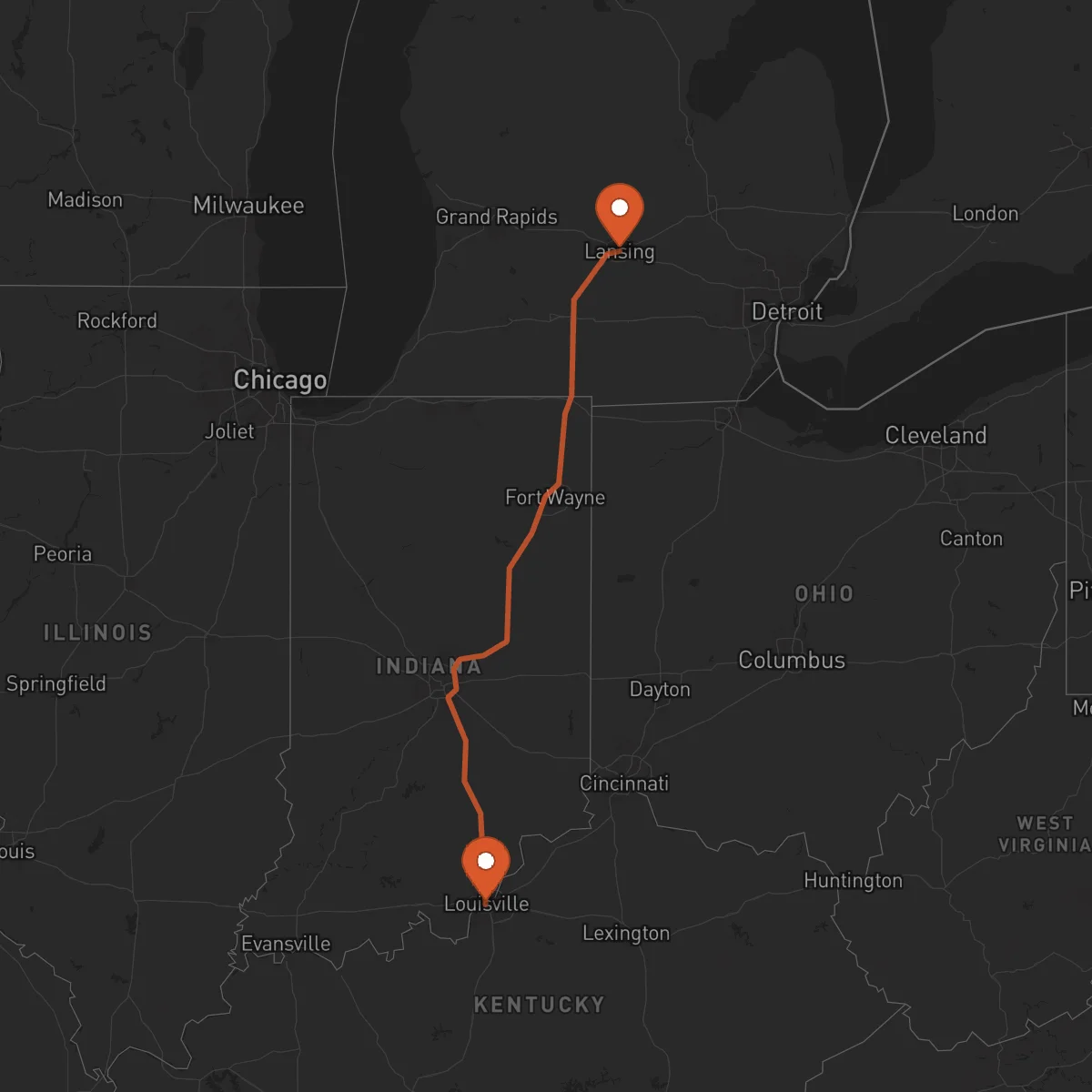
The Louisville to Lansing corridor represents a vital transportation link connecting the heart of Kentucky's logistics hub with Michigan's capital region. This 509-kilometer route traverses key industrial and agricultural regions, facilitating the movement of goods between two strategically important economic centers. The corridor serves as a critical artery for manufacturers, distributors, and retailers operating across the Midwest and Southeast.
The route primarily follows major interstate highways, including I-65 North from Louisville through Indianapolis, then connecting to I-69 North toward Lansing. This well-established transportation pathway passes through diverse economic zones, from Kentucky's bourbon and automotive manufacturing regions to Indiana's agricultural heartland and Michigan's automotive and technology corridors. The infrastructure supports consistent freight movement throughout the year, with multiple alternate routes available for optimal routing based on traffic conditions and delivery requirements.
Control Terrestre leverages this corridor's strategic advantages to provide reliable full truckload (FTL) transportation services. Our extensive network of certified carriers ensures consistent capacity and competitive rates for shipments between these markets. We understand the specific requirements of industries operating along this route, from temperature-controlled products to specialized freight, and maintain equipment availability to meet diverse cargo needs. Our dedicated team coordinates every shipment to ensure timely delivery and seamless communication throughout the transportation process.
Services for this Route
Available services for the corridor Louisville - Lansing
 Origin
Louisville
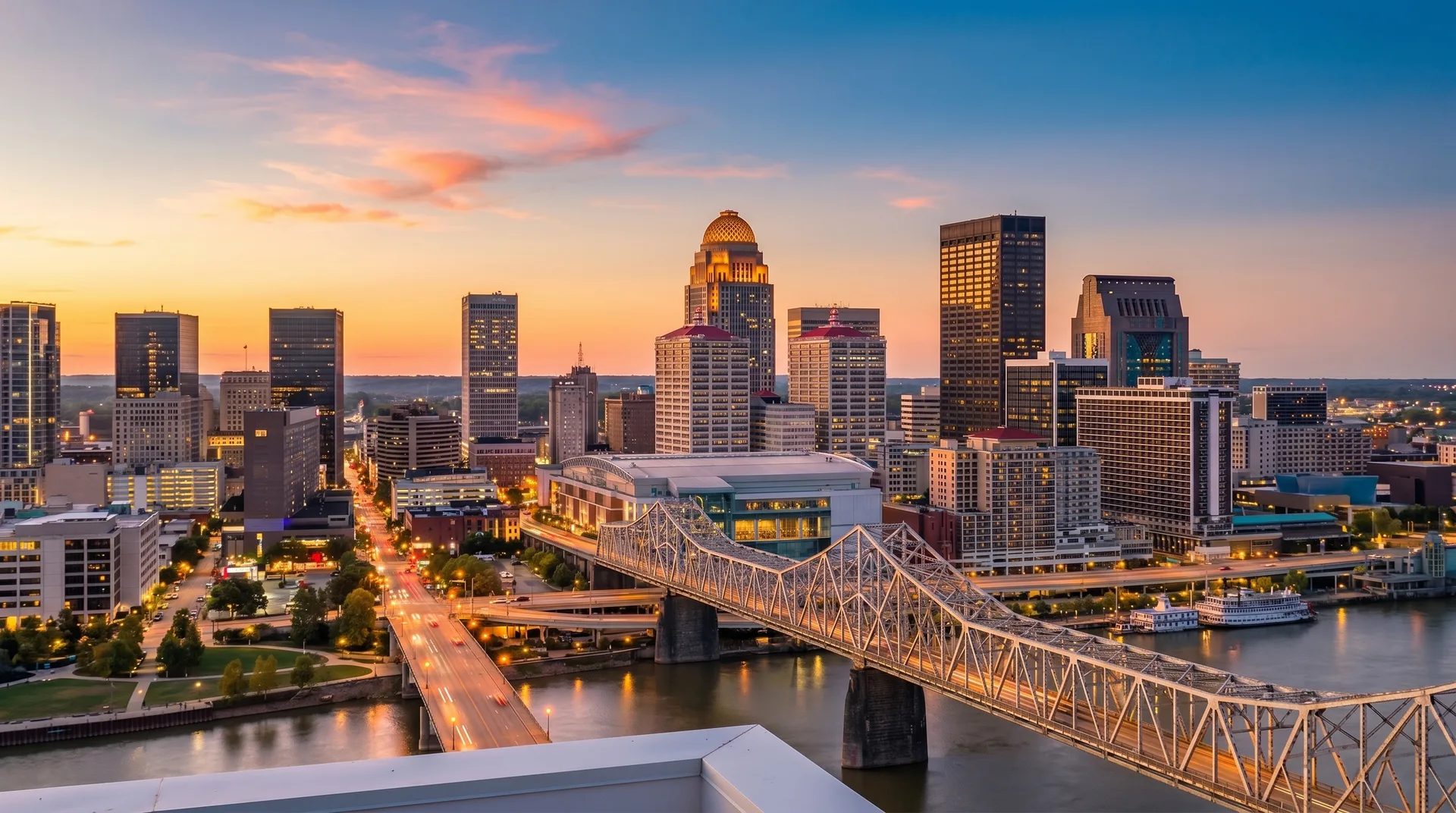
Louisville stands as a premier logistics hub in the southeastern United States, strategically positioned at the crossroads of major transportation networks. The city's location along the Ohio River and at the intersection of I-65, I-64, and I-71 makes it an ideal origin point for freight distribution. Louisville International Airport's UPS Worldport facility, one of the largest automated package handling facilities globally, further enhances the region's logistics capabilities. The city's central location within a day's drive of two-thirds of the U.S. population provides unmatched accessibility for freight movement.
The Louisville metropolitan area hosts diverse industries including automotive manufacturing, healthcare, bourbon production, and logistics services. Ford and GE Appliances maintain significant manufacturing operations in the region, while the healthcare sector continues to expand with major hospital systems and medical research facilities. The city's robust infrastructure includes multiple intermodal facilities, warehousing centers, and a skilled logistics workforce, making it an optimal starting point for freight shipments to destinations throughout the Midwest and beyond.
 Destination
Lansing
Lansing serves as Michigan's capital city and a key distribution point in the state's central region. Located at the intersection of I-96 and I-496, the city provides excellent connectivity to major markets across Michigan and neighboring states. The region's transportation infrastructure includes well-maintained highways, rail connections, and proximity to major Michigan airports, facilitating efficient freight movement and distribution operations. Lansing's central location within Michigan makes it an ideal hub for statewide distribution networks.
The Lansing area's economy centers around government services, education, automotive manufacturing, and healthcare. Michigan State University significantly influences the local economy through research, technology development, and employment. The region hosts various manufacturing facilities, including automotive parts suppliers and assembly operations, creating consistent demand for freight transportation services. Lansing's growing healthcare sector, with multiple major hospital systems and medical facilities, also generates substantial logistics requirements for medical supplies, equipment, and pharmaceutical products.










