Lansing to Laredo
Laredo → LansingFTL freight transportation service between Lansing and Laredo. Reliable logistics solutions for your business.
Route Description
Everything you need to know about the corridor Lansing - Laredo
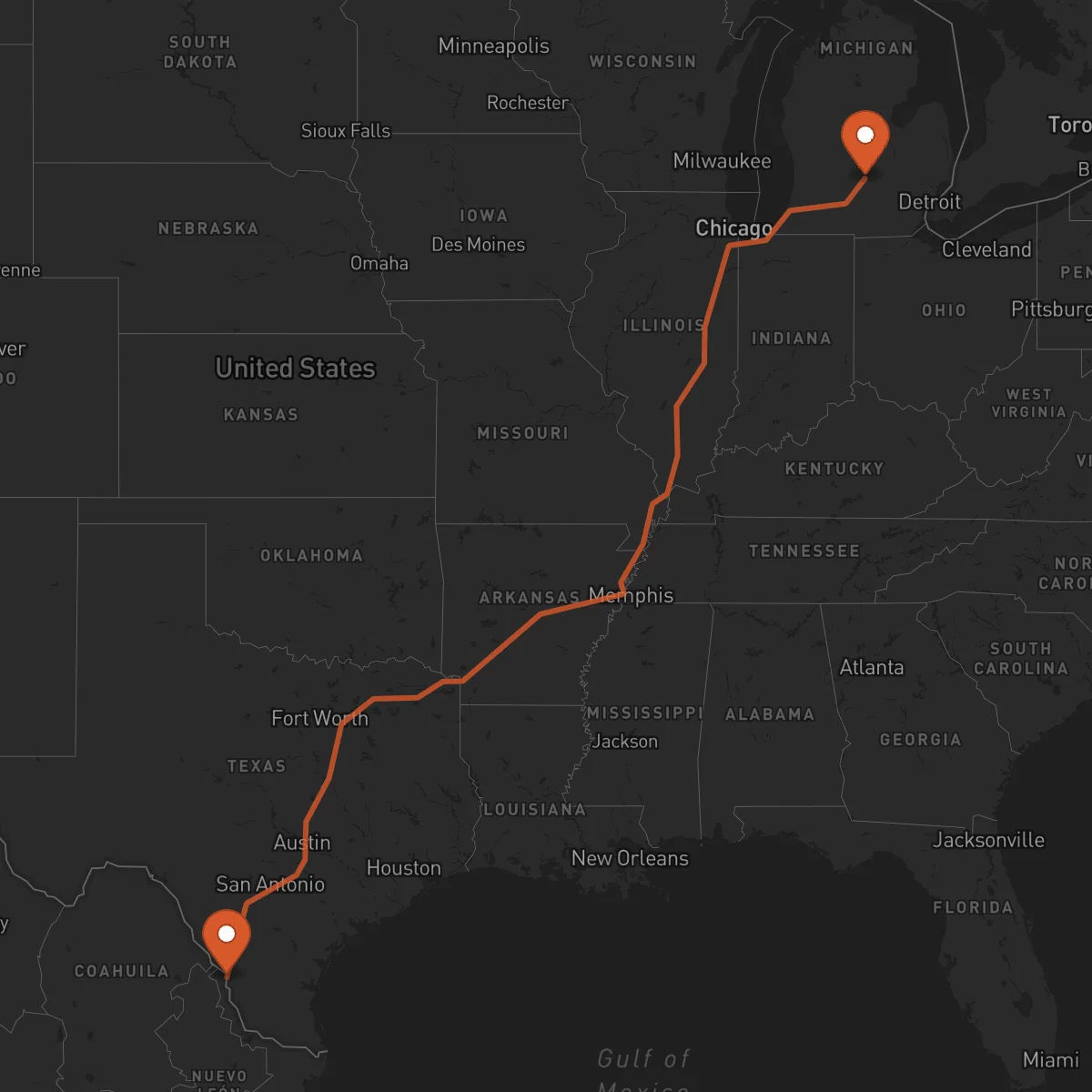
The Lansing to Laredo corridor represents a vital domestic transportation route connecting the industrial heartland of Michigan with the key border crossing point in Texas. This 2165 km route traverses the central United States, linking the Great Lakes manufacturing region with the southern border's international trade gateway. The corridor serves as a crucial artery for domestic freight movement, supporting the continuous flow of goods between the Midwest's industrial base and the border region's distribution networks.
The economic significance of this corridor extends beyond simple point-to-point transportation. Lansing, as Michigan's capital, anchors a region known for automotive manufacturing and technology development, while Laredo serves as one of North America's busiest inland ports of entry. This connection facilitates the movement of both finished goods and raw materials, supporting the integrated supply chains that span from the northern manufacturing centers to the southern distribution hubs and international trade routes.
Major industries utilizing this corridor include automotive parts and components, agricultural products, industrial machinery, and consumer goods. The route primarily follows major interstate highways including I-69, I-30, and I-35, providing reliable access through key economic centers such as Indianapolis, St. Louis, and San Antonio. These transportation corridors offer multiple routing options to accommodate varying freight requirements and delivery schedules.
Control Terrestre specializes in optimizing transportation along this corridor through our network of certified carriers and strategic logistics planning. Our expertise in full truckload (FTL) operations ensures efficient cargo movement with dedicated equipment and experienced drivers familiar with the route's specific requirements. We provide comprehensive logistics solutions that address the unique challenges of long-haul domestic transportation, including cross-border considerations when freight continues beyond Laredo into Mexico or Canada.
Services for this Route
Available services for the corridor Lansing - Laredo
 Origin
Lansing
Lansing serves as a strategic logistics hub in Michigan's Lower Peninsula, benefiting from its central location within the state's manufacturing corridor. The city's proximity to major automotive assembly plants and parts manufacturers in the Detroit metro area and surrounding regions makes it an ideal origin point for industrial freight. Lansing's transportation infrastructure includes direct access to I-96 and I-69, connecting to the broader Midwest network and providing efficient routes to both eastern and southern destinations.
The region's economic base centers on automotive manufacturing, with major suppliers and research facilities supporting the industry's supply chain. Additionally, Lansing hosts state government operations and educational institutions, creating diverse freight generation opportunities. The city's logistics infrastructure includes multiple warehousing facilities, distribution centers, and intermodal yards that support both regional and long-haul transportation needs.
 Destination
Laredo
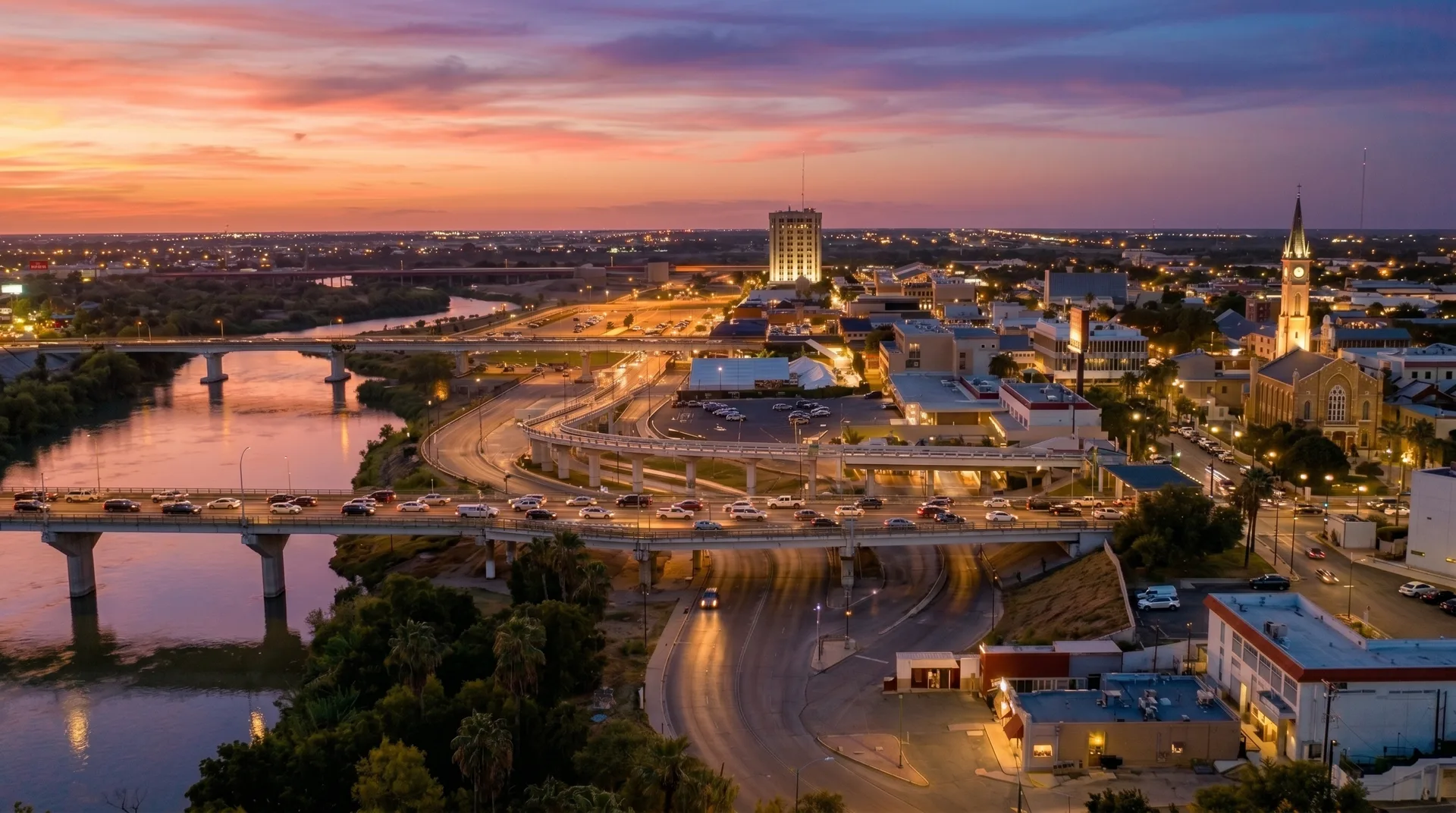
Laredo's strategic location on the U.S.-Mexico border makes it one of the most important logistics hubs in North America. As the nation's largest inland port, Laredo handles billions of dollars in trade annually, with extensive infrastructure supporting cross-border freight movements. The city's transportation network includes direct access to I-35, connecting to major markets in the southern United States and providing efficient routes to northern destinations like Lansing.
The local economy thrives on international trade, warehousing, and logistics services. Laredo's industrial base includes distribution centers for major retailers, manufacturing facilities, and extensive warehousing operations that support both domestic and international supply chains. The city's infrastructure features multiple highway connections, rail terminals, and warehousing facilities designed to handle the high volume of cross-border freight traffic.










