Hamilton to Denver
Denver → HamiltonFTL freight transportation service between Hamilton and Denver. Reliable logistics solutions for your business.
Route Description
Everything you need to know about the corridor Hamilton - Denver
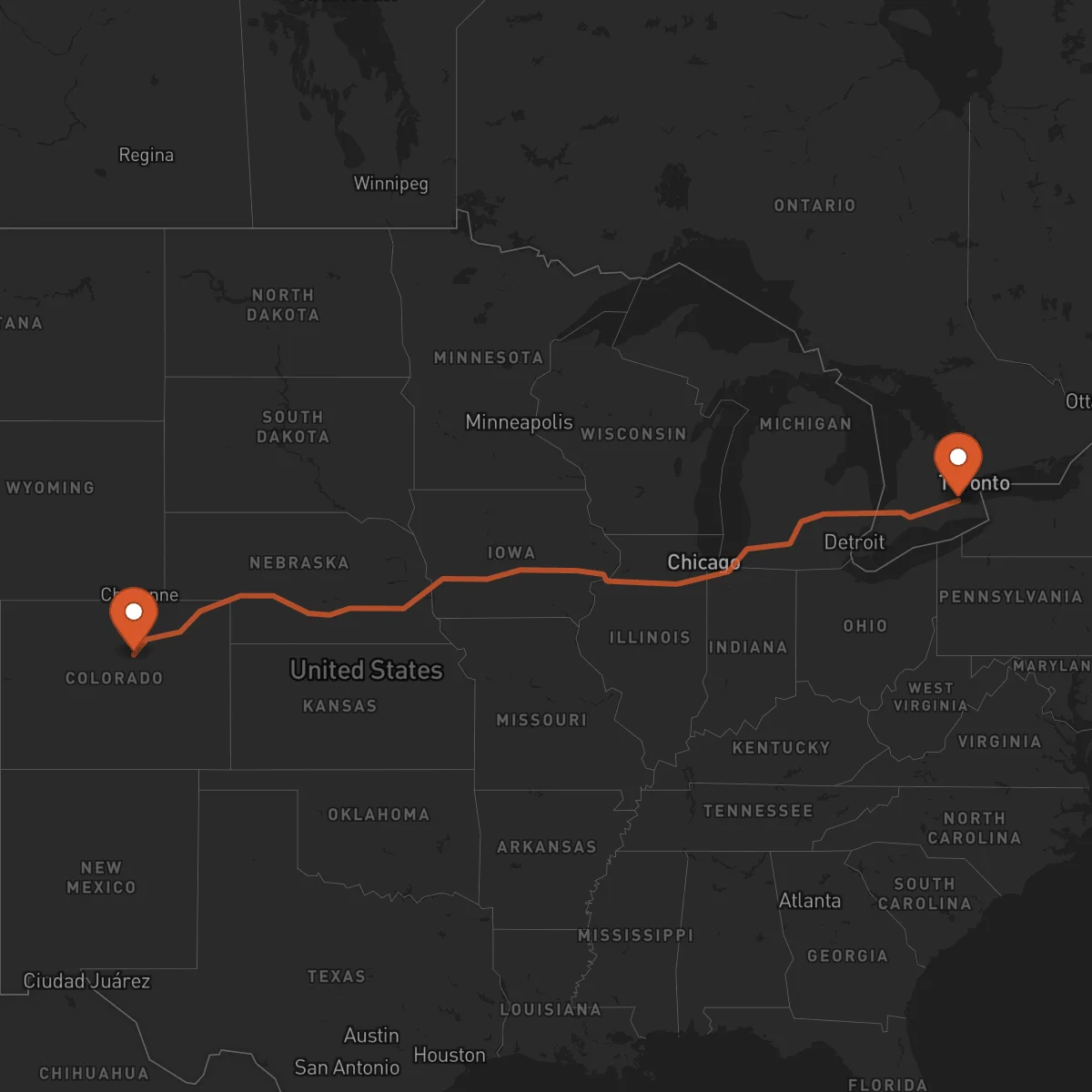
The Hamilton-Denver logistics corridor connects two key industrial hubs across the Canada-US border, spanning approximately 2,120 kilometers through the Great Lakes region and the Rocky Mountains. This cross-border route serves as a vital link between Canada's manufacturing heartland and Colorado's growing logistics and technology sectors. The corridor facilitates the movement of goods between Hamilton's port and industrial facilities and Denver's central location in the western United States.
The economic significance of this route extends beyond simple transportation, as it connects complementary industries on both sides of the border. Hamilton's steel production, advanced manufacturing, and automotive sectors find natural markets in Denver's aerospace, technology, and distribution industries. This creates a steady flow of specialized freight moving in both directions, supported by major transportation infrastructure including the Queen Elizabeth Way, Highway 401, Interstate 80, and Interstate 76.
Control Terrestre facilitates seamless operations along this corridor through our expertise in cross-border logistics and full truckload transportation. Our strategic partnerships with certified carriers ensure reliable service across the entire route, including efficient customs clearance at major border crossings. We provide dedicated transportation solutions that maintain the integrity of time-sensitive and specialized cargo, supporting the supply chain needs of businesses operating between these two important economic centers.
Services for this Route
Available services for the corridor Hamilton - Denver
 Origin
Hamilton, located on the western tip of Lake Ontario, serves as a strategic logistics hub for Ontario's manufacturing sector. The city's port facilities provide direct access to international shipping routes, while its proximity to major highways connects it to the broader North American transportation network. Hamilton's industrial base includes steel production, advanced manufacturing, and automotive parts, creating consistent demand for full truckload freight services to key markets across North America.
The city's transportation infrastructure includes the Port of Hamilton, multiple rail connections, and direct access to Highway 401 - Canada's busiest highway. These assets make Hamilton an ideal origin point for cross-border freight moving to destinations throughout the United States. The concentration of industrial facilities in Hamilton creates opportunities for efficient freight consolidation and specialized transportation services for heavy equipment and manufacturing components.
 Destination
Denver
Denver's strategic location at the intersection of major interstate highways makes it a crucial logistics hub for the western United States. The city's elevation and central position provide access to both coastal markets and inland destinations, while Denver International Airport serves as a major cargo hub. Denver's economy is anchored by aerospace, technology, telecommunications, and energy sectors, all of which require reliable full truckload transportation for specialized equipment and components.
The city's transportation infrastructure includes extensive highway networks, rail connections, and proximity to major distribution centers. Denver's role as a gateway to the Rocky Mountain region creates consistent demand for cross-border freight services connecting Canadian suppliers with Colorado businesses. The concentration of technology and aerospace companies in the Denver area generates specialized freight needs that require dedicated transportation solutions and expertise in handling sensitive cargo.










