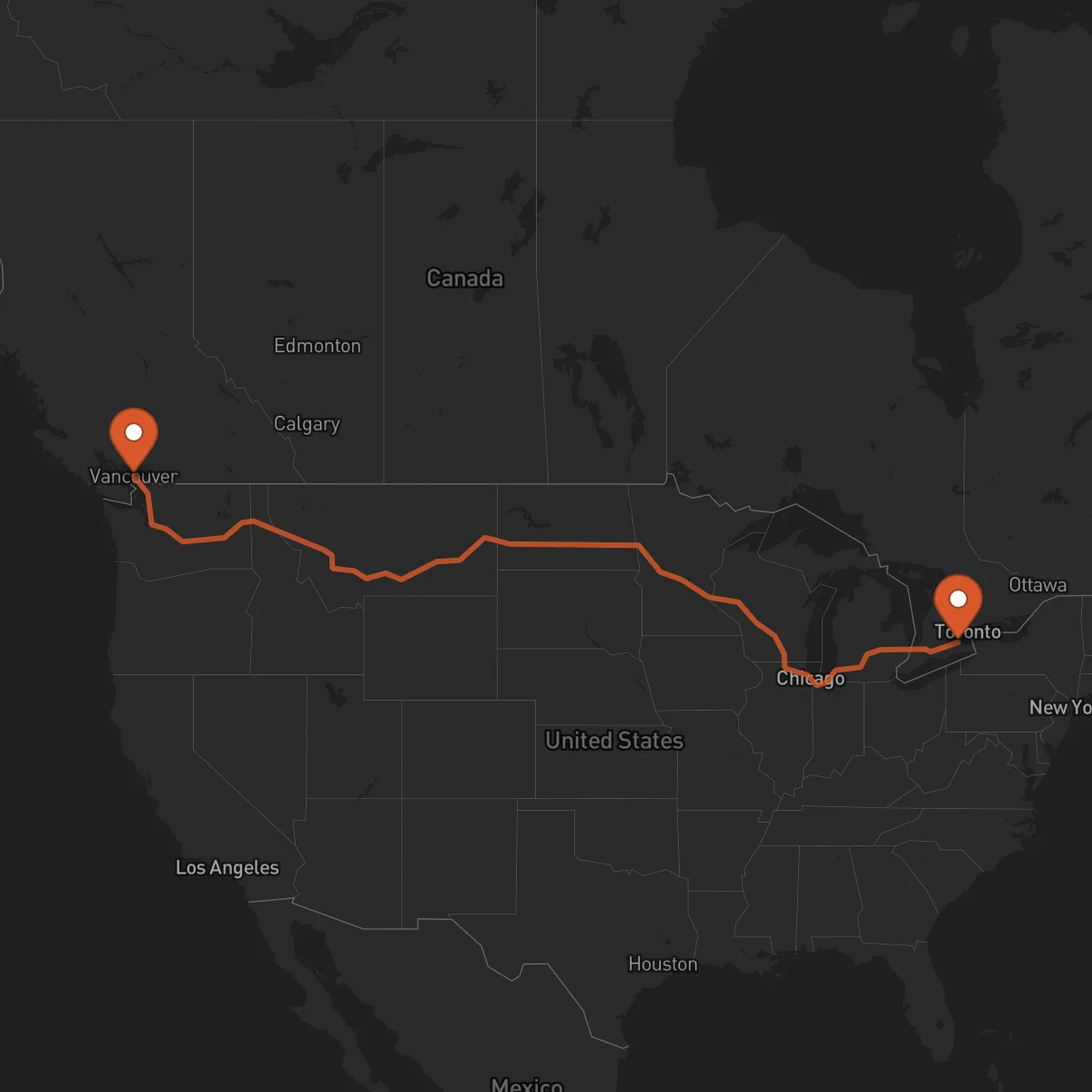
Hamilton to Vancouver
Vancouver → HamiltonFTL freight transportation service between Hamilton and Vancouver. Reliable logistics solutions for your business.
Route Description
Everything you need to know about the corridor Hamilton - Vancouver
The Hamilton to Vancouver corridor represents one of Canada's most vital domestic freight transportation routes, spanning approximately 3,343 kilometers across the country's diverse landscape. This east-west connection links Ontario's industrial heartland with British Columbia's Pacific gateway, creating a critical supply chain artery for Canadian commerce. The route traverses multiple provinces, connecting major economic centers and industrial zones that drive Canada's manufacturing, agricultural, and technology sectors.
The corridor's strategic importance stems from its role in facilitating trade between Canada's most populous provinces and supporting the movement of goods to and from major port facilities. Hamilton serves as a key industrial and manufacturing hub in Ontario, while Vancouver functions as Canada's primary Pacific port, handling significant international trade volumes. This transportation link enables efficient distribution of raw materials, finished goods, and agricultural products across the country's vast geography.
Control Terrestre provides comprehensive FTL (Full Truckload) transportation services along this crucial corridor, offering dedicated equipment and specialized solutions for diverse cargo types. Our experienced network of transportation providers ensures reliable, efficient movement of freight between these key Canadian markets. We understand the unique challenges of cross-country transportation and provide tailored solutions that optimize delivery schedules while maintaining cargo integrity throughout the journey.
Services for this Route
Available services for the corridor Hamilton - Vancouver
 Origin
Hamilton, located in Ontario's Golden Horseshoe region, stands as a major industrial and logistics center with strategic access to the Great Lakes and major transportation networks. The city's economy is anchored by manufacturing, steel production, and advanced technology sectors, with companies like ArcelorMittal Dofasco and Stelco maintaining significant operations. Hamilton's port facilities on Lake Ontario provide crucial connections for international trade, while its proximity to the U.S. border facilitates cross-border commerce.
The city boasts extensive transportation infrastructure including the Queen Elizabeth Way (QEW), Highway 403, and connections to the 401 corridor. Hamilton International Airport supports air cargo operations, and the city's rail connections integrate with Canada's national freight network. The presence of major industrial parks and warehousing facilities makes Hamilton an ideal origin point for freight distribution across Canada and into the United States.
 Destination
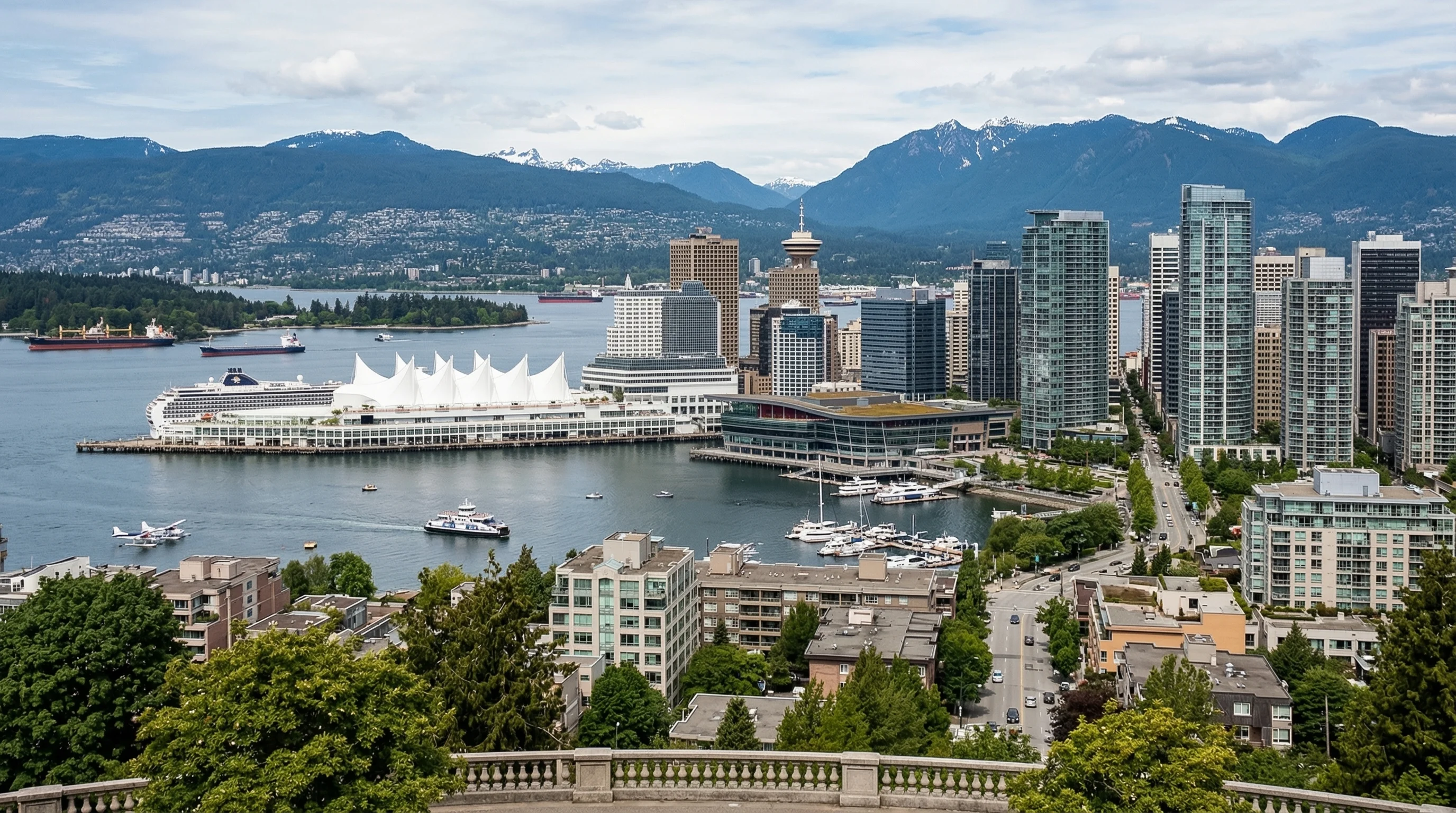
Vancouver
Vancouver serves as Canada's primary Pacific gateway and a critical hub for international trade, offering unparalleled access to Asian markets and beyond. The city's economy encompasses diverse sectors including technology, film production, tourism, and natural resources, with a strong emphasis on international commerce. Vancouver's Port Metro Vancouver is Canada's largest port by tonnage, handling over $200 billion in goods annually and serving as a vital link in global supply chains.
The region features comprehensive transportation infrastructure including major highways like Highway 1 (Trans-Canada Highway), extensive rail networks operated by CN and CP, and Vancouver International Airport's cargo facilities. The city's proximity to the U.S. border and connections to the Asia-Pacific region make it a strategic destination for freight movement. Vancouver's concentration of warehousing, distribution centers, and intermodal facilities supports efficient cargo handling and distribution throughout Western Canada and beyond.










