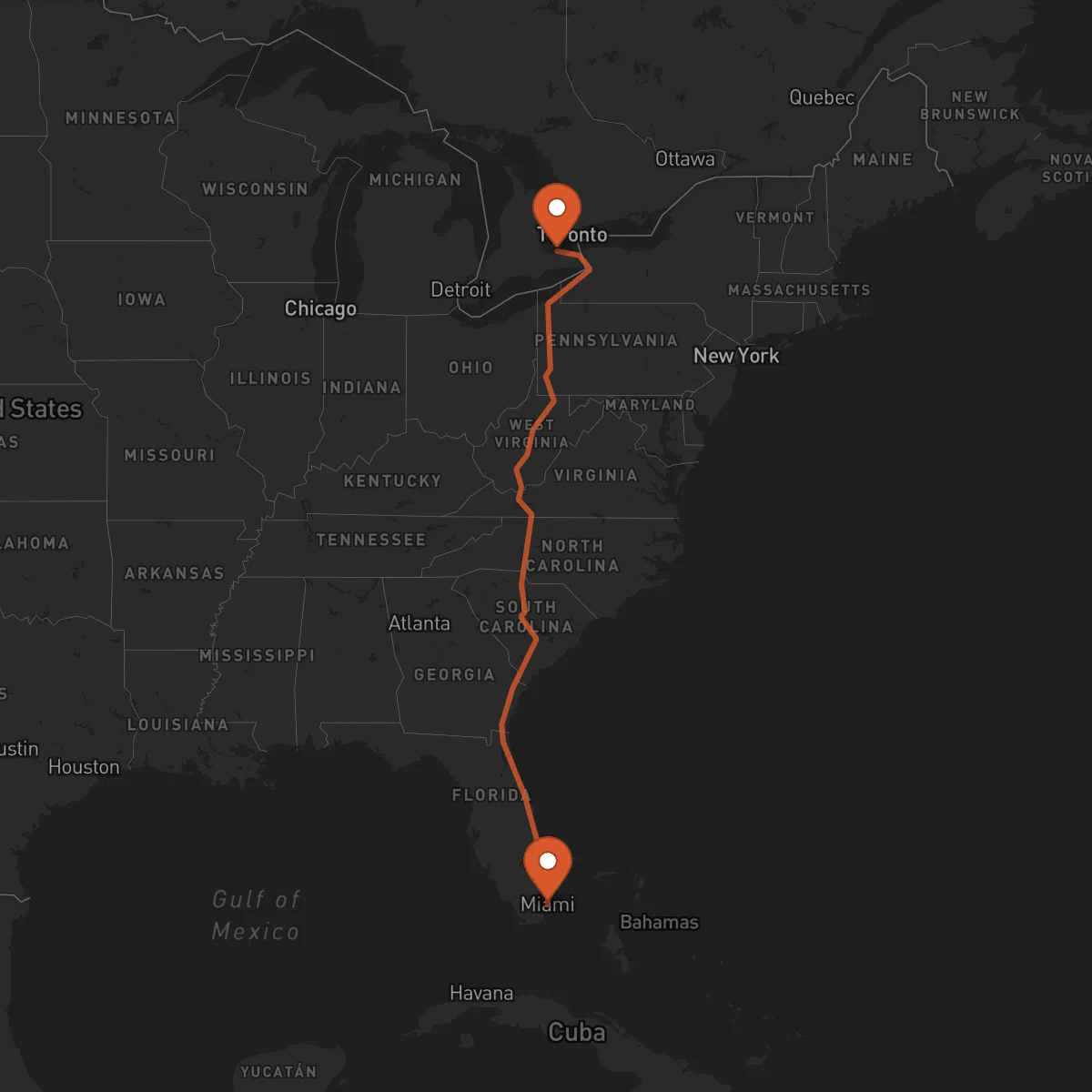
Hamilton to Miami
Miami → HamiltonFTL freight transportation service between Hamilton and Miami. Reliable logistics solutions for your business.
Route Description
Everything you need to know about the corridor Hamilton - Miami
The logistics corridor between Hamilton and Miami represents a vital trade artery connecting Canada's industrial heartland with one of the United States' most dynamic commercial hubs. This cross-border route spans approximately 1945 kilometers, traversing diverse landscapes and economic zones that contribute significantly to North American commerce. The corridor serves as a critical link between Hamilton's manufacturing base and Miami's role as a gateway to Latin American markets, facilitating the movement of goods that drive economic growth on both sides of the border.
The economic significance of this corridor is underscored by the complementary industrial strengths of both regions. Hamilton, known as Canada's steel capital, produces a wide range of manufactured goods, automotive components, and industrial equipment. Miami, conversely, serves as a major distribution center for imports, exports, and re-exports, particularly with Latin America and the Caribbean. The corridor facilitates the flow of raw materials northward and finished products southward, supporting industries such as automotive, electronics, pharmaceuticals, and consumer goods.
Transportation infrastructure along this route includes major highways such as I-75, I-79, and I-95, providing efficient connectivity between key economic centers. The corridor benefits from strategic border crossings, including the Peace Bridge and other major ports of entry, which are equipped with modern customs facilities to expedite cross-border movements. Control Terrestre's expertise in navigating these border crossings, combined with our certified transportation partners, ensures seamless freight movement across international boundaries, minimizing delays and optimizing transit times for our clients' shipments.
Services for this Route
Available services for the corridor Hamilton - Miami
 Origin
Hamilton, located on the western tip of Lake Ontario, serves as a strategic logistics hub in Canada's industrial landscape. The city's proximity to major transportation networks, including the Queen Elizabeth Way and Highway 403, provides excellent connectivity to both domestic and international markets. Hamilton's port facilities on Lake Ontario enable efficient waterborne transportation, complementing its robust road and rail infrastructure. The city's location within the Greater Toronto Area's economic sphere further enhances its importance as a distribution center for goods moving throughout Ontario and beyond.
The economic base of Hamilton is anchored by its manufacturing sector, particularly steel production and metalworking industries. The city hosts numerous industrial parks and business parks that accommodate a diverse range of manufacturing operations, from automotive parts to advanced materials. Hamilton's economy also benefits from growing sectors such as healthcare, education, and technology, creating a dynamic business environment that generates consistent freight transportation demand. The presence of McMaster University and its research facilities has also fostered innovation in logistics and supply chain management, contributing to the city's reputation as a logistics-savvy community.
 Destination
Miami
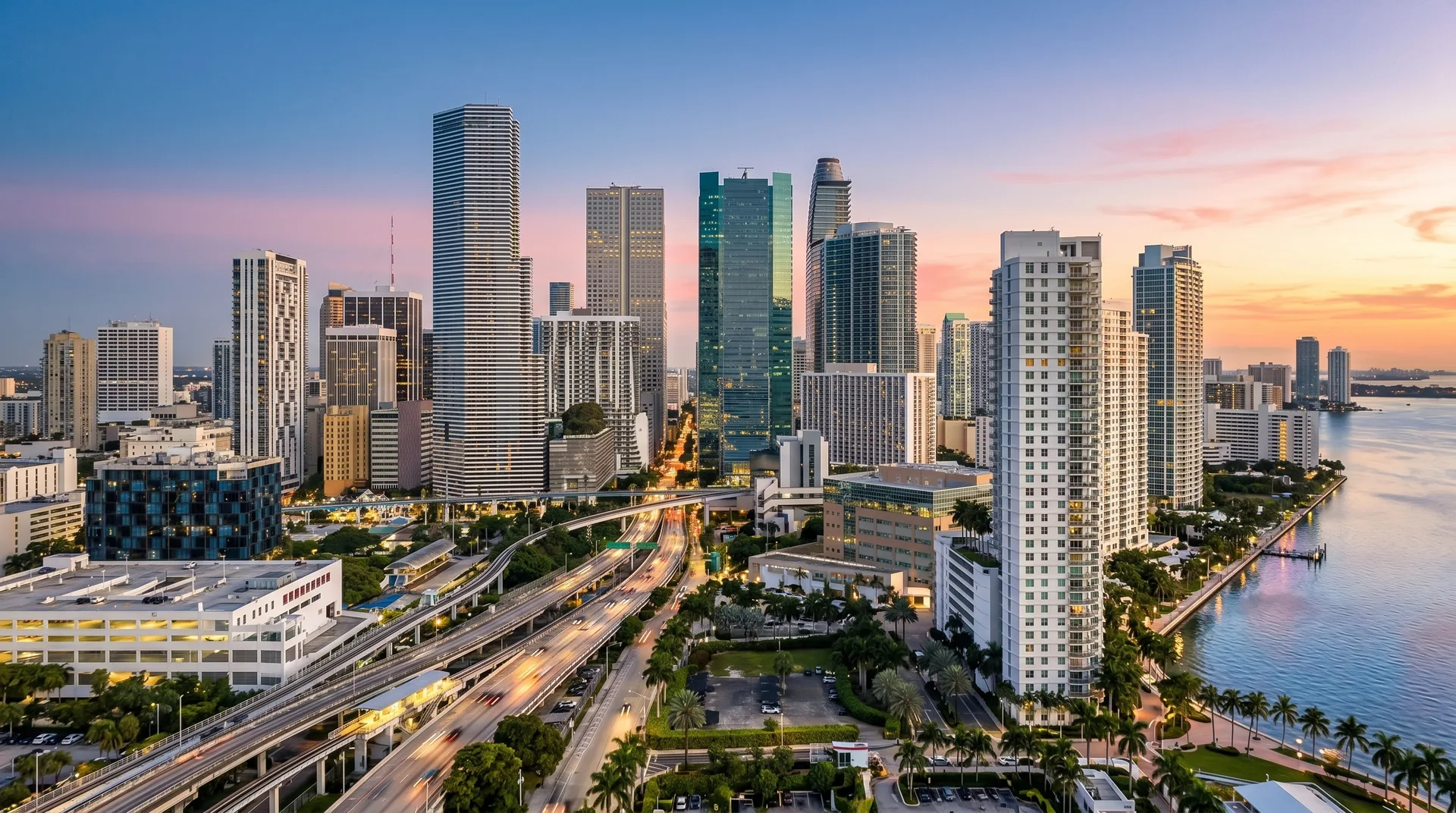
Miami stands as one of the most strategically positioned logistics hubs in the United States, serving as the primary gateway to Latin American and Caribbean markets. The city's location at the southeastern tip of Florida provides unique advantages for international trade, with its port facilities handling millions of tons of cargo annually. Miami International Airport ranks among the busiest cargo airports in the world, facilitating the rapid movement of high-value and time-sensitive goods. The extensive highway network, including I-95 and the Florida Turnpike, ensures efficient distribution throughout the southeastern United States and beyond.
The economic landscape of Miami is characterized by its role as a major commercial and financial center, with strong ties to international trade. The city's economy thrives on diverse sectors including international banking, tourism, healthcare, and technology. Miami's position as a cultural and economic bridge between North America and Latin America has attracted numerous multinational corporations to establish regional headquarters in the area. The Port of Miami, often called the "Cargo Gateway of the Americas," handles a significant volume of containerized cargo, automobiles, and other freight, making it a critical node in global supply chains.










