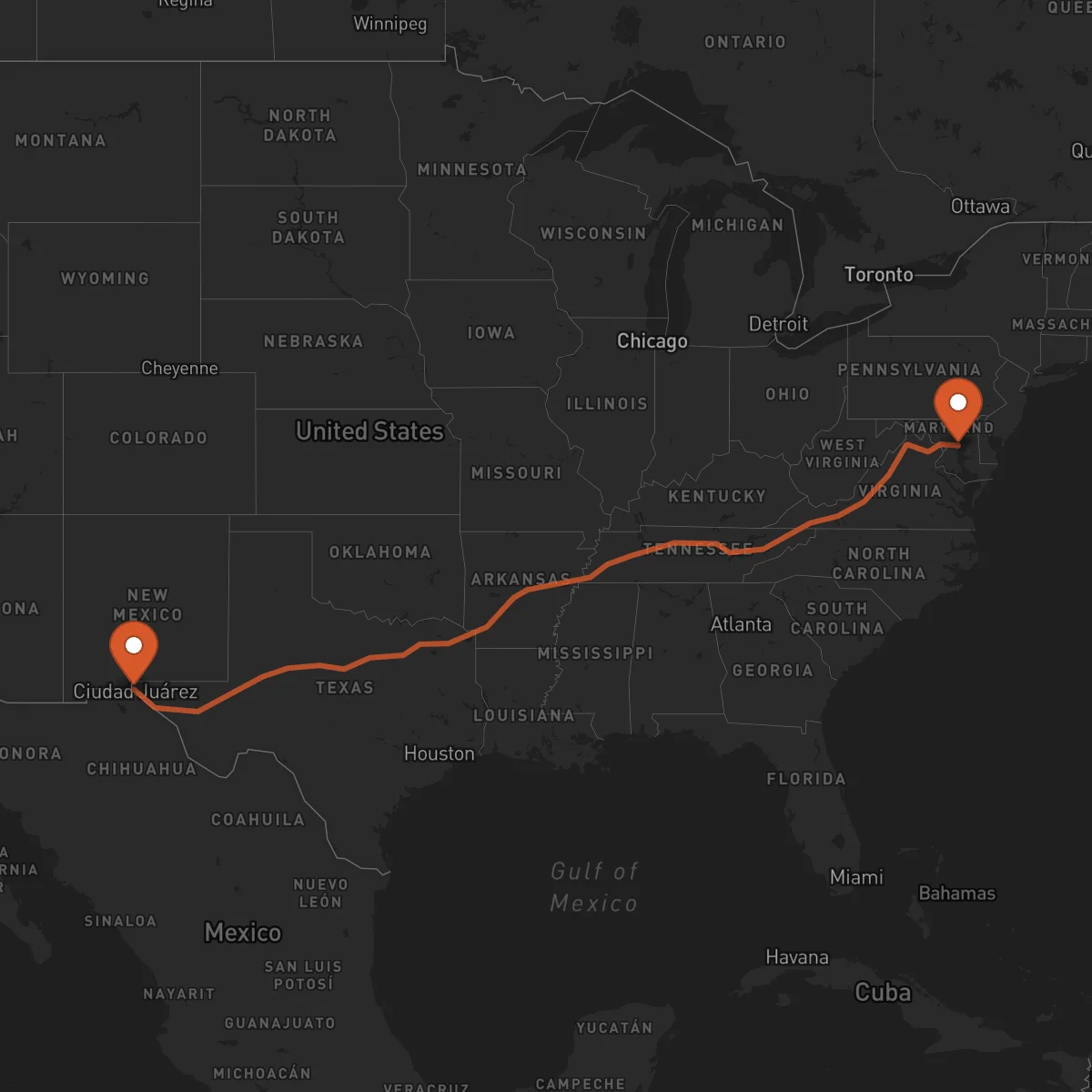
El Paso to Annapolis
Annapolis → El PasoFTL freight transportation service between El Paso and Annapolis. Reliable logistics solutions for your business.
Route Description
Everything you need to know about the corridor El Paso - Annapolis
The El Paso to Annapolis corridor represents a critical east-west transportation link across the United States, spanning approximately 2,821 kilometers through diverse geographic and economic regions. This route connects the border region of Texas with the Mid-Atlantic coast, traversing major industrial and agricultural zones that form the backbone of American commerce. The corridor serves as a vital artery for freight movement between the southwestern states and the northeastern markets, facilitating trade and supply chain operations for numerous industries.
The economic significance of this corridor is substantial, as it connects regions with complementary industrial strengths. El Paso serves as a major border crossing and manufacturing hub, while Annapolis represents access to the Washington-Baltimore metropolitan area, one of the nation's most economically active regions. The route passes through key states including Texas, New Mexico, Oklahoma, Missouri, Illinois, Indiana, Ohio, Pennsylvania, and Maryland, each contributing to the corridor's importance for national freight distribution.
Major industries utilizing this corridor include automotive manufacturing, agricultural products, consumer goods, industrial equipment, and technology components. The route accommodates both eastbound and westbound freight flows, with agricultural exports from the Midwest moving toward international markets via Texas ports, while manufactured goods and imports travel from coastal ports to inland destinations. Control Terrestre provides comprehensive FTL transportation solutions along this corridor, leveraging our network of certified carriers and specialized equipment to ensure reliable, efficient freight movement across this extensive distance.
Services for this Route
Available services for the corridor El Paso - Annapolis
 Origin
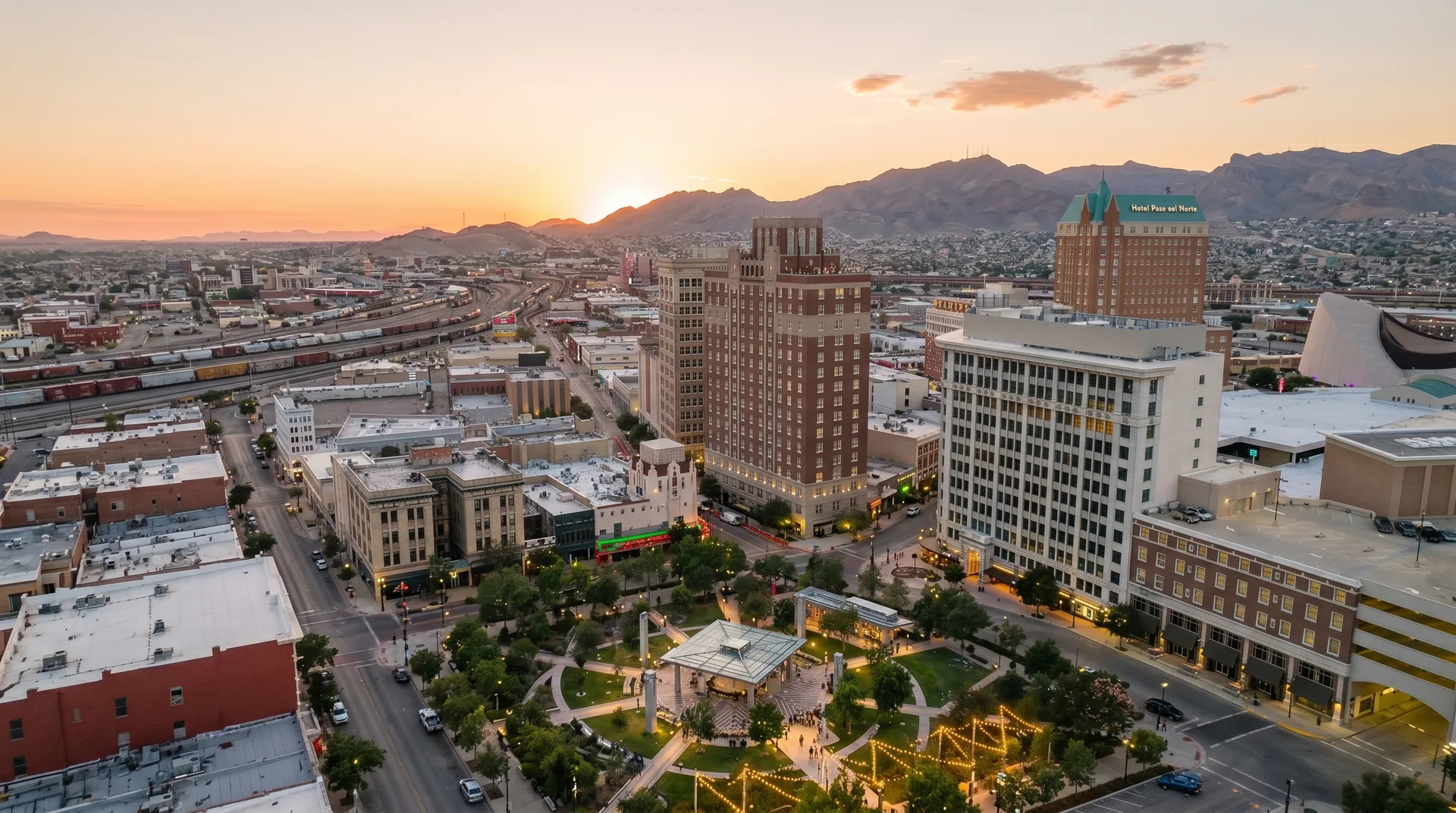
El Paso
El Paso, Texas occupies a strategic position as a major gateway for cross-border trade between the United States and Mexico. Located at the western tip of Texas along the Rio Grande, the city serves as a critical logistics hub with direct access to major transportation networks including Interstate 10, which connects the West Coast with the southeastern United States. The region's infrastructure includes the Bridge of the Americas, Ysleta-Zaragoza International Bridge, and numerous rail crossings that facilitate efficient freight movement.
The economic base of El Paso encompasses manufacturing, international trade, military operations, and healthcare services. The city hosts numerous maquiladoras and manufacturing facilities that produce electronics, automotive components, and consumer goods. The presence of Fort Bliss and the surrounding military installations creates additional demand for specialized logistics services. El Paso's transportation infrastructure includes multiple trucking terminals, warehousing facilities, and intermodal yards that support the efficient movement of goods in and out of the region.
 Destination
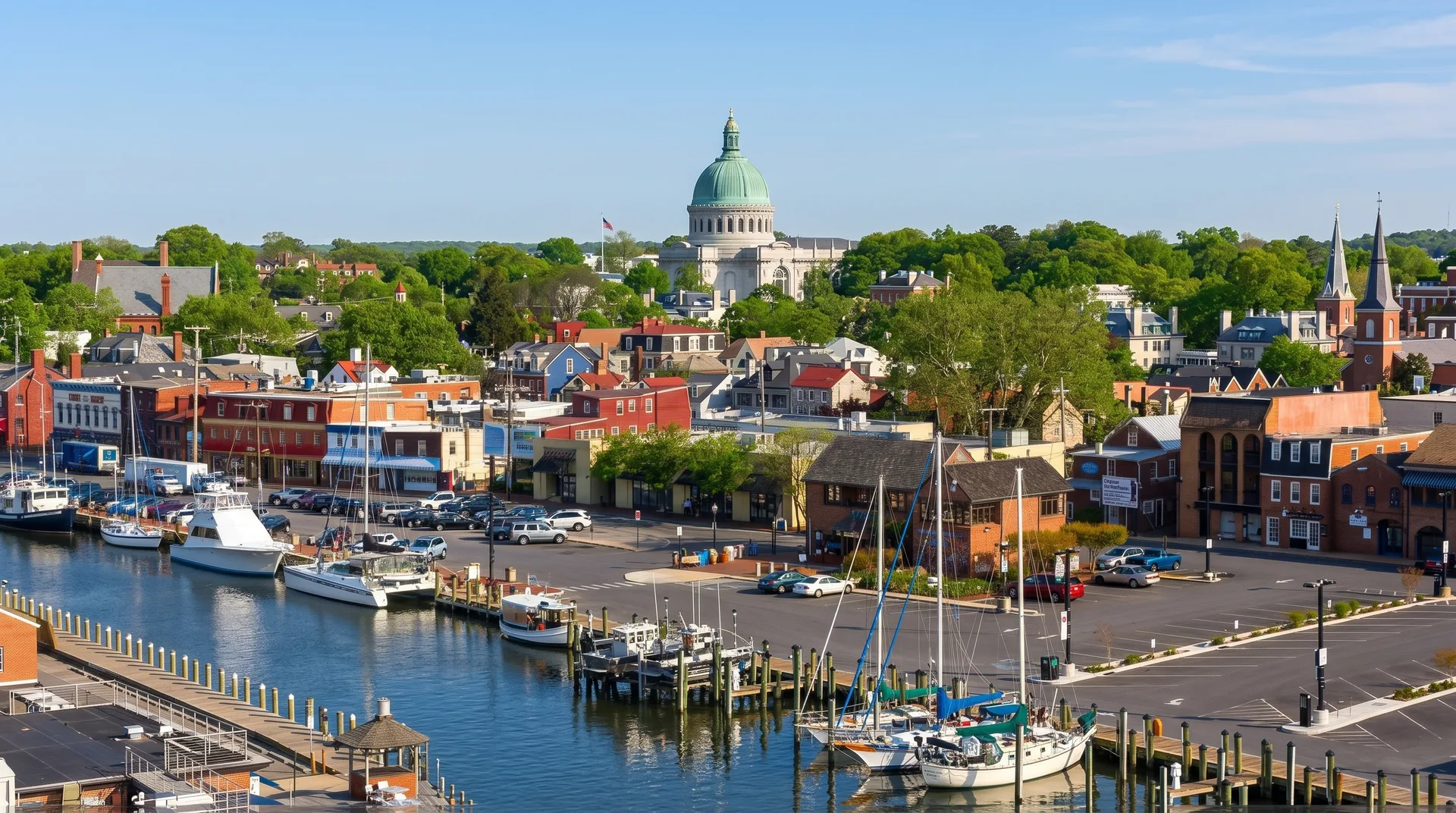
Annapolis
Annapolis, Maryland, while primarily known as the state capital and home to the United States Naval Academy, serves as a strategic access point to the broader Washington-Baltimore metropolitan area. The region benefits from proximity to major East Coast ports including Baltimore and Norfolk, providing excellent connectivity for international trade. The area's transportation infrastructure includes Interstate 97, US Route 50, and connections to Interstate 95, which links the region to major northeastern markets.
The economic landscape around Annapolis encompasses government services, maritime industries, technology, and healthcare. The region's proximity to Washington D.C. creates demand for secure transportation of sensitive materials and time-critical deliveries. The Chesapeake Bay area supports maritime logistics operations, while the presence of numerous federal agencies and contractors generates consistent freight movement. The region's infrastructure includes multiple distribution centers, freight terminals, and specialized handling facilities that support diverse logistics requirements.










