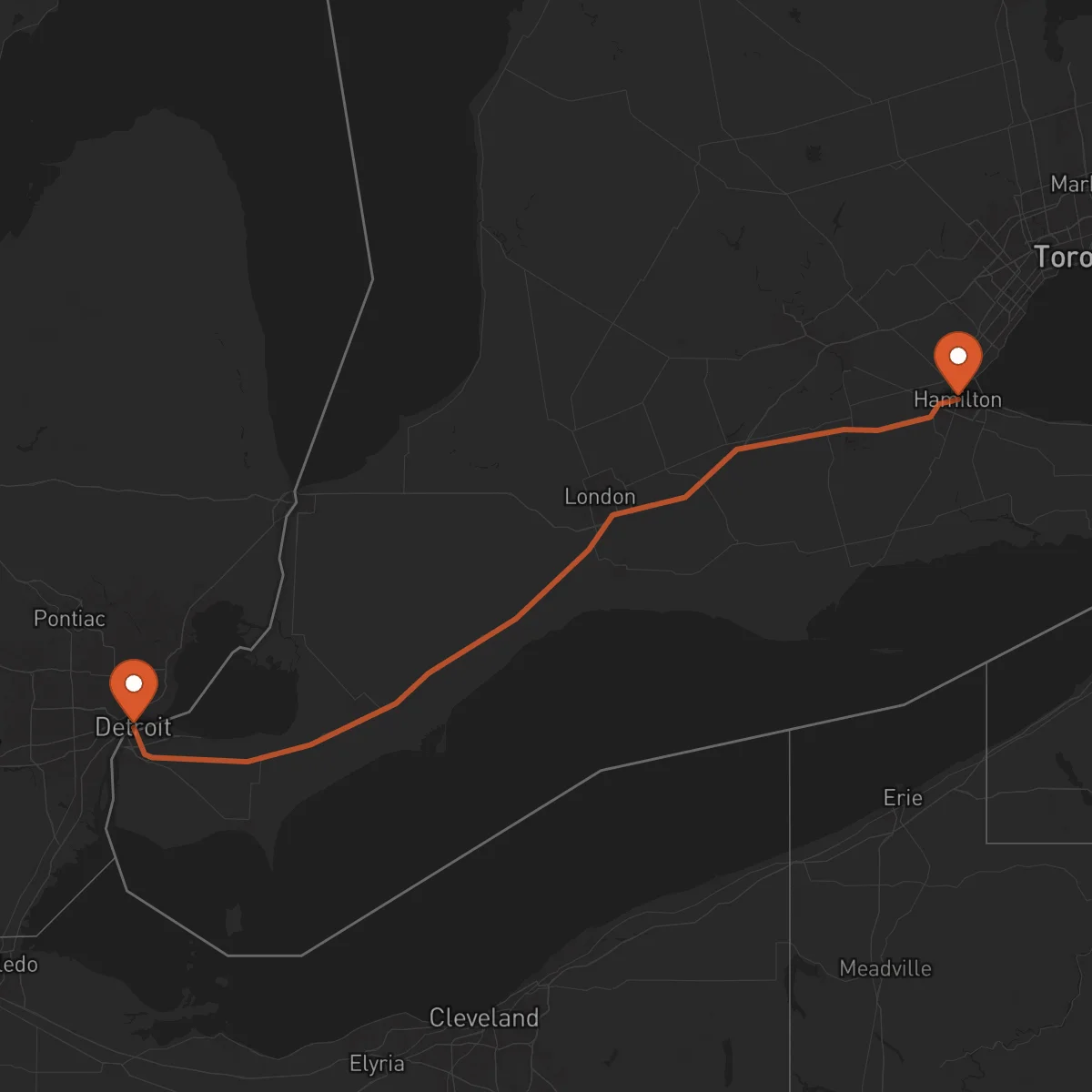
Detroit to Hamilton
Hamilton → DetroitFTL freight transportation service between Detroit and Hamilton. Reliable logistics solutions for your business.
Route Description
Everything you need to know about the corridor Detroit - Hamilton
The Detroit-Hamilton corridor represents a vital logistics connection between the United States and Canada, linking two major industrial centers across the Great Lakes region. This cross-border route spans approximately 278 kilometers and serves as a critical artery for North American trade, connecting Michigan's automotive and manufacturing hub with Ontario's steel and industrial powerhouse. The corridor's strategic importance is amplified by its role in facilitating just-in-time manufacturing and supply chain operations between both countries.
The region's economic significance is rooted in its diverse industrial base. Detroit, known as the automotive capital of the world, hosts major manufacturers and suppliers, while Hamilton has evolved from its steel-making heritage to become a diversified industrial center with strong presence in advanced manufacturing, food processing, and distribution. This complementary industrial landscape creates substantial freight movement in both directions, with automotive parts, raw materials, and finished goods flowing continuously through this corridor.
Transportation infrastructure along this route is robust, with major highways including I-75, I-94, and Highway 401 forming the primary freight arteries. The corridor crosses at key border points, with the Detroit-Windsor crossing being one of North America's busiest commercial gateways. Control Terrestre's expertise in cross-border operations ensures seamless movement through customs and compliance with all regulatory requirements, providing reliable FTL transportation solutions that keep your supply chain moving efficiently between these two strategic industrial centers.
Services for this Route
Available services for the corridor Detroit - Hamilton
 Origin
Detroit
Detroit's strategic location on the U.S.-Canada border makes it a crucial logistics hub for North American trade. The city's extensive transportation infrastructure includes multiple interstate highways, rail connections, and proximity to major ports, creating multiple options for freight movement. Detroit's position as an automotive manufacturing center generates substantial freight volume, with numerous parts suppliers and assembly plants requiring reliable transportation services. The city's logistics ecosystem is supported by advanced warehousing facilities and distribution centers that cater to both domestic and international markets.
 Destination
Hamilton's strategic location on the western tip of Lake Ontario positions it as a key logistics center for Eastern Canada. The city benefits from its proximity to major transportation routes, including Highway 401 and the Queen Elizabeth Way, providing efficient access to Toronto and other major markets. Hamilton's port facilities on Lake Ontario complement its robust road and rail infrastructure, making it an ideal location for distribution operations. The city's diversified industrial base, including advanced manufacturing, food processing, and steel production, creates consistent demand for reliable freight transportation services.










