Detroit to Concord
Concord → DetroitFTL freight transportation service between Detroit and Concord. Reliable logistics solutions for your business.
Route Description
Everything you need to know about the corridor Detroit - Concord
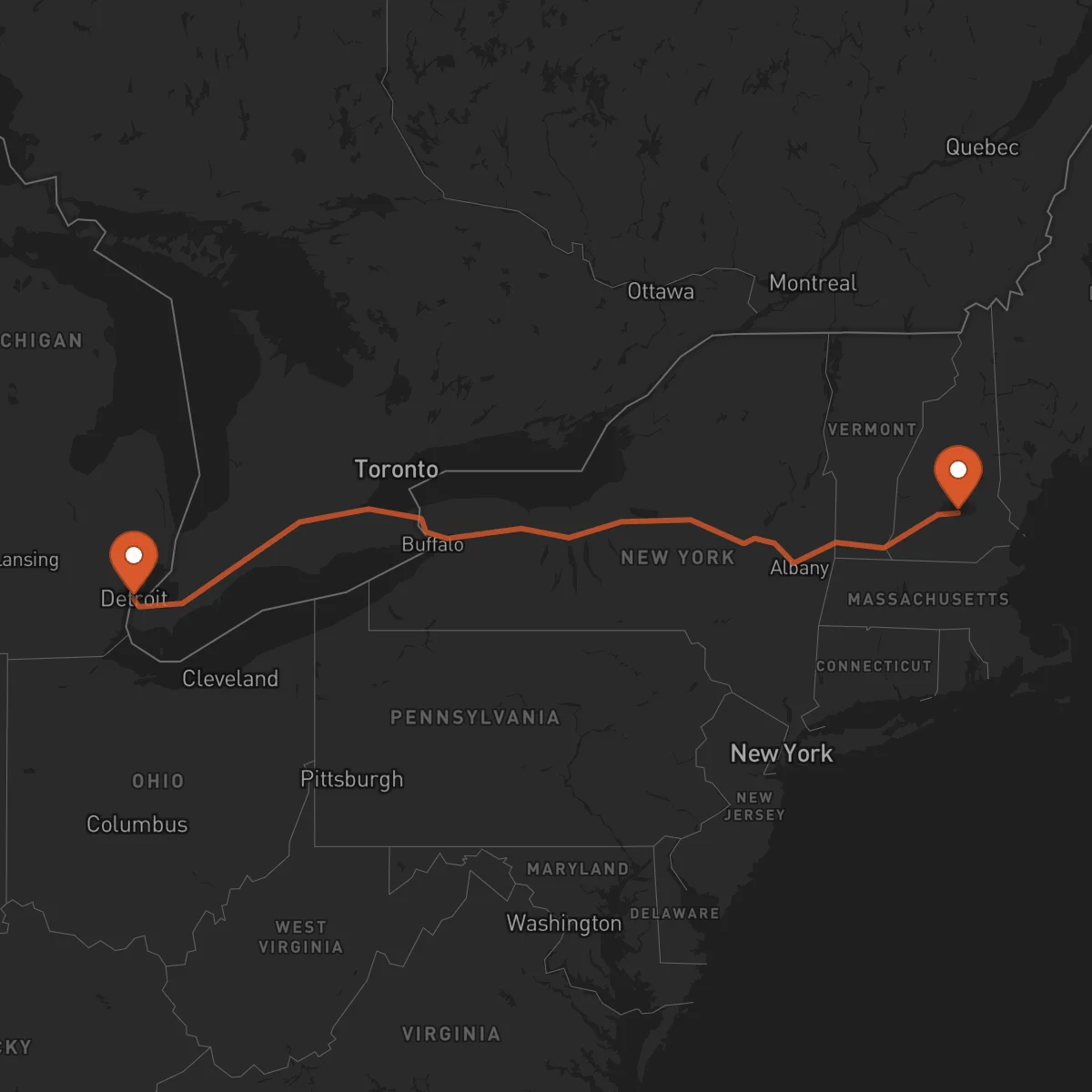
The logistics corridor connecting Detroit, Michigan to Concord, New Hampshire represents a vital transportation route spanning approximately 943 kilometers across the northeastern United States. This corridor links the industrial heartland of the Midwest with New England's manufacturing and distribution centers, facilitating the movement of goods between two economically significant regions. The route traverses multiple states, crossing through diverse industrial landscapes and connecting major economic hubs along the way.
The Detroit-Concord corridor serves as a critical link for industries including automotive parts manufacturing, industrial equipment, consumer goods, and specialized machinery. Detroit's status as the automotive capital of North America creates substantial outbound freight volumes, while Concord and the broader New England region demand consistent supply of components, raw materials, and finished products. This corridor experiences significant freight traffic supporting both regional distribution networks and cross-country supply chains.
Control Terrestre facilitates seamless operations on this corridor through our extensive network of certified transportation providers. Our dedicated full truckload services ensure reliable, direct transport between Detroit and Concord, eliminating the delays and handling risks associated with consolidated freight. With our strategic partnerships and experienced carriers, we provide consistent transit times, real-time tracking, and professional handling of all cargo types, from standard palletized goods to specialized equipment requiring extra care.
Services for this Route
Available services for the corridor Detroit - Concord
 Origin
Detroit
Detroit, Michigan stands as a strategic logistics hub in the Great Lakes region, benefiting from its proximity to major transportation networks and Canada's border. The city's location provides direct access to I-75, I-94, and I-96, connecting to national highway systems that facilitate efficient freight movement across the Midwest. Detroit's extensive infrastructure includes the Ambassador Bridge to Canada, multiple rail yards, and the Port of Detroit on the Detroit River, creating multimodal transportation options for businesses.
The Detroit metropolitan area hosts a diverse industrial base with automotive manufacturing remaining the cornerstone of the local economy. Major automakers and their extensive supplier networks generate substantial freight volumes, while emerging sectors including advanced manufacturing, medical devices, and technology contribute to the region's economic vitality. The concentration of manufacturing facilities, distribution centers, and industrial parks around Detroit creates consistent demand for reliable freight transportation services, particularly for full truckload shipments moving both inbound raw materials and outbound finished products.
 Destination
Concord
Concord, New Hampshire serves as a strategic logistics point in New England, positioned to serve the broader regional market including Boston, Manchester, and surrounding areas. The city's location provides access to major transportation routes including I-93 and I-89, connecting New Hampshire's businesses to the rest of the Northeast and beyond. Concord benefits from its proximity to Boston's port facilities and international airport, while maintaining the advantages of being outside the most congested metropolitan areas.
The economy of Concord and the surrounding Merrimack Valley region encompasses diverse sectors including healthcare, education, government services, and advanced manufacturing. The area hosts numerous small and medium-sized enterprises alongside larger corporations, creating varied freight transportation needs. Industries such as precision manufacturing, medical equipment, and technology products generate consistent demand for reliable freight services. The region's distribution networks serve both local markets and act as consolidation points for goods destined throughout New England and the Atlantic seaboard.










