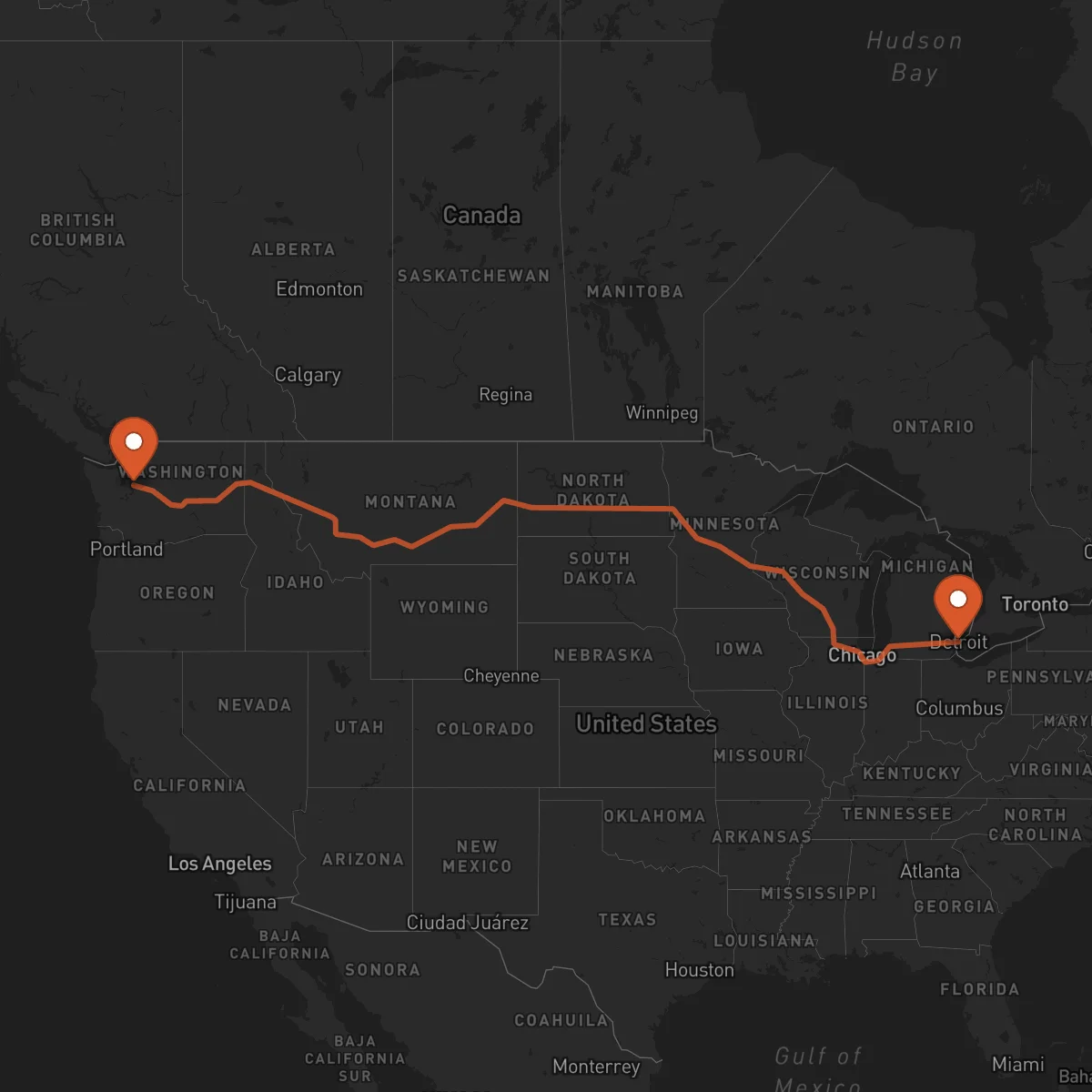
Detroit to Seattle
Seattle → DetroitFTL freight transportation service between Detroit and Seattle. Reliable logistics solutions for your business.
Route Description
Everything you need to know about the corridor Detroit - Seattle
The Detroit to Seattle corridor represents one of the most critical freight transportation routes in North America, connecting the industrial heartland of the Midwest with the Pacific Northwest's major port and technology hub. This 3,112 km journey traverses diverse landscapes and crosses multiple states, serving as a vital link in the North American supply chain. The route connects two major economic powerhouses: Detroit's automotive and manufacturing base with Seattle's technology, aerospace, and international trade sectors.
The corridor primarily utilizes major interstate highways including I-90 and I-94, providing reliable and efficient transportation infrastructure. This route serves as a crucial link for industries requiring cross-country distribution, particularly those connected to the automotive supply chain, technology equipment, and goods destined for international shipping through Seattle's ports. The journey crosses through key industrial and agricultural states, making it essential for both finished goods and raw materials transportation.
Control Terrestre offers comprehensive FTL (Full Truckload) services along this corridor, providing dedicated transportation solutions for companies requiring reliable cross-country freight movement. Our specialized carriers ensure secure, efficient, and timely delivery of your cargo from Michigan to Washington. With our extensive network and experienced logistics partners, we manage every aspect of the transportation process, offering door-to-door service and real-time tracking capabilities. Our C-TPAT certified carriers ensure your freight moves through this corridor with the highest standards of security and compliance.
Services for this Route
Available services for the corridor Detroit - Seattle
 Origin
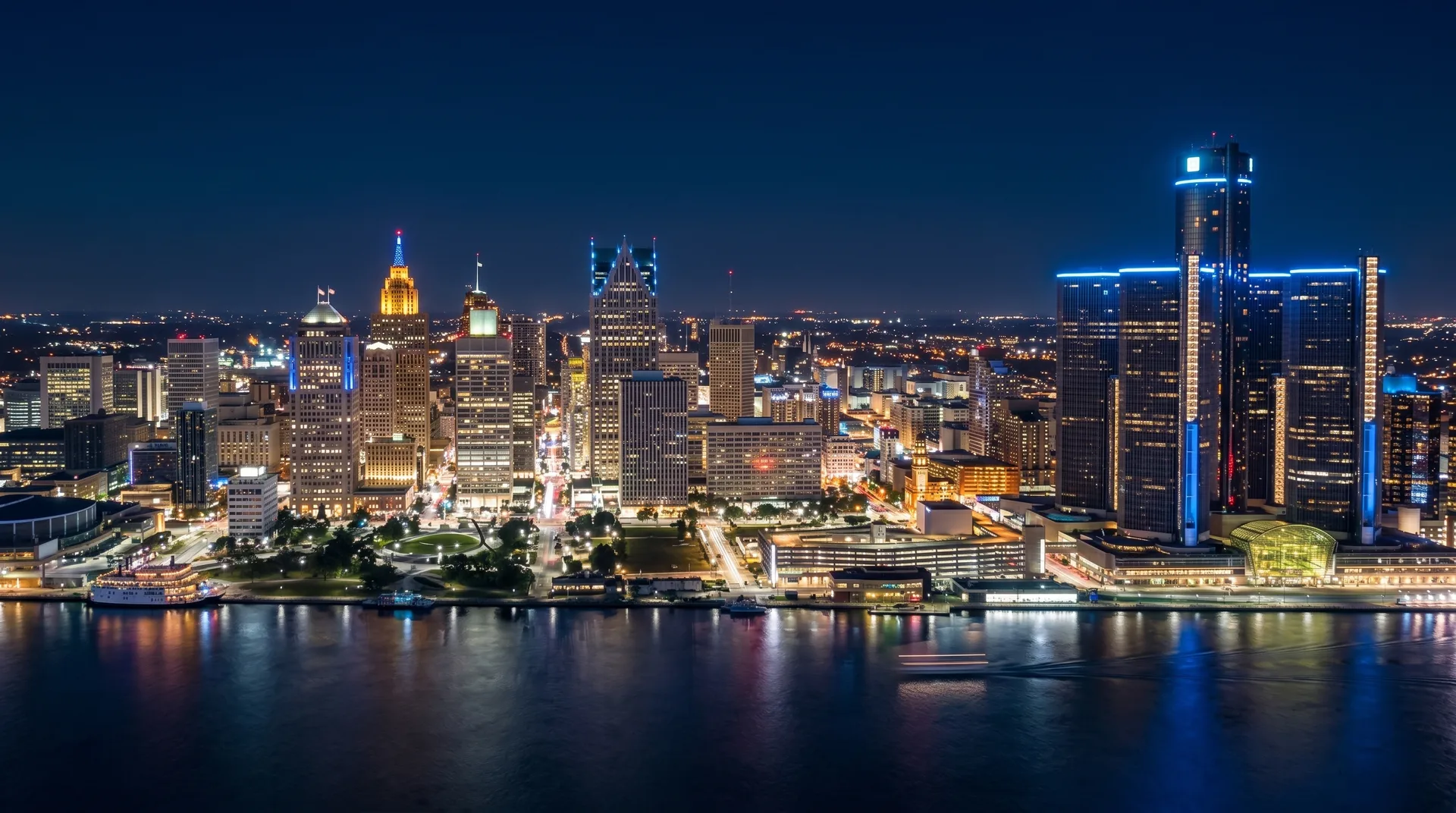
Detroit
Detroit stands as a strategic logistics hub in the Midwest, leveraging its location near the Canadian border and its extensive transportation infrastructure. The city serves as the epicenter of North America's automotive industry, hosting major manufacturing facilities and assembly plants. Detroit's logistics ecosystem includes multiple intermodal terminals, rail connections, and proximity to major international crossings, making it ideal for both domestic and cross-border freight operations. The region's industrial base extends beyond automotive to include manufacturing, technology, and distribution centers serving the entire Great Lakes region.
 Destination
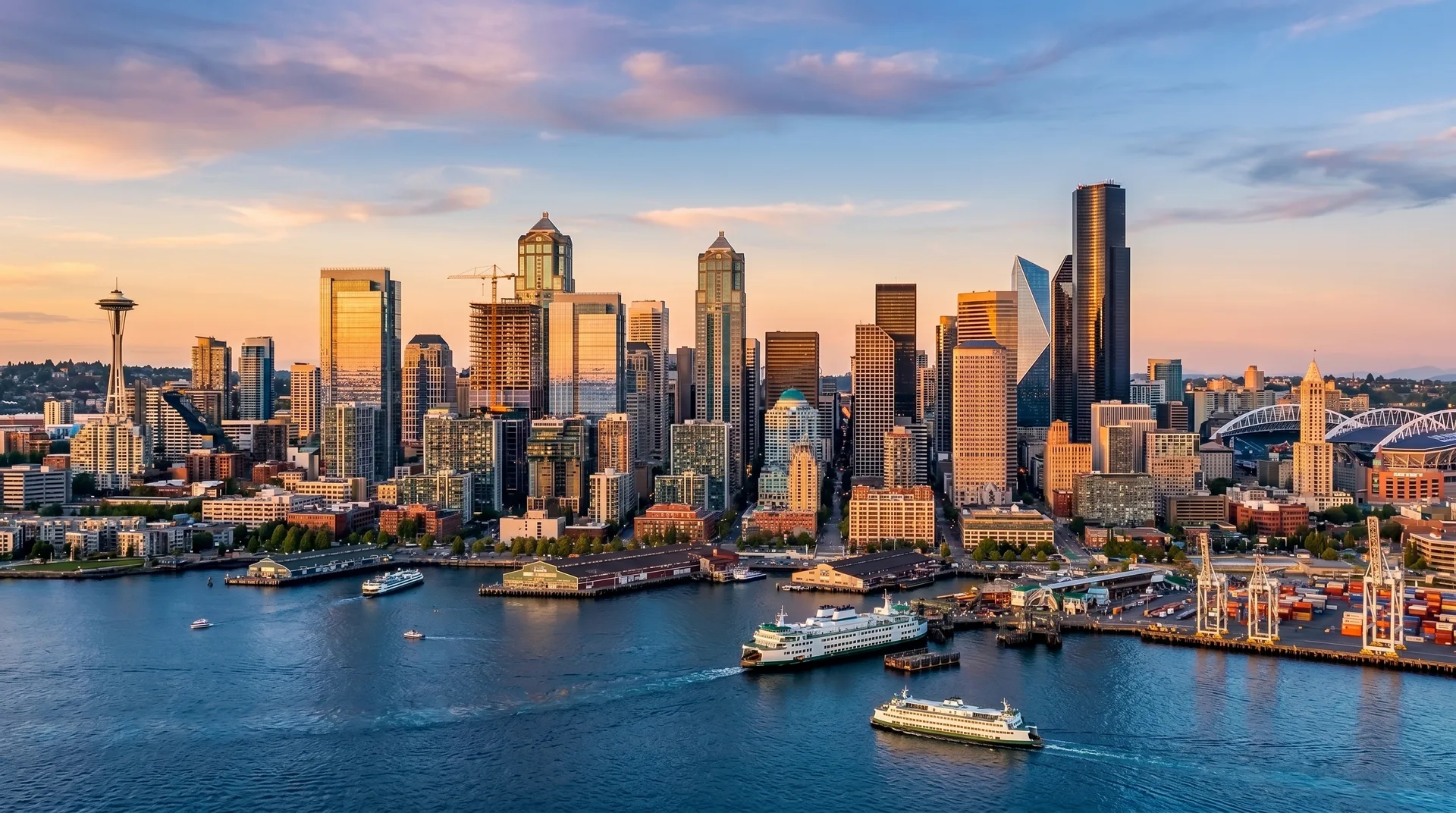
Seattle
Seattle represents a strategic gateway to the Pacific Rim, combining its role as a major port city with its status as a technology and aerospace hub. The city's port facilities rank among the busiest in the United States, handling significant international cargo volumes. Seattle's location provides access to Asian markets and serves as a critical distribution point for goods throughout the Pacific Northwest. The region's economy is driven by technology companies, aerospace manufacturing (including Boeing), and international trade, creating substantial demand for reliable freight transportation services. The city's infrastructure includes extensive highway networks, rail connections, and modern warehousing facilities.










