Denver to Pierre
Pierre → DenverFTL freight transportation service between Denver and Pierre. Reliable logistics solutions for your business.
Route Description
Everything you need to know about the corridor Denver - Pierre
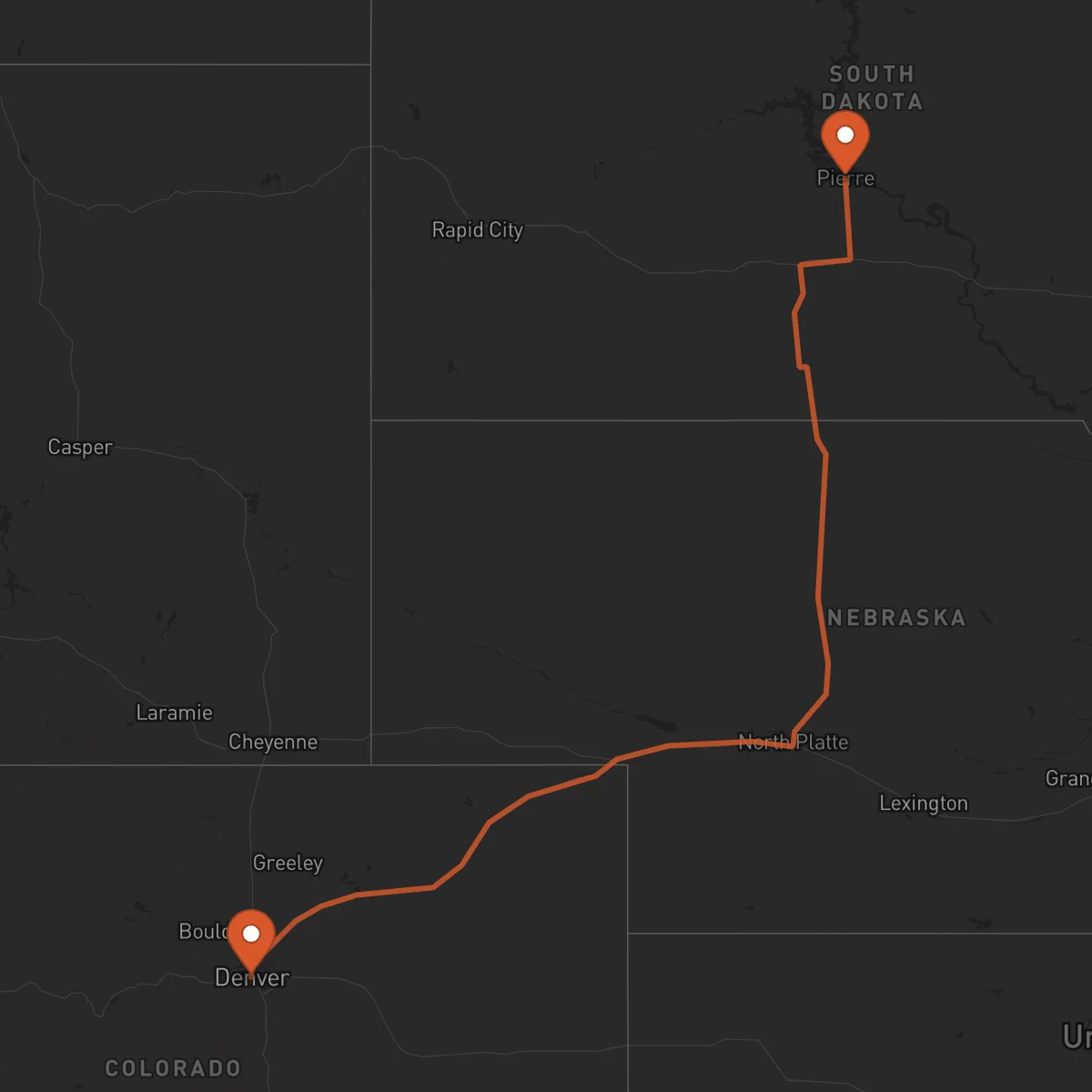
The Denver to Pierre corridor represents a vital transportation link connecting Colorado's Front Range with South Dakota's capital city. This 641-kilometer route traverses diverse terrain, from the Rocky Mountain foothills to the Great Plains, serving as a crucial artery for freight movement between these two important regional hubs. The corridor plays a significant role in supporting economic integration between the Mountain West and the Northern Plains states.
The region along this route encompasses major economic activities including agriculture, energy production, manufacturing, and distribution. Denver serves as a major logistics hub with extensive warehousing and distribution networks, while Pierre functions as a key administrative and agricultural center for South Dakota. The corridor facilitates the movement of agricultural products, industrial equipment, energy resources, and manufactured goods between these markets.
Transportation infrastructure along this route includes Interstate 25 and Interstate 90, providing reliable highway access for commercial freight. The well-maintained interstate system ensures consistent transit times and supports various equipment types, from standard dry vans to specialized freight. This infrastructure backbone enables efficient logistics operations throughout the year, even during challenging weather conditions typical of the region.
Control Terrestre leverages this established infrastructure to provide comprehensive FTL transportation solutions along the Denver-Pierre corridor. Our strategic partnerships with certified carriers and extensive experience in regional freight movement ensure reliable service for businesses requiring dedicated truckload capacity. We understand the unique requirements of this route and offer customized solutions to meet specific cargo needs, whether for agricultural commodities, industrial equipment, or general freight.
Services for this Route
Available services for the corridor Denver - Pierre
 Origin
Denver
Denver, Colorado stands as a major logistics hub in the Mountain West region, strategically positioned at the intersection of key transportation routes. The city's location at the eastern edge of the Rocky Mountains provides access to both western and central U.S. markets. Denver International Airport and extensive rail connections complement the robust highway network, making it an ideal origin point for freight distribution. The metropolitan area hosts numerous distribution centers and warehouses serving the entire Rocky Mountain region.
The Denver economy is diverse, with strong sectors in aerospace, technology, telecommunications, and energy. The region is also a major agricultural producer, particularly for livestock and crops suited to high-altitude farming. Manufacturing industries in Denver include electronics, food processing, and machinery production. This economic diversity creates substantial freight movement requirements, particularly for specialized and time-sensitive cargo.
 Destination
Pierre
Pierre, South Dakota serves as the state's capital and a key administrative center in the Great Plains region. Located along the Missouri River, Pierre benefits from its position as a central distribution point for South Dakota and surrounding states. The city's infrastructure includes access to major highways and river transportation options, supporting its role in regional logistics. Pierre's relatively small size is offset by its strategic importance as a governmental and agricultural hub.
The local economy centers on state government operations, healthcare, and agriculture. Pierre and the surrounding region are major producers of corn, soybeans, wheat, and livestock. The area also supports food processing industries and agricultural equipment manufacturing. These economic activities generate consistent freight movement needs, particularly for agricultural products, machinery, and supplies essential to farming operations.










