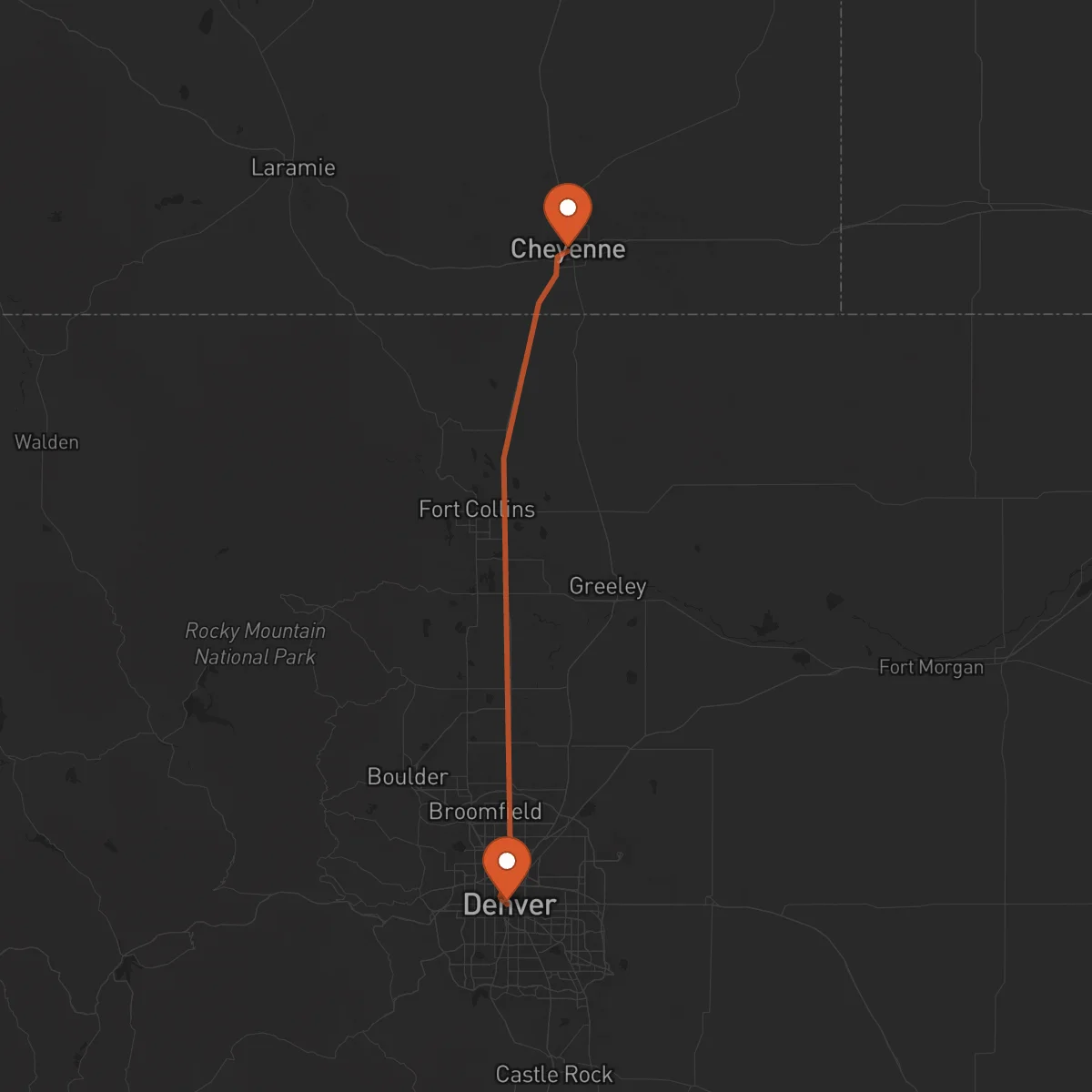
Denver to Cheyenne
Cheyenne → DenverFTL freight transportation service between Denver and Cheyenne. Reliable logistics solutions for your business.
Route Description
Everything you need to know about the corridor Denver - Cheyenne
The Denver to Cheyenne corridor represents a vital north-south freight route connecting two of the most important economic centers in the Rocky Mountain region. This strategic 156 km stretch serves as a critical link between Colorado's capital and largest city and Wyoming's capital, facilitating the movement of goods between major industrial zones and distribution centers. The corridor's significance has grown substantially with the expansion of e-commerce and the need for efficient regional distribution networks.
The route traverses a region characterized by diverse economic activities, from Denver's robust technology and aerospace sectors to Cheyenne's strong presence in energy and logistics. This corridor benefits from its proximity to major interstate highways, particularly I-25, which provides seamless connectivity to both the broader U.S. highway system and international trade routes through nearby border crossings. The region's infrastructure has been continuously improved to accommodate increasing freight volumes and ensure reliable transportation services.
Control Terrestre specializes in providing comprehensive FTL transportation solutions along this corridor, leveraging our extensive network of certified carriers and strategic partnerships. Our dedicated services ensure that shipments move efficiently between Denver and Cheyenne, with real-time tracking and specialized handling for various cargo types. We understand the unique requirements of businesses operating in this region and offer tailored solutions that optimize transit times while maintaining the highest safety standards. Our expertise in handling both standard and specialized freight makes us the preferred partner for companies requiring reliable transportation between these key markets.
Services for this Route
Available services for the corridor Denver - Cheyenne
 Origin
Denver
Denver stands as a major logistics hub in the western United States, strategically positioned at the intersection of several key transportation corridors. The city's location at the base of the Rocky Mountains provides unique advantages for freight movement, with access to multiple interstate highways including I-25, I-70, and I-76. Denver International Airport, one of the largest cargo airports in the country, further enhances the city's logistics capabilities, offering air freight connections to global markets. The city's extensive rail network, operated by major carriers like Union Pacific and BNSF, provides additional multimodal transportation options.
The Denver metropolitan area is home to a diverse range of industries that drive freight demand, including aerospace, technology, telecommunications, and healthcare. The region's strong manufacturing sector, particularly in electronics and precision instruments, requires reliable transportation services for both raw materials and finished goods. Denver's growing population and robust consumer market create consistent demand for retail and e-commerce distribution, making it a crucial origin point for regional freight movements.
 Destination
Cheyenne
Cheyenne serves as a strategic logistics gateway to the northern Rocky Mountain region, leveraging its location at the intersection of major transportation routes. The city's position along I-25 and its proximity to I-80 creates an ideal distribution point for freight moving between the Midwest and the western United States. Cheyenne's transportation infrastructure includes a well-developed highway network and rail connections through the Union Pacific Railroad, providing efficient access to both regional and national markets.
The city's economy is anchored by significant government operations, energy production, and logistics services. Cheyenne's industrial base includes manufacturing facilities, warehousing operations, and distribution centers that require consistent freight transportation. The presence of major employers in the technology and defense sectors creates specialized shipping needs, particularly for high-value and sensitive cargo. The city's role as Wyoming's capital also generates consistent government-related freight movements, while its growing logistics sector continues to expand the demand for reliable transportation services.










