Columbus to Winnipeg
Winnipeg → ColumbusFTL freight transportation service between Columbus and Winnipeg. Reliable logistics solutions for your business.
Route Description
Everything you need to know about the corridor Columbus - Winnipeg
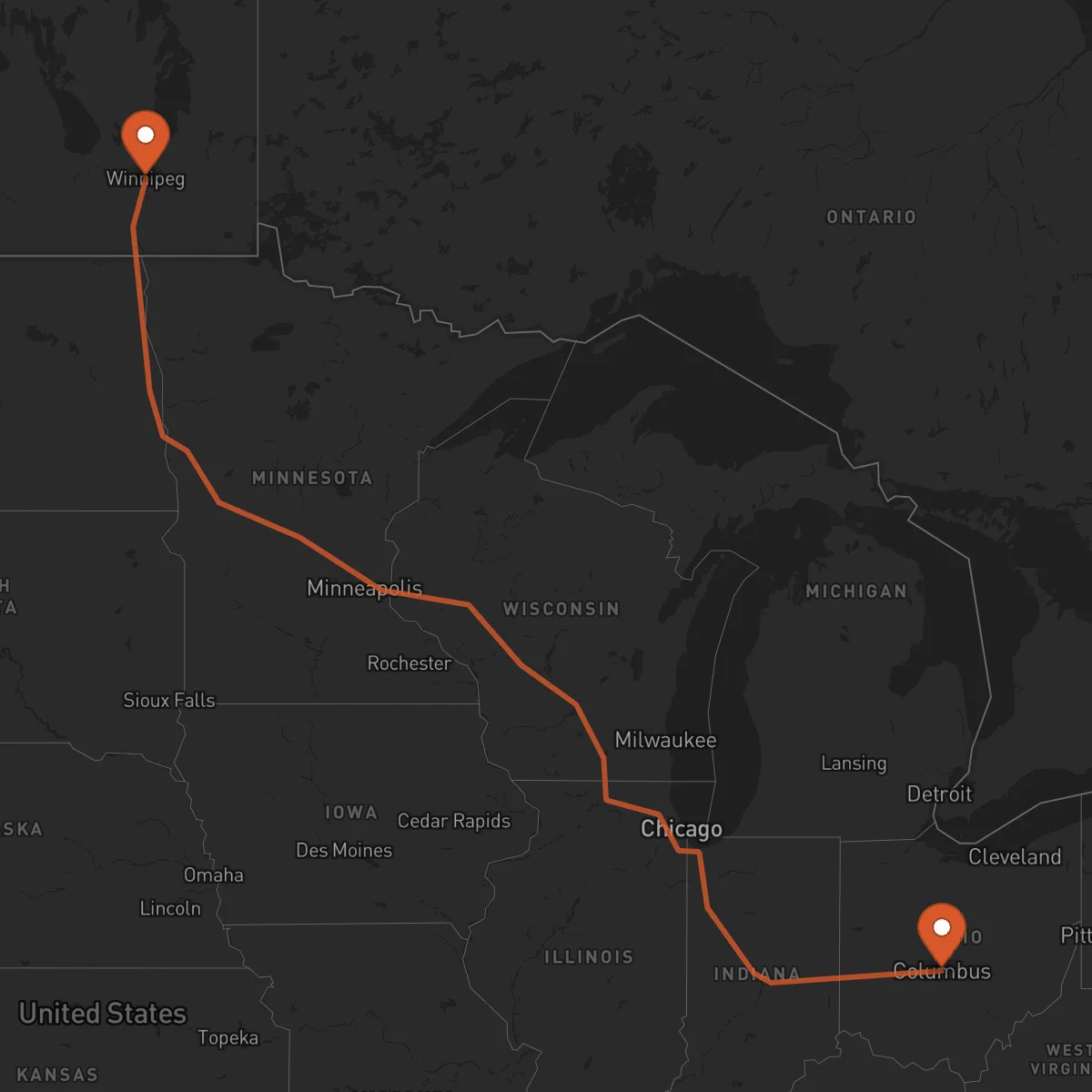
The logistics corridor between Columbus, Ohio and Winnipeg, Manitoba represents a vital cross-border connection between the United States and Canada. This 1563 km route traverses the heart of North America, linking the industrial Midwest with the Canadian Prairies. The corridor serves as a crucial supply chain artery for industries requiring efficient transportation of goods between these two major economic regions.
The route connects two dynamic economic zones: Columbus, with its strong manufacturing and technology sectors, and Winnipeg, a key distribution hub for Western Canada. This corridor facilitates the movement of diverse cargo types, from automotive parts and agricultural products to industrial equipment and consumer goods. The transportation infrastructure along this route includes major highways such as I-71 North from Columbus, which connects to I-90 West, providing a direct path to Winnipeg.
Cross-border operations are streamlined through strategic border crossings, with the Pembina-Emerson crossing being a primary point of entry into Canada. Control Terrestre's expertise in cross-border logistics ensures smooth customs clearance and compliance with both US and Canadian regulations. Our team manages all necessary documentation and coordinates with customs authorities to minimize delays and ensure timely delivery.
Control Terrestre offers comprehensive FTL services on this corridor, utilizing our network of certified carriers and specialized equipment. We provide door-to-door service, handling every aspect of the transportation process from pickup in Columbus to final delivery in Winnipeg. Our commitment to reliability and efficiency makes us the ideal partner for companies looking to optimize their supply chain between these two important North American cities.
Services for this Route
Available services for the corridor Columbus - Winnipeg
 Origin
Columbus
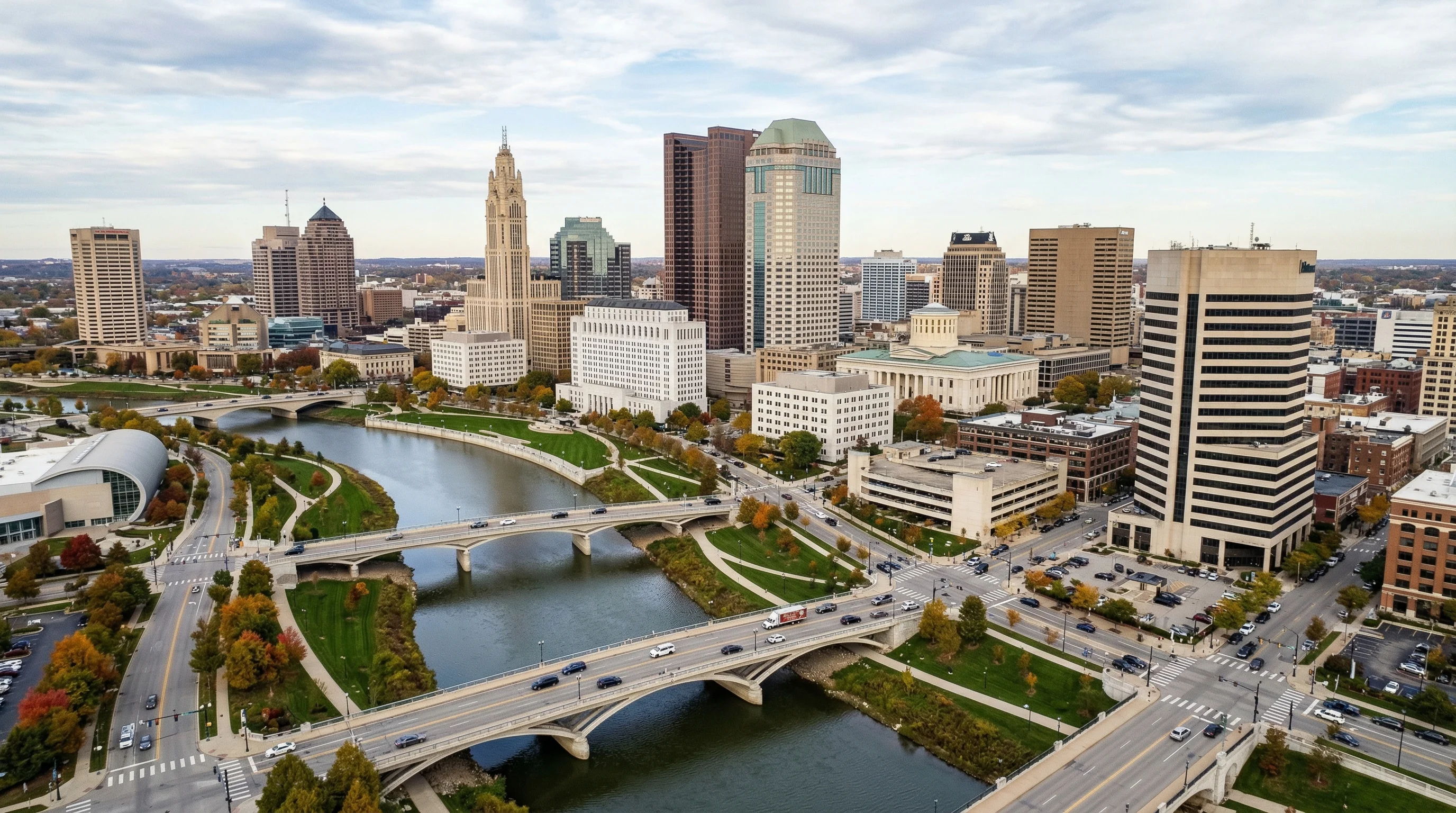
Columbus, Ohio stands as a strategic logistics hub in the Midwest, benefiting from its central location and robust infrastructure. The city is home to a diverse economic base, with strong presence in education, healthcare, technology, and manufacturing sectors. Columbus's logistics advantages include its proximity to major markets, access to three major interstate highways (I-70, I-71, and I-270), and the Port Columbus International Airport, facilitating multimodal transportation options.
The city's manufacturing sector, particularly in automotive and aerospace industries, generates significant freight volume, making it an ideal origin point for cross-border shipments. Columbus also boasts a growing tech scene, with companies like Intel investing heavily in the region, further increasing the demand for reliable logistics services. The city's strategic position allows for efficient distribution throughout the Midwest and beyond, making it an excellent starting point for freight heading to Winnipeg and other Canadian destinations.
 Destination
Winnipeg, Manitoba serves as a critical logistics and distribution center for Western Canada, earning its nickname as the 'Gateway to the West.' Located at the confluence of the Red and Assiniboine rivers, Winnipeg's strategic position makes it a natural transportation hub. The city is connected by major highways including the Trans-Canada Highway (Highway 1) and the Yellowhead Highway (Highway 16), facilitating efficient movement of goods throughout the region.
The city's economy is diverse, with strong sectors in agriculture, manufacturing, and transportation. Winnipeg is home to significant food processing facilities, given its proximity to Canada's agricultural heartland. The city also has a growing aerospace industry and serves as a major distribution point for goods destined for northern communities. Winnipeg's Richardson International Airport and extensive rail network complement its road infrastructure, creating a multimodal logistics environment that efficiently handles freight from the United States and distributes it across Western Canada.










