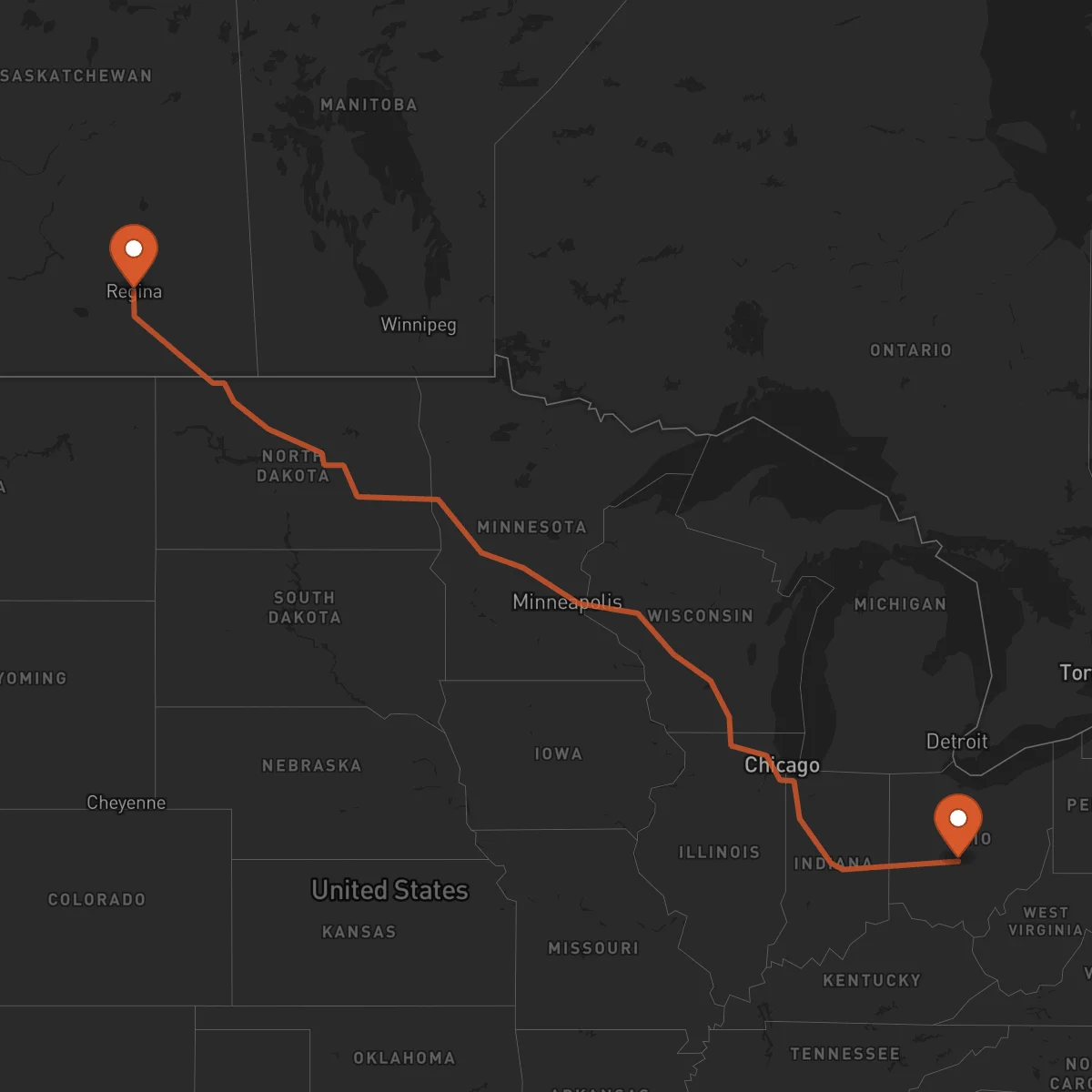
Columbus to Regina
Regina → ColumbusFTL freight transportation service between Columbus and Regina. Reliable logistics solutions for your business.
Route Description
Everything you need to know about the corridor Columbus - Regina
The Columbus to Regina corridor represents a vital cross-border logistics connection between the industrial Midwest of the United States and the agricultural heartland of Canada. This 2,044-kilometer route traverses diverse terrain and connects two major economic regions, facilitating the movement of goods essential to both American and Canadian supply chains. The corridor serves as a critical link for manufacturers, agricultural producers, and distributors operating across North America.
This route primarily utilizes major transportation arteries including I-71 North from Columbus, connecting to I-90 West through the Great Lakes region, and continuing through Minnesota and North Dakota before entering Saskatchewan. The journey crosses at key border points such as Portal, North Dakota/Regway, Saskatchewan, or other strategic crossings depending on specific cargo requirements and customs considerations. The infrastructure along this corridor is well-developed, featuring multiple interstate highways and provincial routes designed to handle heavy freight traffic efficiently.
Control Terrestre specializes in managing cross-border FTL operations along this corridor, ensuring seamless customs clearance and regulatory compliance. Our experienced team understands the complexities of US-Canada freight transportation, including documentation requirements, duty considerations, and border processing procedures. We coordinate with certified carriers who maintain all necessary cross-border certifications and insurance coverage, providing our clients with reliable, end-to-end transportation solutions that optimize their supply chain between these two important markets.
Services for this Route
Available services for the corridor Columbus - Regina
 Origin
Columbus
Columbus, Ohio serves as a strategic logistics hub in the American Midwest, positioned advantageously for distribution throughout the eastern United States. The city's central location within Ohio provides excellent access to major markets including Chicago, New York, Atlanta, and Detroit within a day's drive. Columbus benefits from a robust transportation infrastructure featuring multiple interstate highways (I-70, I-71, I-270) that facilitate efficient freight movement in all directions.
The Columbus metropolitan area is home to diverse industries including advanced manufacturing, healthcare, education, and technology. The region hosts major corporations and distribution centers, making it a critical node in North American supply chains. The Port Columbus International Airport and several rail terminals complement the highway network, creating a multimodal logistics environment. The city's pro-business climate and central geographic position make it an ideal origin point for cross-border freight destined for Canadian markets.
 Destination
Regina
Regina, Saskatchewan stands as a key logistics center in Western Canada, strategically positioned to serve the vast agricultural and resource-based economy of the Prairie provinces. Located along the Trans-Canada Highway (Highway 1), Regina provides critical access to major markets across Canada and serves as a gateway for goods moving between Western Canada and the United States. The city's infrastructure includes well-maintained highways, rail connections via Canadian Pacific Railway, and the Regina International Airport.
The Regina economy is anchored by agriculture, mining, and energy sectors, with the surrounding region producing significant quantities of wheat, canola, potash, and other commodities. This creates substantial freight demand for both inbound manufacturing supplies and outbound raw materials and processed goods. Regina's role as the provincial capital also generates consistent business-to-business shipping needs. The city's logistics infrastructure is designed to handle large volumes of freight, with facilities capable of managing cross-border shipments efficiently through Saskatchewan's network of highways and border crossings.










