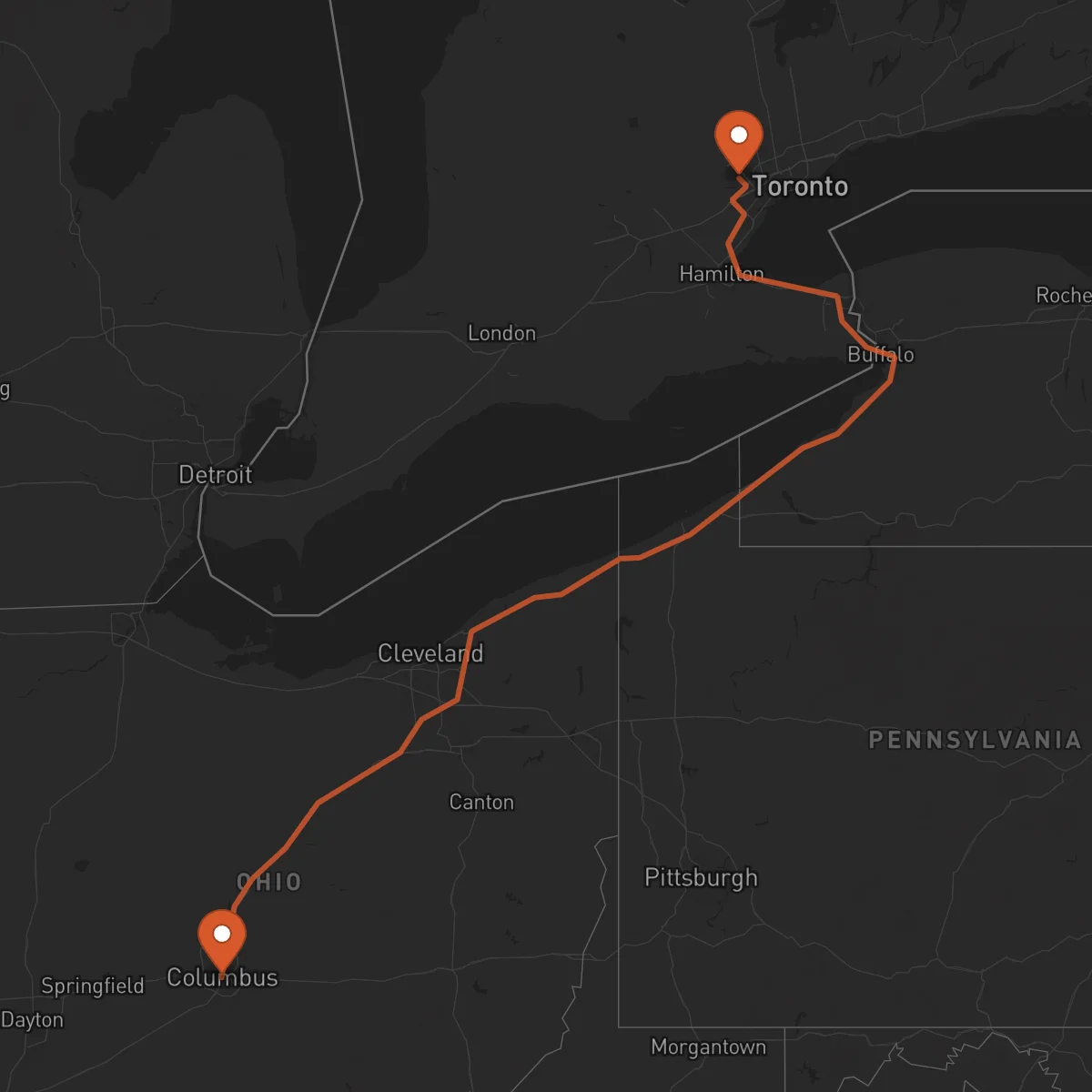
Columbus to Brampton
Brampton → ColumbusFTL freight transportation service between Columbus and Brampton. Reliable logistics solutions for your business.
Route Description
Everything you need to know about the corridor Columbus - Brampton
The Columbus to Brampton corridor represents a vital cross-border freight transportation link between the United States and Canada. This strategic route connects Ohio's capital city with one of Ontario's major logistics hubs, facilitating the movement of goods across the Great Lakes region. The corridor spans approximately 494 kilometers and traverses through key economic zones, making it essential for North American supply chains.
The economic significance of this corridor is underscored by the strong industrial presence in both Columbus and Brampton. Columbus serves as a major distribution center for automotive, technology, and retail sectors, while Brampton has established itself as a critical logistics and manufacturing hub for the Greater Toronto Area. This complementary industrial ecosystem creates substantial freight demand along the route, particularly for automotive parts, consumer goods, and industrial equipment.
Transportation infrastructure along this corridor includes major highways such as I-71 North, which connects Columbus to Detroit, and the 401 Highway in Canada, which serves as a primary freight artery. The Detroit-Windsor border crossing provides the main entry point into Canada, with efficient customs processing for qualified carriers. Control Terrestre leverages this infrastructure through our network of certified transportation providers, ensuring seamless cross-border operations with expertise in customs documentation and regulatory compliance.
Services for this Route
Available services for the corridor Columbus - Brampton
 Origin
Columbus
Columbus, Ohio stands as a strategic logistics hub in the Midwest, benefiting from its central location and robust transportation infrastructure. The city serves as a major distribution center for several key industries, including automotive manufacturing, healthcare technology, and retail distribution. Columbus's economy is characterized by a diverse industrial base, with companies like Honda operating significant manufacturing facilities in the region. The city's transportation network includes multiple interstate highways, a major international airport, and direct rail connections, making it an ideal origin point for cross-border freight movements.
 Destination
Brampton, Ontario has emerged as one of Canada's most important logistics and manufacturing centers, strategically positioned within the Greater Toronto Area. The city's economy is heavily focused on advanced manufacturing, logistics services, and wholesale trade, with numerous warehousing and distribution facilities supporting the broader Toronto market. Brampton's location provides excellent access to major transportation routes, including Highway 401 and proximity to Pearson International Airport. The city's industrial parks and logistics centers make it a critical destination for freight movements, particularly for companies serving the Canadian market from U.S. origins.










