Columbus to Saskatoon
Saskatoon → ColumbusFTL freight transportation service between Columbus and Saskatoon. Reliable logistics solutions for your business.
Route Description
Everything you need to know about the corridor Columbus - Saskatoon
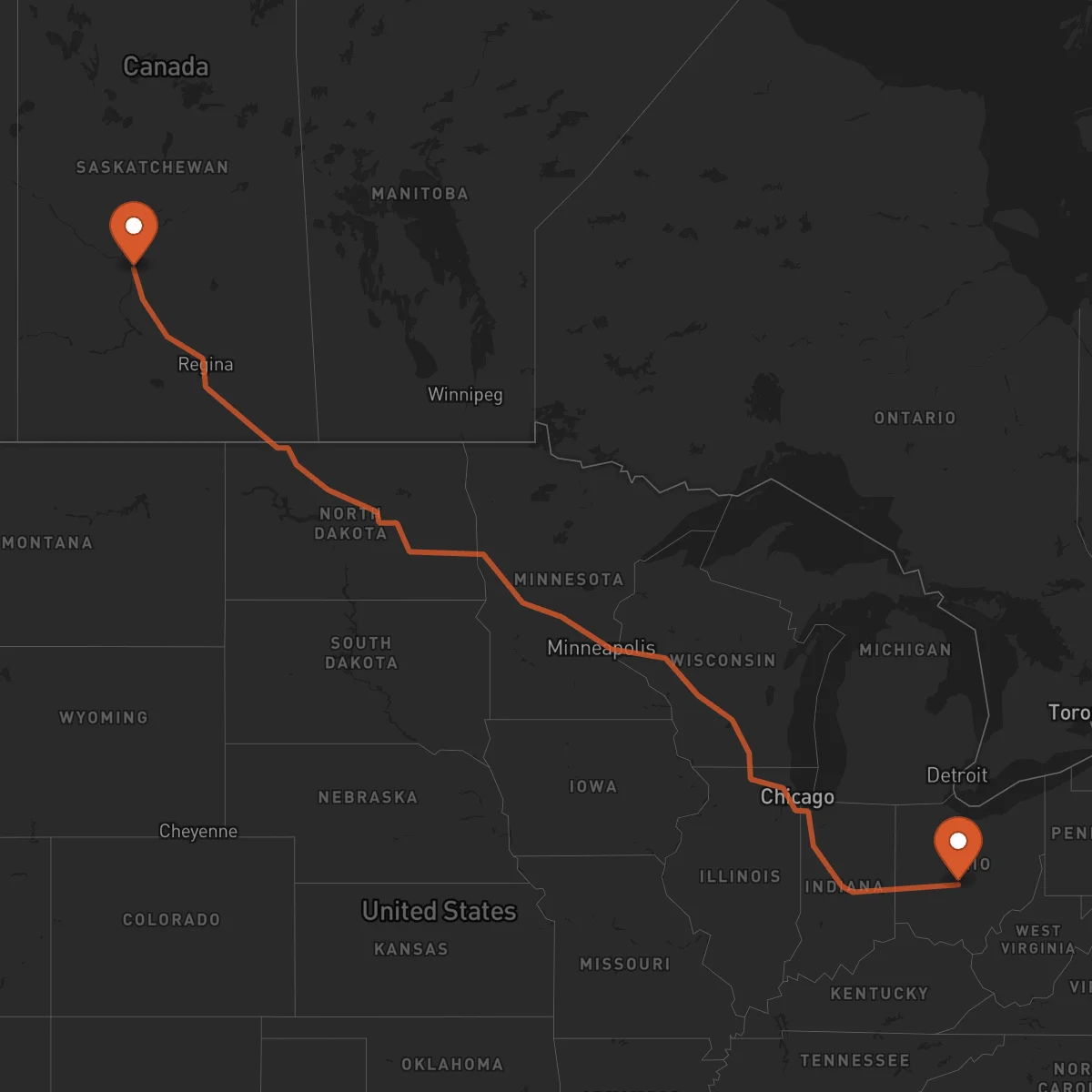
The logistics corridor between Columbus, Ohio and Saskatoon, Saskatchewan represents a vital cross-border connection between the United States and Canada, spanning approximately 2,257 kilometers through the heart of North America. This route serves as a crucial artery for industrial and commercial exchange between the Midwest manufacturing hub and the agricultural and resource-rich Canadian Prairies. The corridor traverses diverse landscapes and crosses international borders, making it essential for companies engaged in North American supply chain operations.
The economic significance of this corridor is underscored by the complementary industrial strengths of both regions. Columbus serves as a major distribution center with strong manufacturing, technology, and logistics sectors, while Saskatoon functions as a key hub for agriculture, mining, and energy industries in Saskatchewan. The route facilitates the movement of manufactured goods, agricultural products, industrial equipment, and raw materials between these economic powerhouses. Companies operating along this corridor benefit from the integration of U.S. and Canadian markets, particularly in sectors such as automotive, aerospace, agricultural machinery, and food processing.
Transportation infrastructure along this corridor relies primarily on major highway systems, including Interstate 80 and Interstate 90 in the United States, transitioning to the Trans-Canada Highway (Highway 1) and other provincial routes in Canada. The route typically involves crossing at major border points such as Detroit-Windsor or Sarnia-Port Huron, depending on the specific origin and destination points. Control Terrestre facilitates seamless operations on this corridor through our expertise in cross-border logistics, customs documentation, and compliance with both U.S. and Canadian transportation regulations. Our strategic partnerships with certified carriers ensure reliable full truckload (FTL) service, maintaining cargo integrity and meeting delivery schedules across this extensive international route.
Services for this Route
Available services for the corridor Columbus - Saskatoon
 Origin
Columbus
Columbus, Ohio stands as a strategic logistics hub in the American Midwest, benefiting from its central location within the United States and excellent transportation connectivity. The city serves as a major distribution center with access to multiple interstate highways, including I-70, I-71, and I-270, creating a robust network for freight movement. Columbus's economy is diversified across manufacturing, technology, healthcare, and education sectors, with significant presence in automotive, aerospace, and logistics industries. The city hosts several major logistics facilities and distribution centers, leveraging its position within a one-day drive of over half the U.S. population. The Port Columbus International Airport and nearby rail connections further enhance the multimodal transportation capabilities available to shippers operating from this strategic location.
 Destination
Saskatoon
Saskatoon, Saskatchewan occupies a strategic position in the Canadian Prairies, serving as the economic and logistical center of the province. Located along the South Saskatchewan River, the city benefits from its position at the intersection of major transportation routes, including the Yellowhead Highway (Highway 16) and the Canadian National Railway main line. Saskatoon's economy is anchored in agriculture, mining, and energy sectors, with particular strength in potash mining, agriculture technology, and biotechnology. The city's logistics infrastructure includes the John G. Diefenbaker International Airport and extensive road networks connecting to other major Canadian cities and U.S. border crossings. As Saskatchewan's largest city, Saskatoon functions as a critical distribution point for goods moving throughout the Prairie provinces and serves as a gateway for international trade with the United States.










