Columbia to Austin
Austin → ColumbiaFTL freight transportation service between Columbia and Austin. Reliable logistics solutions for your business.
Route Description
Everything you need to know about the corridor Columbia - Austin
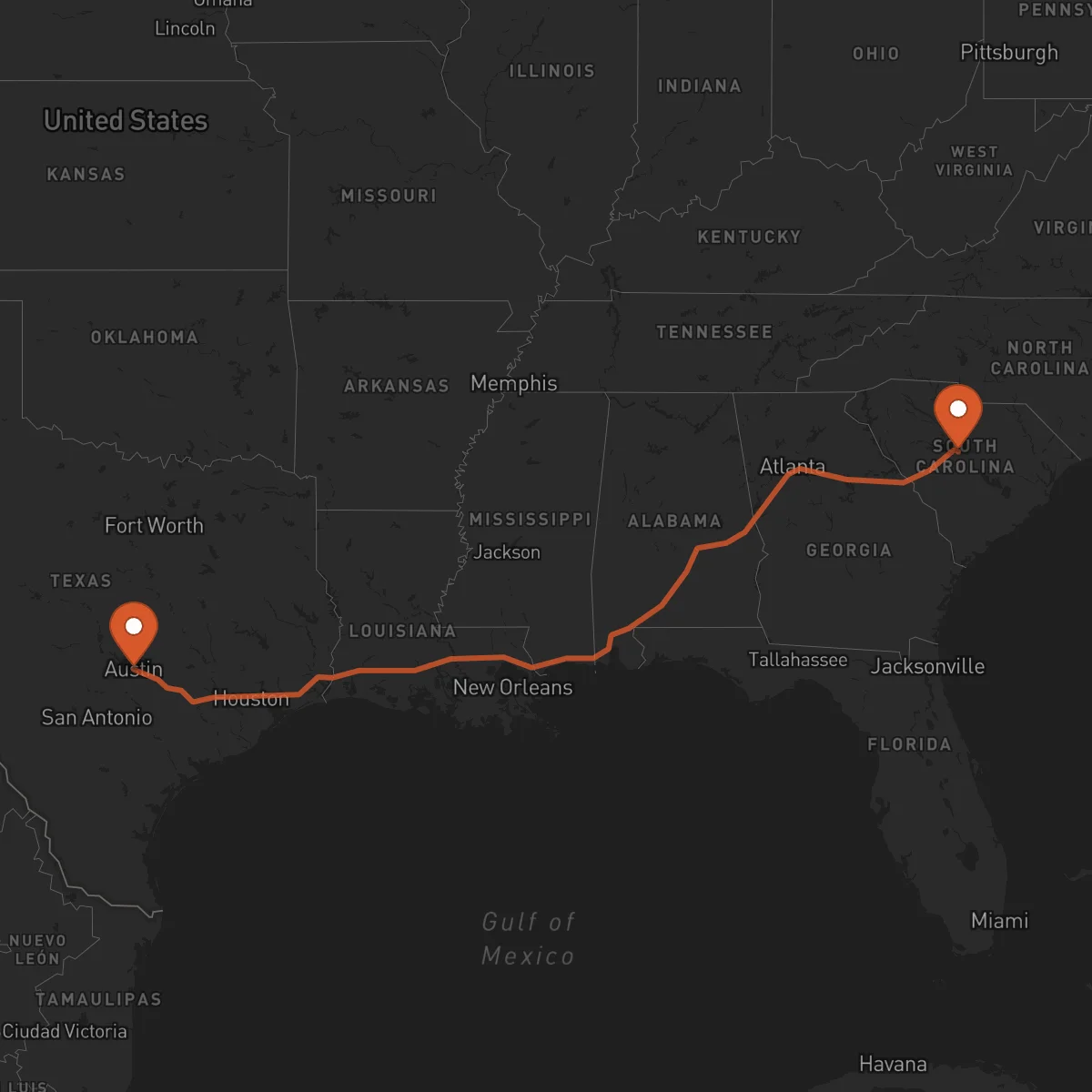
The logistics corridor connecting Columbia, South Carolina, to Austin, Texas, spans approximately 1,625 kilometers and represents a vital link between the southeastern and south-central United States. This domestic corridor traverses diverse landscapes and crosses multiple state lines, making it a strategic route for businesses operating across these regions. The journey connects the Atlantic coast's industrial base with Texas's dynamic economic centers, facilitating the movement of goods between distinct but complementary markets.
The corridor's economic significance is underscored by the industrial diversity of both endpoints. Columbia serves as a manufacturing and distribution hub for the Southeast, while Austin has emerged as a technology and innovation center, often referred to as "Silicon Hills." This creates a natural flow of goods between traditional manufacturing sectors and high-tech industries. The route also connects through major metropolitan areas including Atlanta, Birmingham, and Dallas, providing access to substantial consumer markets and industrial zones along the way.
Control Terrestre optimizes operations along this corridor through our network of certified transportation providers. We understand the unique requirements of moving freight across multiple state jurisdictions, including varying regulations and infrastructure conditions. Our specialized FTL services ensure that your cargo moves efficiently and securely from origin to destination, with real-time tracking and dedicated support throughout the journey. Whether you're shipping manufacturing components from Columbia's industrial parks or delivering finished products to Austin's growing consumer base, we provide the reliable transportation solutions your business needs.
Services for this Route
Available services for the corridor Columbia - Austin
 Origin
Columbia
Columbia, South Carolina, serves as a strategic logistics hub in the southeastern United States, offering excellent connectivity to major markets along the Atlantic coast and throughout the Southeast. The city's central location within South Carolina provides easy access to the Port of Charleston and other regional transportation networks. Columbia's economy is anchored by government operations, healthcare, and education, complemented by a growing manufacturing sector that includes automotive, aerospace, and advanced materials production. The presence of Fort Jackson, the U.S. Army's largest initial training installation, also contributes to the region's economic stability and creates consistent freight movement patterns.
The transportation infrastructure in Columbia is robust, featuring multiple interstate highways including I-20, I-26, and I-77 that converge in the metropolitan area. The city is served by the Columbia Metropolitan Airport and has rail connections through Norfolk Southern and CSX Transportation. Industrial parks and distribution centers are strategically located throughout the region, taking advantage of Columbia's position as a logistics crossroads. This infrastructure, combined with the city's business-friendly environment, makes Columbia an ideal origin point for freight moving to destinations across the country.
 Destination
Austin
Austin, Texas, has established itself as a premier logistics destination, particularly for technology and innovation-driven industries. The city's strategic location in central Texas provides access to major markets throughout the Southwest and Mexico, while its rapidly growing population creates strong demand for goods and services. Austin's economy is diverse, with technology companies, government operations, education, and healthcare forming the backbone of the local market. The presence of the University of Texas and numerous tech giants has created a knowledge-based economy that requires sophisticated logistics solutions for both inbound raw materials and outbound finished products.
The transportation infrastructure in Austin is well-developed to support its growing logistics needs. The city is served by Austin-Bergstrom International Airport and is connected to major interstate highways including I-35, which runs north-south through the heart of Texas. The Port of Houston, one of the busiest ports in the United States, is accessible within a day's drive, providing international shipping capabilities. Austin's position within Texas's deregulated energy market and its proximity to Mexico make it an attractive location for companies seeking efficient cross-border operations. The city's expanding network of distribution centers and industrial parks continues to evolve to meet the demands of its growing economy.










