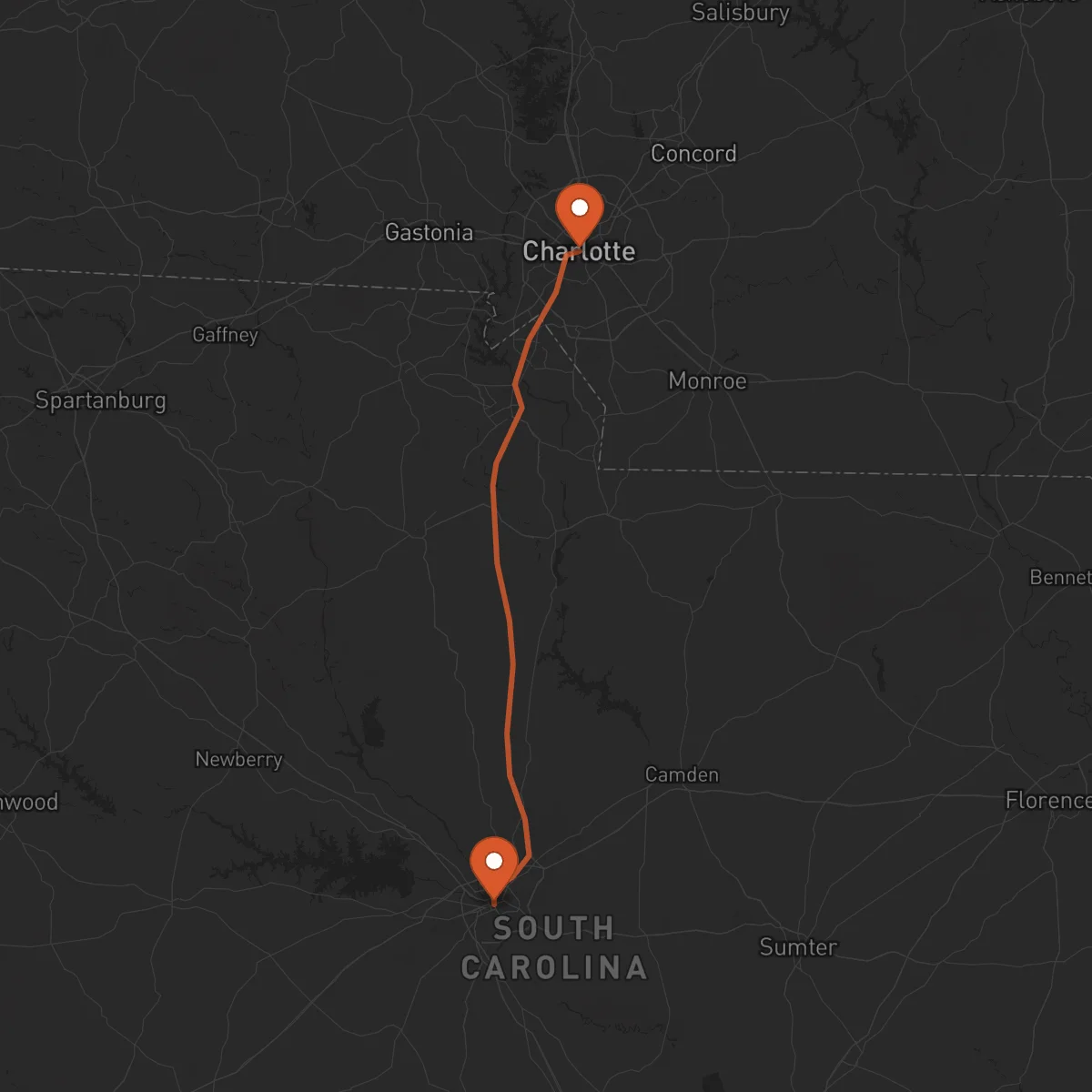
Columbia to Charlotte
Charlotte → ColumbiaFTL freight transportation service between Columbia and Charlotte. Reliable logistics solutions for your business.
Route Description
Everything you need to know about the corridor Columbia - Charlotte
The corridor connecting Columbia, South Carolina to Charlotte, North Carolina represents one of the most vital domestic freight routes in the southeastern United States. This 138-kilometer route links two major economic hubs, facilitating the efficient movement of goods between South Carolina's capital and North Carolina's largest city. The corridor's strategic importance stems from its position connecting the rapidly growing Piedmont region with the broader Atlantic coast supply chains.
The region's economy is characterized by a diverse industrial base, with Columbia serving as a governmental and educational center while Charlotte has established itself as a major financial services hub and distribution center. Key industries utilizing this corridor include automotive manufacturing, aerospace components, pharmaceuticals, and consumer goods. The route primarily follows Interstate 77, a major north-south artery that provides reliable, year-round transportation infrastructure.
Control Terrestre optimizes freight operations along this corridor by leveraging our network of certified transportation providers and specialized equipment. Our dedicated full truckload services ensure that cargo moves efficiently between these two cities, supporting just-in-time manufacturing schedules and retail distribution networks. With our C-TPAT-certified carriers and real-time tracking capabilities, we provide the reliability and security that businesses require for their critical freight movements between Columbia and Charlotte.
Services for this Route
Available services for the corridor Columbia - Charlotte
 Origin
Columbia
Columbia, South Carolina serves as a strategic logistics hub in the southeastern United States, positioned at the confluence of major transportation networks. The city's location at the center of South Carolina provides excellent connectivity to both coastal ports and inland markets. Columbia's economy benefits from a diverse industrial base including automotive manufacturing, healthcare, education, and government services. The city is home to several major employers and distribution centers that rely on efficient freight transportation.
The transportation infrastructure in Columbia is robust, featuring access to Interstate 26, Interstate 20, and Interstate 77. The city is served by the Columbia Metropolitan Airport and is within reasonable distance of the Port of Charleston, providing multimodal transportation options. The presence of the University of South Carolina also contributes to a skilled workforce and technological innovation in logistics and supply chain management.
 Destination
Charlotte
Charlotte, North Carolina stands as a premier logistics and distribution center in the southeastern United States, strategically positioned to serve both regional and national markets. As North Carolina's largest city and a major financial services hub, Charlotte's economy is characterized by strong growth in banking, healthcare, energy, and advanced manufacturing sectors. The city has developed into a critical distribution point for goods moving throughout the eastern United States.
The transportation infrastructure in Charlotte is exceptional, with the city being served by four major interstate highways: I-85, I-77, I-485, and I-277. Charlotte Douglas International Airport is one of the busiest airports in the world for aircraft movements and provides extensive air cargo capabilities. The city's location within a one-day truck drive of major metropolitan areas on the East Coast makes it an ideal distribution hub. Charlotte's pro-business environment and strategic location continue to attract logistics companies and distribution centers, further strengthening its position in the supply chain network.










