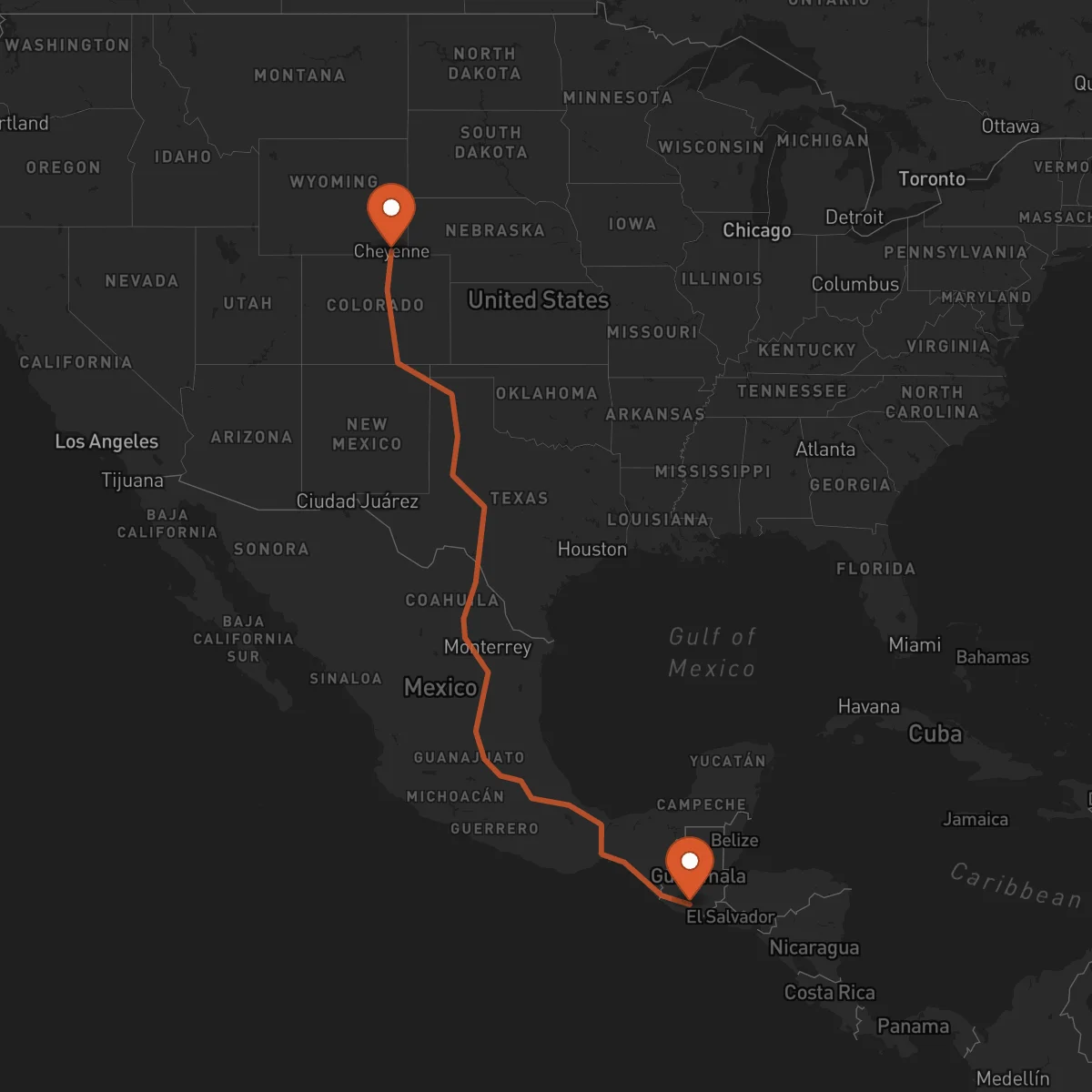
Cheyenne to Escuintla
Escuintla → CheyenneFTL freight transportation service between Cheyenne and Escuintla. Reliable logistics solutions for your business.
Route Description
Everything you need to know about the corridor Cheyenne - Escuintla
The logistics corridor between Cheyenne, Wyoming and Escuintla, Guatemala represents a vital cross-border freight transportation route connecting the central United States with Central America. This 3,278 km corridor facilitates the movement of goods between two strategically important regions, supporting international trade and supply chain operations. The route traverses multiple countries and requires coordination across different transportation networks, making it an ideal solution for companies seeking comprehensive cross-border logistics services.
The corridor serves diverse industries including manufacturing, agriculture, automotive, and consumer goods. Companies based in Cheyenne's industrial sector export products ranging from machinery and equipment to processed foods and manufactured goods. Upon arrival in Guatemala, these products support Escuintla's growing industrial base, which includes food processing plants, textile manufacturers, and distribution centers serving the broader Central American market.
Transportation infrastructure along this corridor includes major interstate highways in the United States connecting to international routes through Mexico and Central America. Key border crossings require careful coordination with customs authorities to ensure smooth transit. The route utilizes established freight corridors through Mexico before connecting to Guatemala's transportation network. Control Terrestre provides end-to-end logistics management for this corridor, offering dedicated truckload services that ensure cargo moves efficiently from origin to destination without intermediate handling or transfers.
Services for this Route
Available services for the corridor Cheyenne - Escuintla
 Origin
Cheyenne
Cheyenne, Wyoming serves as a strategic logistics hub in the central United States, benefiting from its location along major transportation corridors. The city's position near Interstate 80 provides direct access to both east-west and north-south freight routes, making it an ideal origin point for cross-border shipments. Cheyenne's transportation infrastructure includes the Union Pacific rail line, Cheyenne Regional Airport, and extensive highway networks that connect to major freight corridors throughout the country.
The local economy is anchored by government, military, and energy sectors, with significant contributions from manufacturing, agriculture, and technology industries. The nearby Warren Air Force Base and state government operations create consistent freight demand, while the region's agricultural production and energy resources generate substantial export volumes. Cheyenne's logistics ecosystem includes warehousing facilities, freight terminals, and a skilled workforce experienced in handling various types of cargo shipments.
 Destination
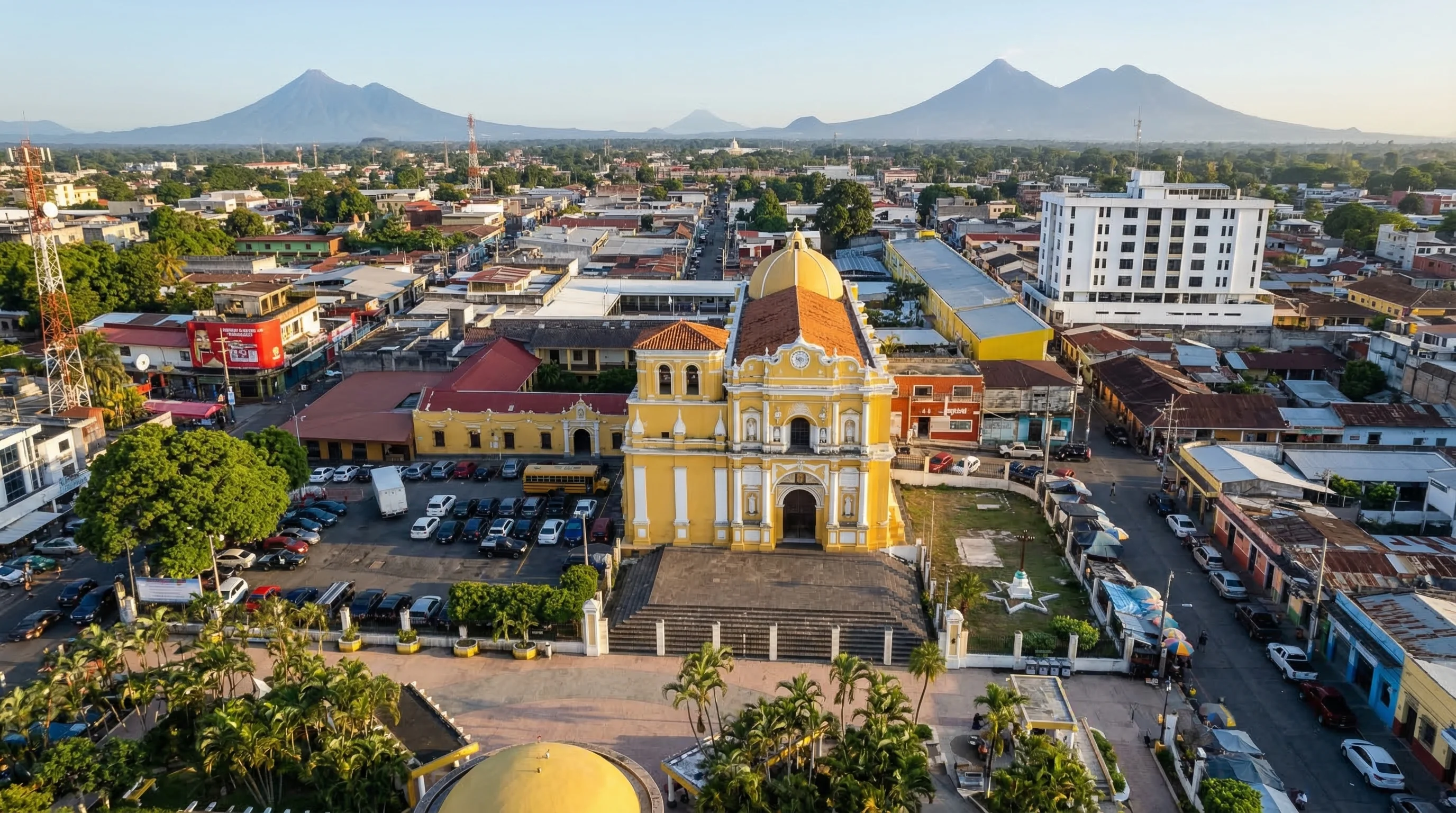
Escuintla, Guatemala occupies a strategic position in Central America's Pacific lowlands, serving as a key logistics and industrial center for the region. Located approximately 50 kilometers from Guatemala City and near the Pacific coast, Escuintla provides excellent connectivity for both domestic distribution and international trade. The city's transportation infrastructure includes access to the CA-2 highway, which connects to major ports and border crossings, facilitating efficient movement of goods throughout Central America.
The region's economy is characterized by diverse industrial activities including food processing, beverage production, textile manufacturing, and agricultural processing. Escuintla's proximity to Guatemala's Pacific ports enables efficient import and export operations, while its central location within the country makes it an ideal distribution point for reaching markets throughout Guatemala and neighboring countries. The city's industrial parks and logistics facilities are equipped to handle various cargo types, supporting the growing demand for cross-border freight transportation services.










