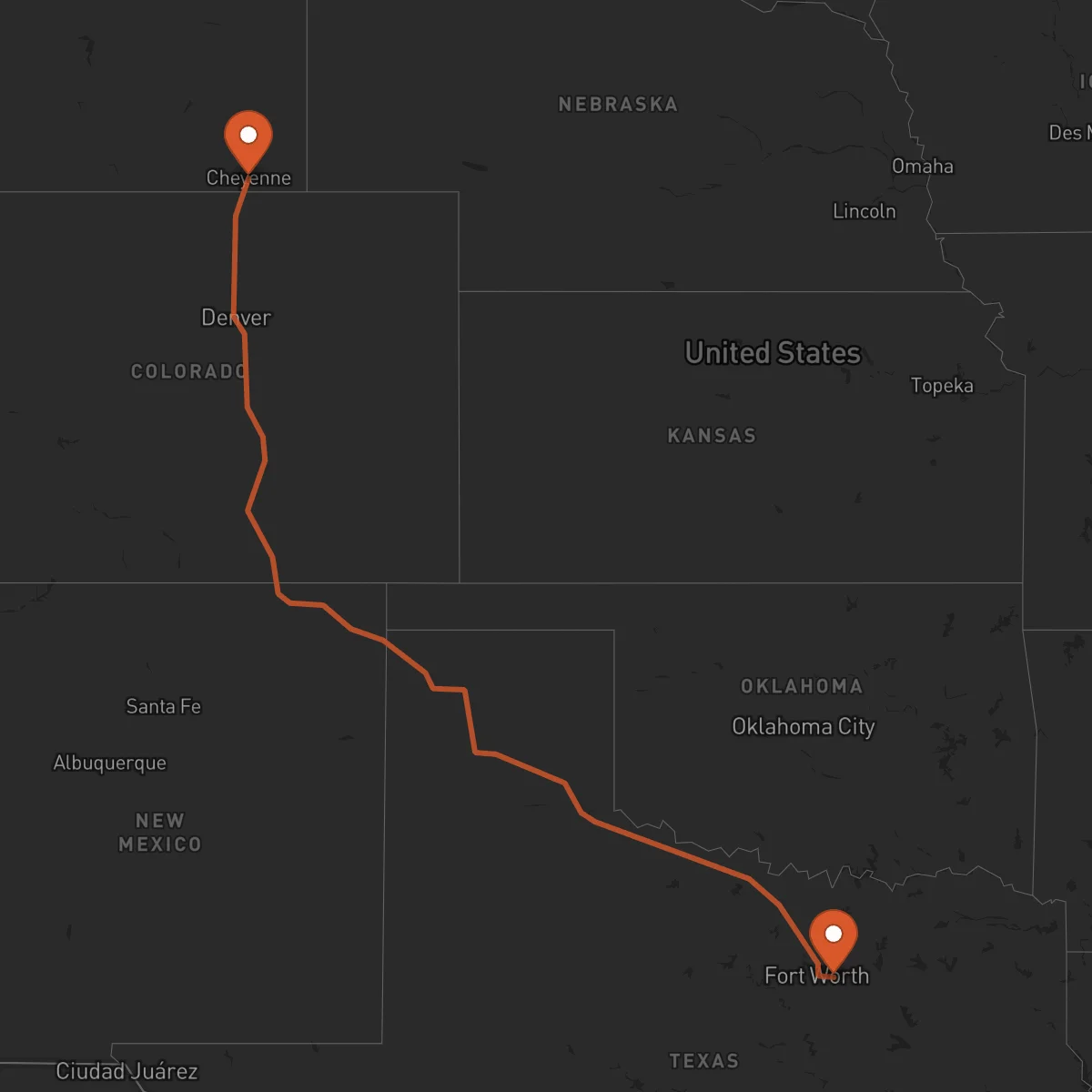
Cheyenne to Arlington
Arlington → CheyenneFTL freight transportation service between Cheyenne and Arlington. Reliable logistics solutions for your business.
Route Description
Everything you need to know about the corridor Cheyenne - Arlington
The logistics corridor connecting Cheyenne, Wyoming to Arlington, Texas represents a vital transportation route spanning approximately 1,157 kilometers across the heart of the United States. This domestic corridor traverses diverse terrain and connects the northern Rocky Mountain region with the dynamic Dallas-Fort Worth metropolitan area, facilitating the movement of goods between key economic centers. The route primarily follows major interstate highways including I-25 south from Cheyenne, transitioning to I-35E as it approaches the Dallas-Fort Worth area, providing reliable and efficient transportation infrastructure for freight movement.
The economic significance of this corridor extends beyond its geographic span, linking Wyoming's energy and agricultural sectors with Texas's manufacturing, technology, and distribution hubs. Cheyenne serves as a strategic gateway to the Rocky Mountain region, while Arlington benefits from its proximity to one of the nation's largest consumer markets and logistics centers. This connection supports industries ranging from energy equipment and agricultural products to automotive parts and consumer goods, making it essential for businesses operating across these regions.
Control Terrestre specializes in optimizing freight transportation along this corridor through our network of certified transportation providers. We understand the unique challenges of moving goods across diverse climate zones and varying elevation changes, from the high plains of Wyoming to the urban centers of Texas. Our dedicated FTL services ensure that your cargo moves efficiently and securely, whether you're shipping industrial equipment, perishable goods, or time-sensitive materials between these strategic locations.
Services for this Route
Available services for the corridor Cheyenne - Arlington
 Origin
Cheyenne
Cheyenne, Wyoming serves as a strategic logistics hub positioned at the intersection of major transportation routes in the Rocky Mountain region. Located at the intersection of Interstates 25 and 80, Cheyenne provides direct access to both north-south and east-west freight movement across the central United States. The city's elevation of approximately 6,000 feet and proximity to major rail yards make it an ideal transshipment point for goods moving between mountain states and the rest of the country.
The economic landscape of Cheyenne is anchored by government operations, military installations, and a growing technology sector, complemented by traditional industries such as agriculture, energy, and mining. The city's logistics infrastructure includes modern warehousing facilities, intermodal yards, and a well-maintained highway system capable of handling heavy freight loads. Cheyenne's status as the state capital and its strategic location near the Colorado border make it a natural distribution center for Wyoming and surrounding states.
 Destination
Arlington
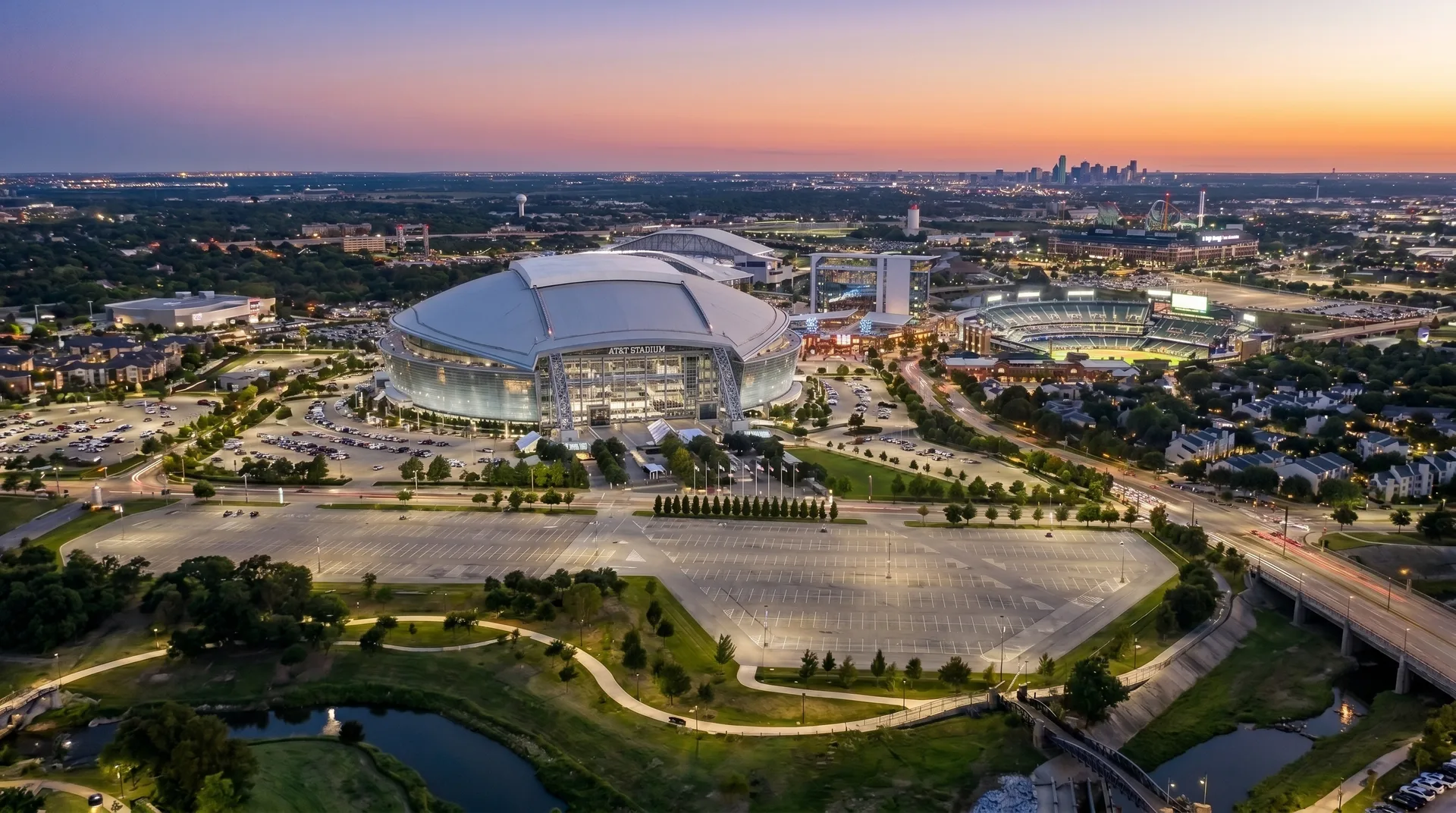
Arlington, Texas occupies a prime location within the Dallas-Fort Worth metroplex, one of the largest and most dynamic economic regions in the United States. Situated between Dallas and Fort Worth along major interstate corridors including I-20 and I-30, Arlington provides seamless connectivity to national freight networks and international trade gateways. The city's proximity to DFW International Airport and major rail terminals enhances its capabilities as a logistics and distribution center.
The economic profile of Arlington is diverse and robust, featuring strong presence in automotive manufacturing, healthcare, education, and entertainment industries. Home to major corporations and industrial parks, the city benefits from Texas's business-friendly environment and central geographic position for distribution throughout North America. Arlington's transportation infrastructure includes extensive highway networks, dedicated freight corridors, and proximity to the Port of Houston via interstate connections, making it an ideal destination for businesses seeking efficient distribution capabilities.










