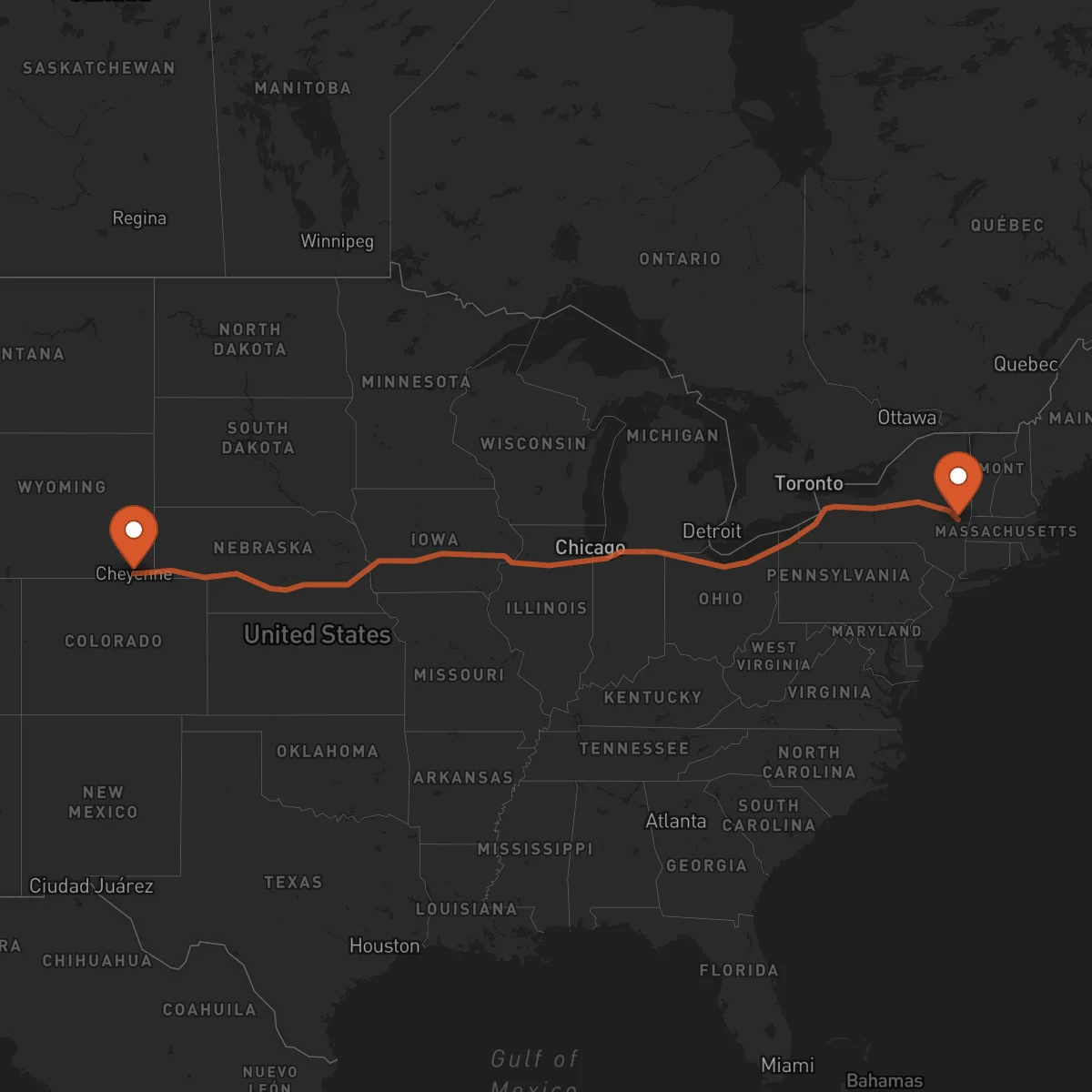
Cheyenne to Albany
Albany → CheyenneFTL freight transportation service between Cheyenne and Albany. Reliable logistics solutions for your business.
Route Description
Everything you need to know about the corridor Cheyenne - Albany
The Cheyenne to Albany corridor represents a vital freight transportation link connecting the central United States with the Northeast. This 2,563 km route traverses diverse terrain and crosses multiple state lines, making it essential for companies moving goods between Wyoming's energy and agricultural sectors and New York's manufacturing and distribution hubs. The corridor passes through key states including Nebraska, Iowa, Illinois, Indiana, Ohio, Pennsylvania, and New York, utilizing major interstate highways that form the backbone of America's freight network.
The economic significance of this corridor is substantial, supporting industries ranging from energy and agriculture to manufacturing and retail. Companies rely on this route for transporting everything from agricultural products and industrial equipment to consumer goods and raw materials. The diverse industrial base along the route creates a steady demand for full truckload services, particularly for specialized cargo and time-sensitive shipments that require dedicated transportation solutions.
Control Terrestre specializes in optimizing freight movements along this corridor through our network of certified carriers and strategic partnerships. Our expertise in handling full truckload shipments ensures reliable, efficient transportation from origin to destination. We provide dedicated services that eliminate the risks associated with consolidated freight, offering direct point-to-point delivery with minimal handling. Our carriers' certifications including C-TPAT and FAST enable smooth cross-state operations, while our specialized equipment options accommodate various cargo types, from standard dry goods to temperature-controlled products and oversized freight.
Services for this Route
Available services for the corridor Cheyenne - Albany
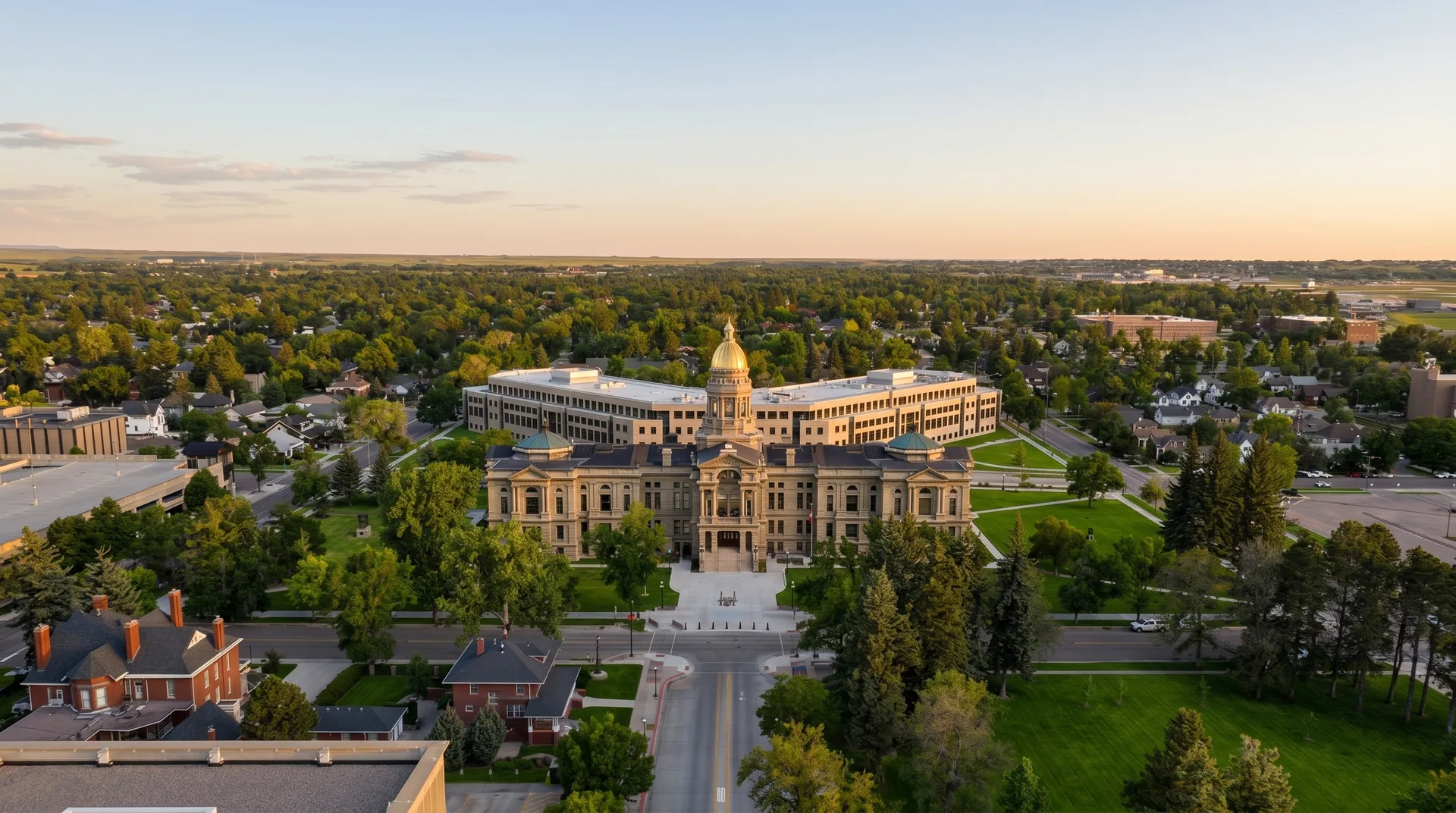 Origin
Cheyenne
Cheyenne, Wyoming serves as a strategic logistics hub in the Rocky Mountain region, offering unique advantages for freight transportation. The city's location at the intersection of major interstate highways I-25 and I-80 provides excellent connectivity to both east-west and north-south freight corridors. Cheyenne's proximity to Denver and its position as Wyoming's capital make it a natural gateway for goods moving in and out of the state. The city's transportation infrastructure includes the Cheyenne Regional Airport and access to major rail lines, complementing its robust trucking capabilities.
The economic landscape of Cheyenne is diverse, with strong energy, agriculture, and manufacturing sectors driving freight demand. Wyoming's energy industry, including oil, natural gas, and coal operations, creates significant transportation needs for equipment and supplies. The region's agricultural output, including cattle and grain production, requires reliable freight services for both inbound feed and outbound products. Additionally, Cheyenne's growing manufacturing sector, particularly in aerospace and technology, contributes to the demand for specialized freight transportation services.
 Destination
Albany
Albany, New York occupies a strategic position in the northeastern United States, serving as a crucial logistics center for the region. Located along the Hudson River and at the intersection of major transportation routes, Albany provides excellent connectivity to the Northeast's dense population centers and industrial areas. The city's infrastructure includes the Port of Albany, multiple interstate highways, and rail connections, creating a multimodal transportation hub that facilitates efficient freight movement throughout the region.
The Albany metropolitan area is characterized by a diverse economic base, with significant activity in government, education, healthcare, and technology sectors. The region's manufacturing industry, particularly in high-tech and precision equipment, generates substantial freight demand. Albany's role as a state capital and its proximity to major urban centers like New York City and Boston create consistent demand for reliable freight services. The area's distribution centers and warehouses rely on efficient transportation corridors to maintain inventory levels and meet customer demands across the Northeast.










