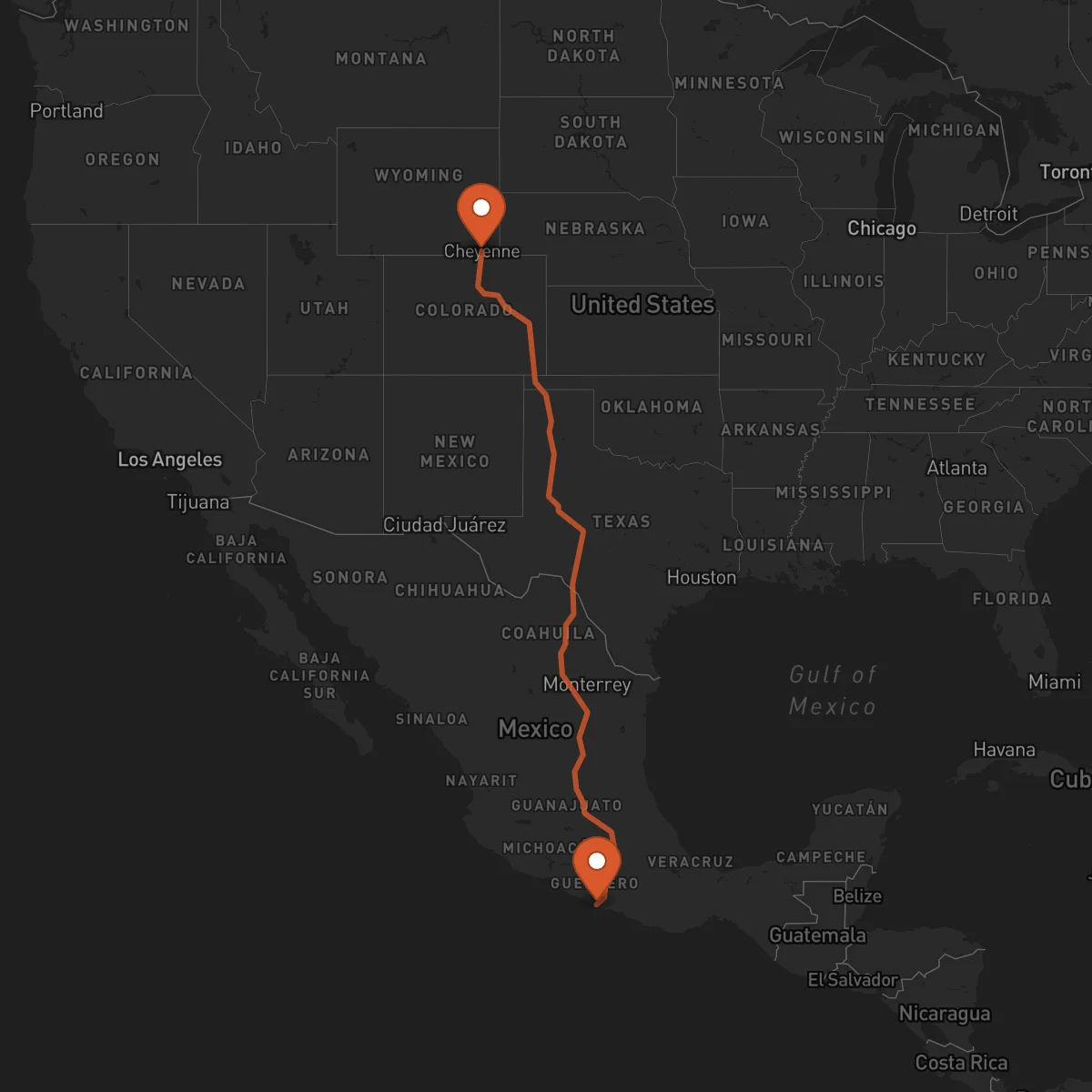
Cheyenne to Acapulco
Acapulco → CheyenneFTL freight transportation service between Cheyenne and Acapulco. Reliable logistics solutions for your business.
Route Description
Everything you need to know about the corridor Cheyenne - Acapulco
The logistics corridor between Cheyenne, Wyoming, and Acapulco, Guerrero, represents a vital cross-border connection between the United States and Mexico. This 2,740 km route links the industrial heart of the Rocky Mountain region with one of Mexico's most important Pacific ports and tourist destinations. The corridor traverses diverse terrains and crosses multiple states, making it a complex but essential pathway for freight transportation between the two nations.
The economic significance of this route extends beyond its geographical span. Cheyenne serves as a strategic hub for manufacturing, energy, and agricultural industries in the American West, while Acapulco functions as a critical gateway for international trade, tourism, and regional distribution in southern Mexico. This corridor facilitates the movement of goods ranging from industrial equipment and consumer products to agricultural commodities and specialized cargo.
Key transportation infrastructure along this route includes major highways such as I-25, I-40, and Mexico's Federal Highway 95D. The primary border crossing at Laredo/Nuevo Laredo provides efficient customs processing for cross-border freight. Control Terrestre's expertise in managing this corridor ensures seamless coordination between US and Mexican transportation networks, handling all necessary customs documentation and compliance requirements. Our strategic partnerships with certified carriers on both sides of the border enable us to provide reliable, full truckload (FTL) services that meet the demanding needs of industries relying on this crucial trade route.
Services for this Route
Available services for the corridor Cheyenne - Acapulco
 Origin
Cheyenne
Cheyenne, Wyoming, serves as a strategic logistics hub in the Rocky Mountain region, offering excellent connectivity to major transportation networks. Located at the intersection of I-25 and I-80, Cheyenne provides direct access to Denver, Salt Lake City, and other key western markets. The city's central location makes it an ideal origin point for freight distribution across the western United States, with proximity to major rail terminals and the Warren Air Force Base adding to its logistical significance.
The region's economy is driven by government services, military operations, energy production, and manufacturing sectors. Cheyenne benefits from Wyoming's business-friendly environment and serves as a distribution center for agricultural products, mining equipment, and industrial goods. The city's transportation infrastructure includes modern warehousing facilities, intermodal yards, and a well-maintained highway system that supports efficient freight movement in all directions.
 Destination
Acapulco, Guerrero, occupies a strategic position on Mexico's Pacific coast, serving as both a major tourist destination and a crucial logistics hub for southern Mexico. The city's port facilities and proximity to Mexico's southern border regions make it an essential gateway for international trade and domestic distribution. Acapulco's location provides access to growing markets in Central America and serves as a critical link in Mexico's Pacific trade corridor.
The local economy thrives on tourism, fishing, and manufacturing, with increasing investment in logistics and distribution infrastructure. Acapulco's transportation network includes the Juan Álvarez International Airport, seaport facilities, and well-connected highway systems linking to Mexico City and other major urban centers. The city's development as a logistics hub continues to expand, supported by investments in warehousing, cold storage facilities, and modern distribution centers that cater to both import/export operations and domestic supply chains.










