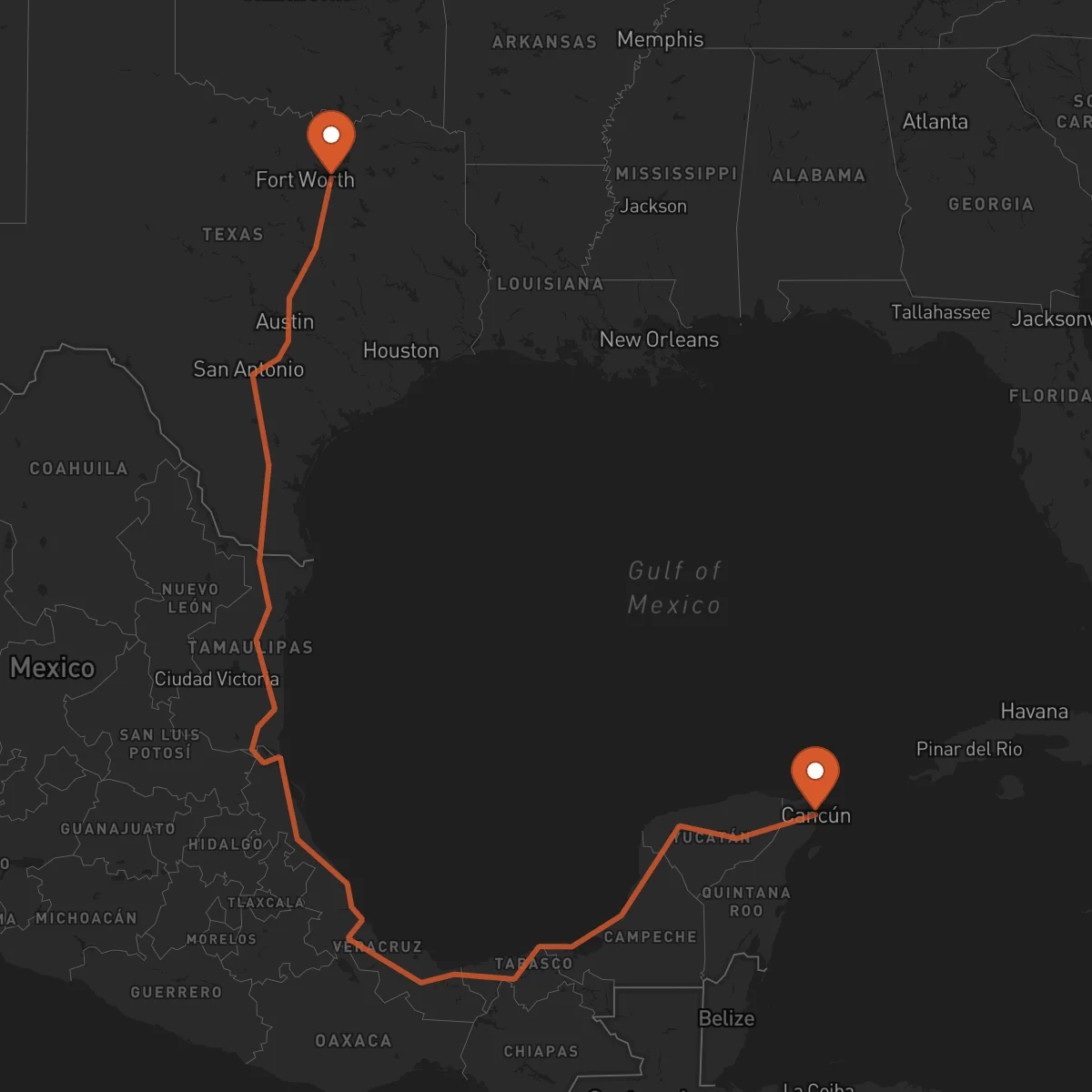
Cancún to Dallas
Dallas → CancúnFTL freight transportation service between Cancún and Dallas. Reliable logistics solutions for your business.
Route Description
Everything you need to know about the corridor Cancún - Dallas
The logistics corridor connecting Cancún, Quintana Roo, México to Dallas, Texas, Estados Unidos represents a vital trade route for the automotive, manufacturing, and electronics industries. This cross-border corridor spans approximately 1623 km and facilitates the movement of full truckload freight between Mexico's Caribbean coast and the heart of Texas's industrial corridor. The route connects two major economic hubs, enabling seamless freight transportation for companies operating in both countries.
The transportation infrastructure along this corridor includes major highways such as the Carretera Federal 180D and Carretera Federal 190 in Mexico, connecting to US Interstate 35 in Texas. The corridor passes through key border crossings where Control Terrestre's C-TPAT and FAST certified partners ensure efficient customs clearance and secure freight handling. This infrastructure supports the high-volume movement of goods between automotive manufacturing plants, electronics assembly facilities, and distribution centers in both regions.
Control Terrestre facilitates operations on this corridor through our network of experienced transportation providers who understand the specific requirements of cross-border freight. Our partners' certifications (C-TPAT, FAST, BASC) ensure compliance with all security and customs regulations, while our dedicated service options provide companies with reliable transportation solutions for their full truckload shipments. We coordinate every aspect of the journey, from origin pickup in Cancún to final delivery in Dallas, ensuring your cargo moves efficiently through this important trade corridor.
Services for this Route
Available services for the corridor Cancún - Dallas
 Origin
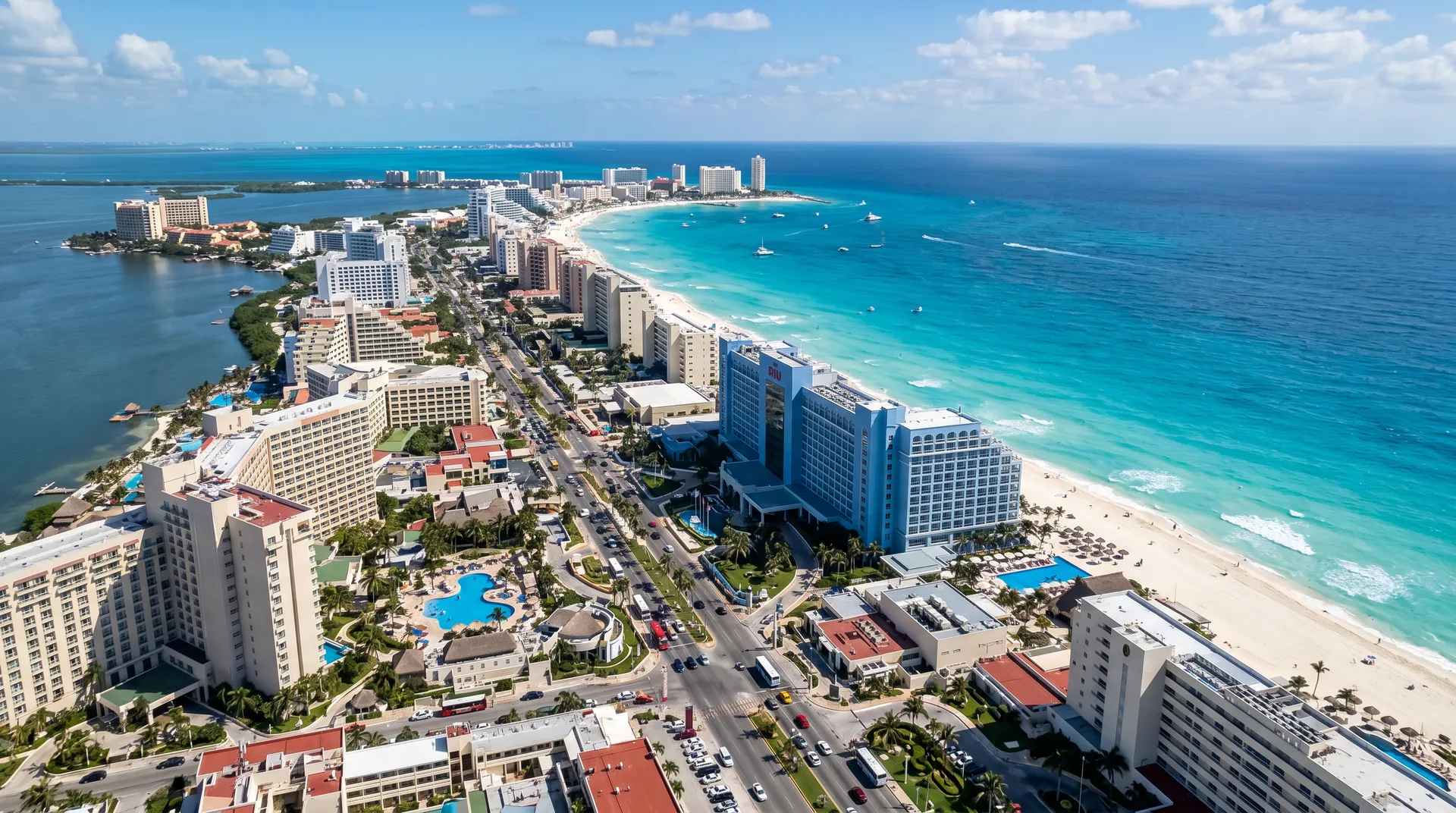
Cancún
Cancún, located on Mexico's Caribbean coast in Quintana Roo, serves as a strategic gateway for international trade and logistics operations. The city's proximity to major ports and its connection to the Mexican highway system make it an ideal origin point for freight transportation to the United States. Cancún's growing industrial sector includes automotive parts manufacturing, electronics assembly, and food processing facilities that require reliable cross-border transportation solutions.
The region benefits from modern transportation infrastructure, including the Cancún International Airport for air cargo operations and well-maintained highways connecting to the rest of Mexico. The Carretera Federal network provides direct access to major inland destinations, while the nearby Port of Progreso offers additional maritime freight options. This infrastructure, combined with Cancún's strategic location, positions the city as a key origin point for companies seeking to transport goods to markets in the United States and Canada.
 Destination
Dallas
Dallas, Texas, stands as a major logistics and distribution hub in the United States, offering strategic advantages for freight transportation and supply chain operations. Located in the heart of Texas's industrial corridor, Dallas provides excellent connectivity to major markets across the country through its extensive highway network, including direct access to Interstate 35. The city's central location makes it an ideal destination for companies seeking to distribute goods throughout the United States.
The Dallas-Fort Worth metroplex hosts a diverse industrial base, including automotive manufacturing, aerospace, telecommunications, and advanced electronics sectors. These industries rely on efficient cross-border freight transportation to maintain their supply chains and distribution networks. Dallas's robust transportation infrastructure includes multiple interstate highways, rail connections, and the Dallas/Fort Worth International Airport, one of the busiest cargo airports in the country. This comprehensive logistics infrastructure supports the high-volume movement of goods and provides companies with multiple options for freight distribution and last-mile delivery.










