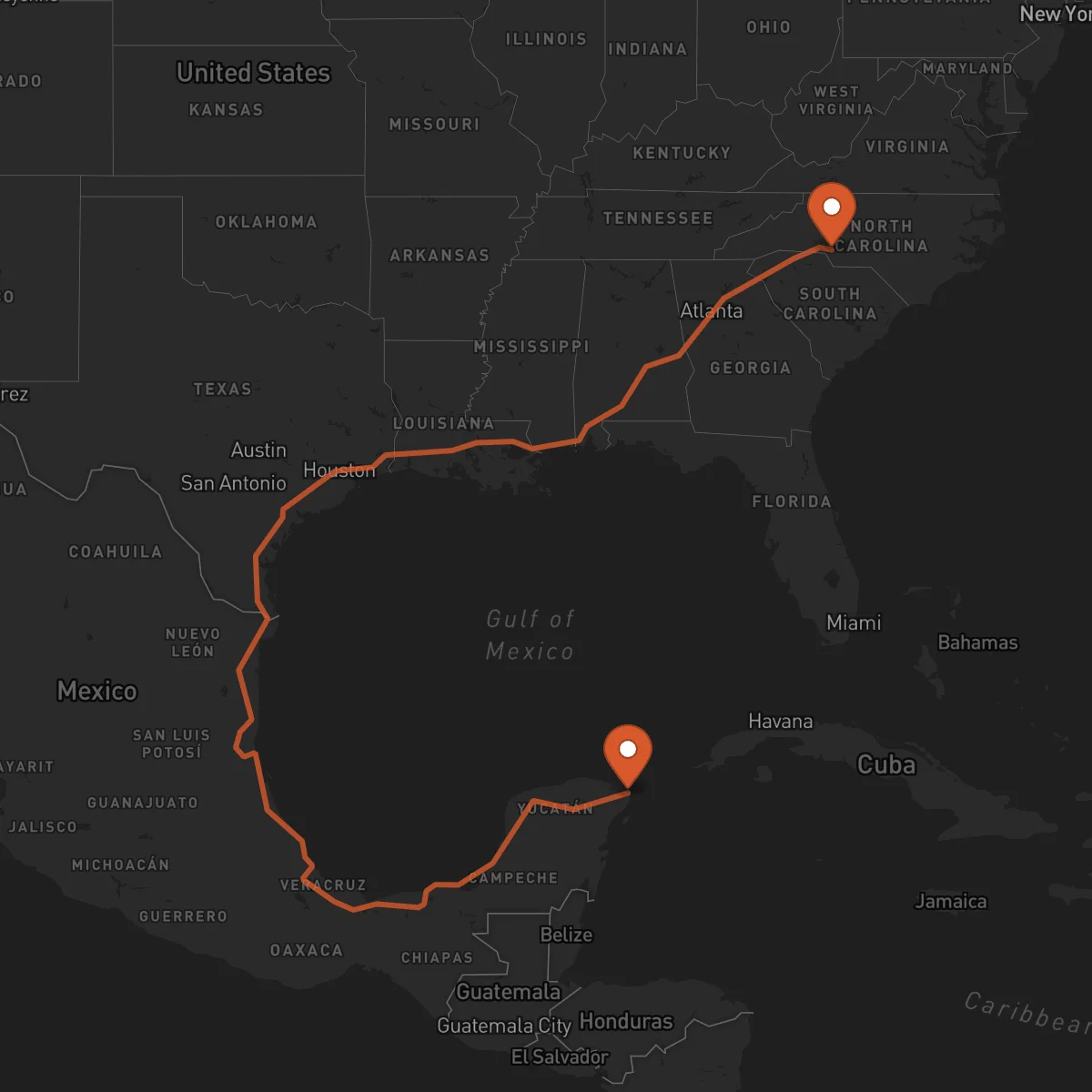
Cancún to Charlotte
Charlotte → CancúnFTL freight transportation service between Cancún and Charlotte. Reliable logistics solutions for your business.
Route Description
Everything you need to know about the corridor Cancún - Charlotte
The Cancún to Charlotte corridor represents a vital trade link between Mexico's Caribbean coast and the southeastern United States. This 1,670 km route connects the vibrant tourism and manufacturing hub of Cancún with Charlotte's growing logistics and financial center. The corridor serves as a critical artery for cross-border trade, facilitating the movement of goods between two dynamic economic regions.
The transportation infrastructure along this corridor includes Mexico's Federal Highway 180 and 180D, connecting to U.S. Interstate 85 in Laredo. This route passes through key commercial centers and industrial zones, making it ideal for full truckload (FTL) freight transportation. Control Terrestre leverages this infrastructure to provide efficient, reliable cross-border services, ensuring seamless cargo movement through customs and border crossings.
This corridor is particularly important for industries such as automotive parts, electronics, textiles, and agricultural products. The route accommodates the growing trade between Mexico's manufacturing sector and the southeastern U.S. market. Control Terrestre's expertise in cross-border operations ensures that shipments move efficiently through customs, with our certified carriers handling all necessary documentation and compliance requirements. Our strategic partnerships with experienced carriers along this route guarantee timely and secure delivery of full truckload shipments between Cancún and Charlotte.
Services for this Route
Available services for the corridor Cancún - Charlotte
 Origin
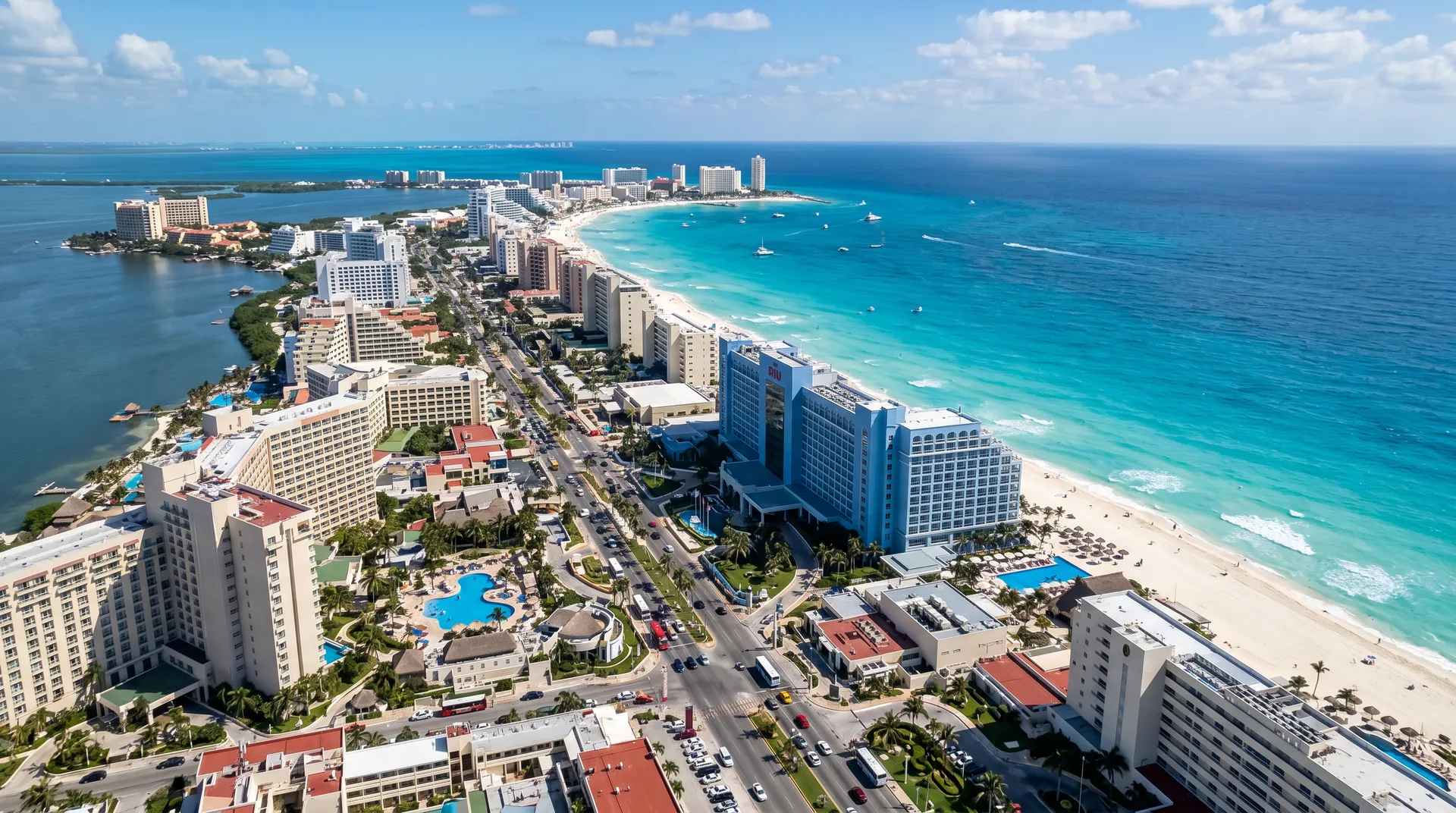
Cancún
Cancún, located in Quintana Roo, Mexico, serves as a strategic logistics hub for the Yucatán Peninsula. Beyond its renowned tourism industry, Cancún has developed significant manufacturing and export capabilities, particularly in the Riviera Maya region. The city's proximity to major ports and its well-developed transportation infrastructure make it an ideal origin point for cross-border freight. Cancún International Airport and the region's highway network provide multiple options for cargo consolidation and distribution. The area's growing industrial parks and maquiladora operations contribute to the increasing demand for reliable freight transportation services to U.S. markets.
 Destination
Charlotte
Charlotte, North Carolina, stands as a major logistics and distribution center in the southeastern United States. The city's strategic location, combined with its extensive transportation infrastructure including Interstates 85, 77, and 485, makes it an ideal destination for cross-border freight. Charlotte's booming economy, driven by banking, energy, and manufacturing sectors, creates consistent demand for inbound freight from Mexico. The city's proximity to major ports in Charleston and Wilmington, along with its robust warehousing and distribution network, positions Charlotte as a key gateway for goods entering the U.S. southeastern market.










