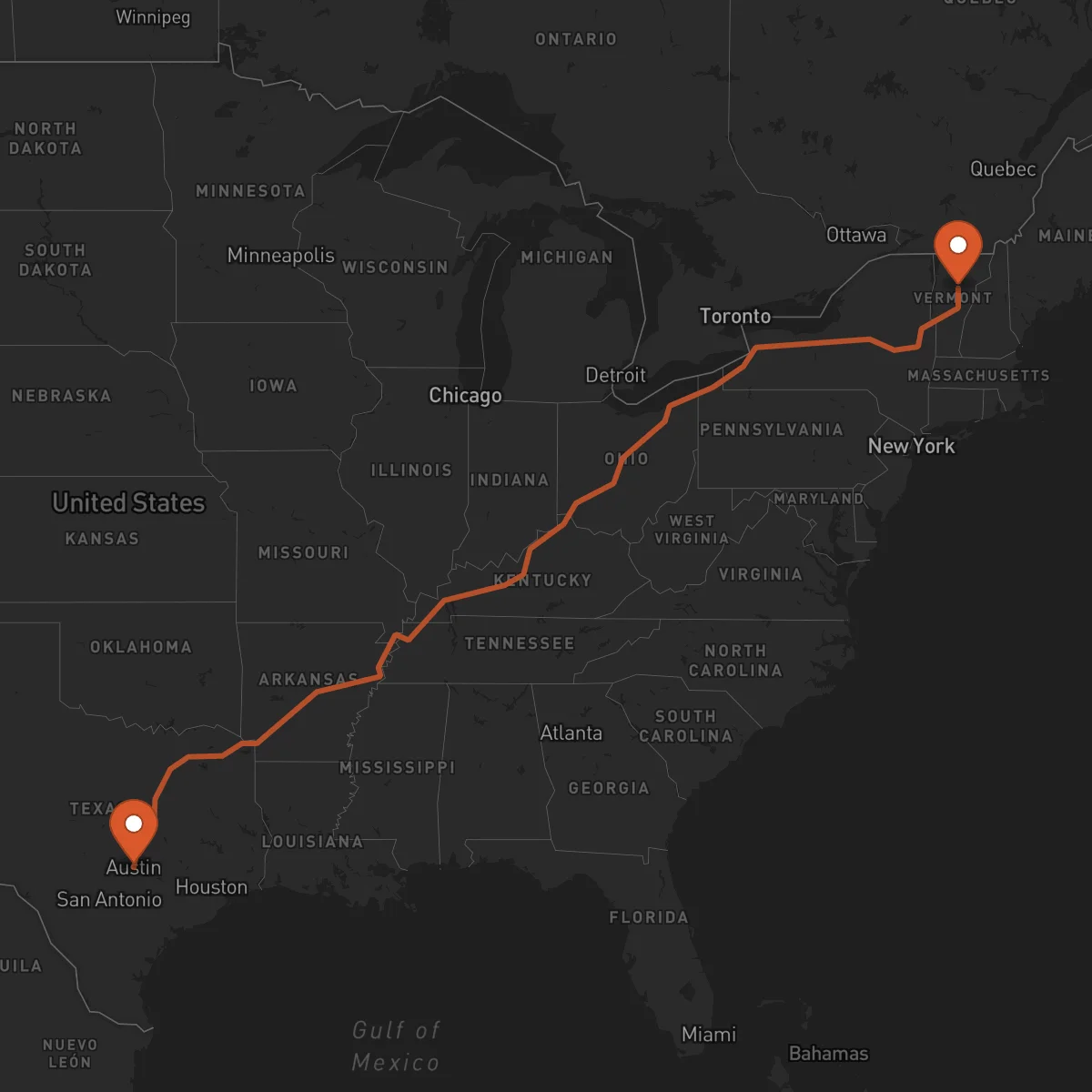
Austin to Montpelier
Montpelier → AustinFTL freight transportation service between Austin and Montpelier. Reliable logistics solutions for your business.
Route Description
Everything you need to know about the corridor Austin - Montpelier
The Austin-Montpelier corridor represents a crucial domestic freight transportation route connecting the vibrant technology and manufacturing hub of Texas with the government and service-oriented economy of Vermont. This 2,699 km route traverses the heart of the United States, crossing multiple states and serving as a vital link for businesses operating between the southern and northeastern regions. The corridor's strategic importance lies in its ability to facilitate the movement of goods from Texas's major ports and industrial centers to New England's markets and distribution networks.
This transportation corridor supports a diverse range of industries, including technology, manufacturing, automotive, and agricultural products moving from the Austin area, while serving Vermont's sectors such as government services, healthcare, education, and specialty food products. The route primarily utilizes major interstate highways including I-35, I-40, I-81, and I-89, providing reliable and efficient transportation infrastructure for freight movement. Control Terrestre leverages this established network to ensure seamless cargo delivery across this extensive distance.
Control Terrestre facilitates operations on this corridor by providing dedicated full truckload (FTL) services with experienced carriers who understand the nuances of long-haul transportation. Our strategic partnerships with certified transportation providers ensure that your cargo moves efficiently and securely from origin to destination. We coordinate every aspect of the journey, from pickup in Austin to final delivery in Montpelier, offering real-time tracking and communication throughout the entire process to keep your supply chain running smoothly.
Services for this Route
Available services for the corridor Austin - Montpelier
 Origin
Austin
Austin, Texas serves as a strategic logistics hub in the southern United States, combining its position as a major technology center with excellent transportation infrastructure. The city's location provides access to major ports in Houston and the Gulf Coast, while its growing industrial base creates substantial freight generation. Austin's economy is driven by technology, manufacturing, healthcare, and education sectors, all of which require reliable freight transportation services to support their operations and distribution needs.
The transportation infrastructure in Austin includes extensive highway networks with direct access to I-35, a major north-south corridor, as well as connections to I-10 and I-45. The city is served by Austin-Bergstrom International Airport for air cargo needs and has rail connections through Union Pacific and other freight rail operators. This multimodal transportation capability makes Austin an ideal origin point for freight moving throughout the United States, particularly along the Austin-Montpelier corridor.
 Destination
Montpelier
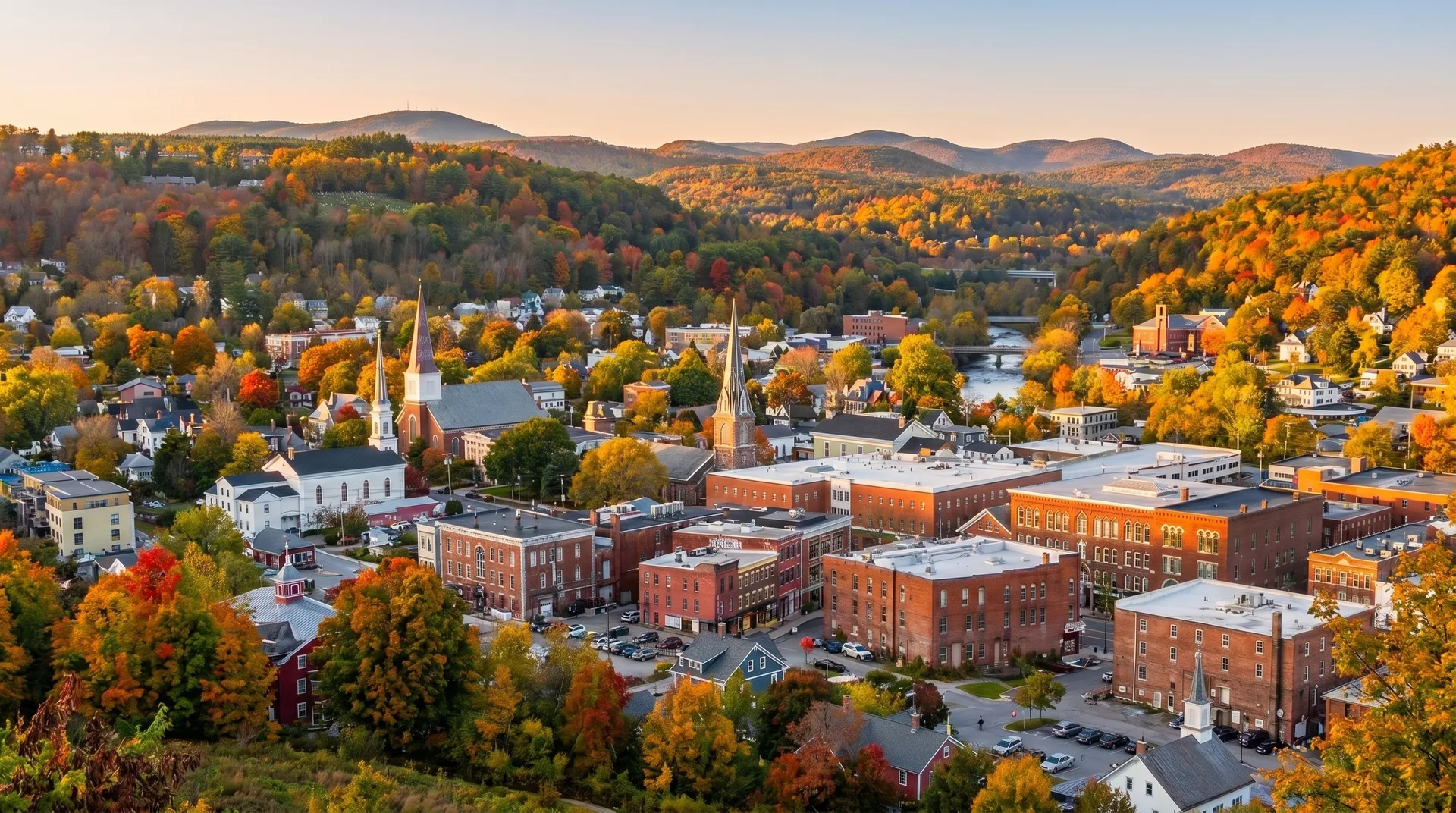
Montpelier, Vermont represents a strategic logistics point in the northeastern United States, serving as the state capital and a center for government services, healthcare, and education. While smaller than many state capitals, Montpelier's location provides access to the broader New England market and connects to major transportation routes leading to Boston, New York, and other key economic centers. The city's economy, while service-oriented, requires consistent freight movement to support its institutions and the surrounding agricultural and specialty food production industries.
The transportation infrastructure in Montpelier includes access to I-89, a major north-south highway connecting Vermont to Canada and the rest of New England. The city is also served by rail freight services and is within reasonable distance of Burlington International Airport for air cargo needs. Montpelier's location at the intersection of several state routes makes it a key distribution point for freight moving into Vermont's interior regions, making it an important destination for the Austin-Montpelier corridor.










