Austin to Harrisburg
Harrisburg → AustinFTL freight transportation service between Austin and Harrisburg. Reliable logistics solutions for your business.
Route Description
Everything you need to know about the corridor Austin - Harrisburg
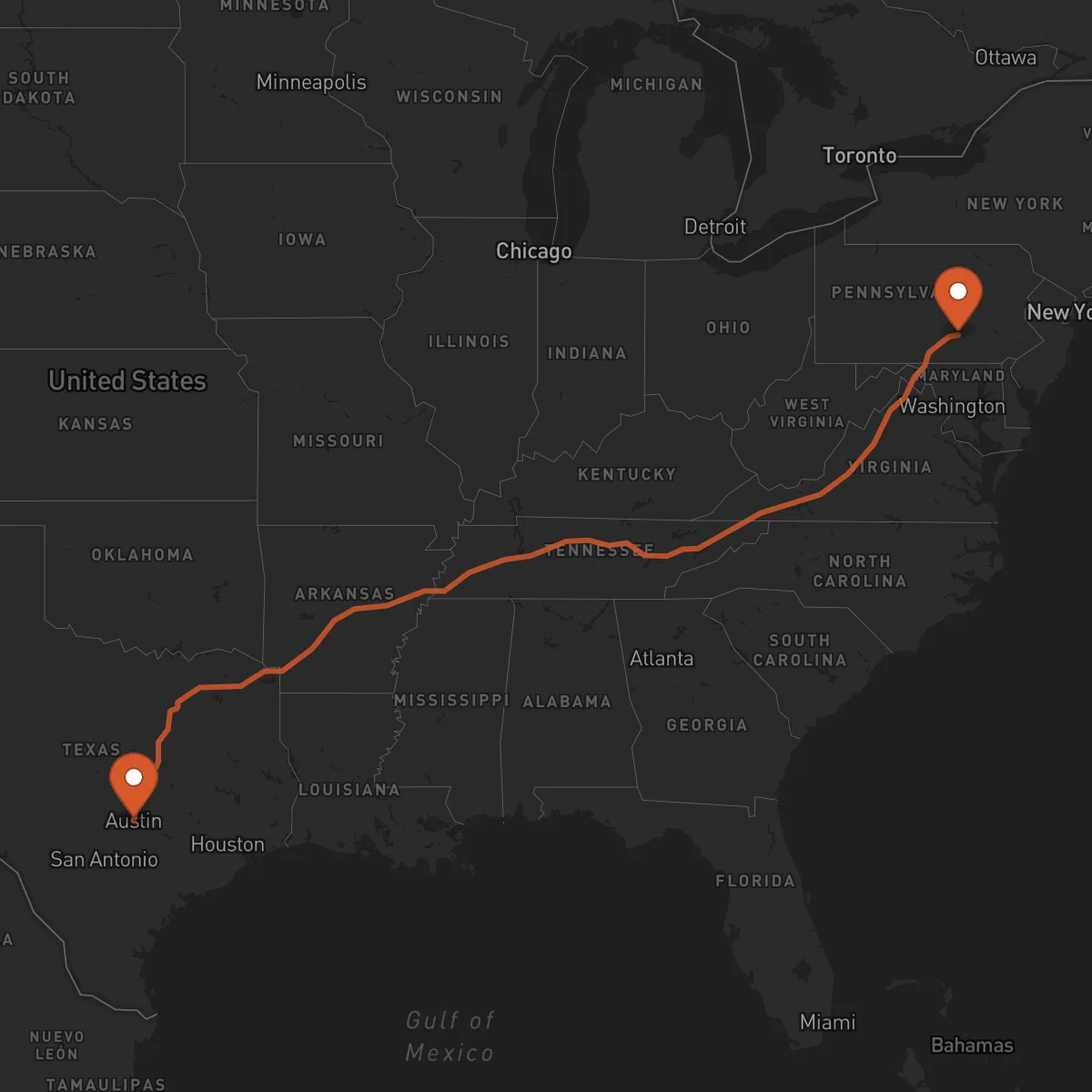
The Austin-Harrisburg corridor represents one of the most strategic domestic freight transportation routes in the United States, connecting the vibrant tech hub of Texas with the industrial heart of Pennsylvania. This 2,188 km route traverses diverse economic regions, facilitating the movement of goods between the booming technology and manufacturing sectors of the South and the established industrial base of the Northeast. The corridor is vital for industries requiring reliable, time-sensitive freight transportation across the country's interior.
This route passes through key economic centers including Dallas, Memphis, Nashville, and Pittsburgh, creating a vital link between the Sun Belt's growth economy and the traditional manufacturing powerhouses of the Mid-Atlantic. The corridor serves a wide range of industries, from electronics and automotive components to pharmaceuticals and consumer goods. Control Terrestre's full truckload (FTL) services ensure that high-value, time-sensitive cargo moves efficiently across this critical supply chain link.
Control Terrestre facilitates seamless operations on this corridor through our network of certified transportation providers. Our dedicated FTL services ensure that your cargo travels directly from origin to destination without stops or transfers, maintaining the integrity and security of your shipment. With our strategic partnerships and experienced carriers, we provide reliable transportation solutions that keep your supply chain moving smoothly across this extensive domestic route.
Services for this Route
Available services for the corridor Austin - Harrisburg
 Origin
Austin
Austin, Texas serves as a strategic logistics hub in the heart of the Texas Triangle, offering exceptional connectivity to major markets across the southern United States. The city has evolved into a major technology and innovation center, earning its reputation as 'Silicon Hills' with a concentration of tech companies, startups, and research institutions. Austin's economy is diverse, encompassing technology, advanced manufacturing, healthcare, and creative industries, creating consistent demand for freight transportation services.
The city boasts excellent transportation infrastructure, including Austin-Bergstrom International Airport and extensive highway networks including I-35, which runs north-south through the city. The Port of Houston, located approximately 165 miles southeast, provides ocean freight connectivity for international shipments. Austin's strategic position allows for efficient distribution throughout Texas and neighboring states, making it an ideal origin point for cross-country freight movements.
 Destination
Harrisburg
Harrisburg, Pennsylvania occupies a strategic location in the Mid-Atlantic region, serving as a gateway to major Northeastern markets including Philadelphia, New York, and Washington D.C. The city's position along the Susquehanna River and its proximity to major transportation corridors make it a vital logistics hub for the eastern United States. Harrisburg's economy is anchored by state government operations, healthcare, and a growing technology sector, creating diverse freight transportation needs.
The region benefits from excellent transportation infrastructure, including Harrisburg International Airport and major highways such as I-81 and I-83. The nearby Port of Philadelphia provides ocean freight access, while the extensive rail network offers intermodal transportation options. Harrisburg's central location in the Northeast Corridor makes it an ideal distribution point for goods destined for the densely populated eastern seaboard, supporting efficient last-mile delivery to major metropolitan areas.










