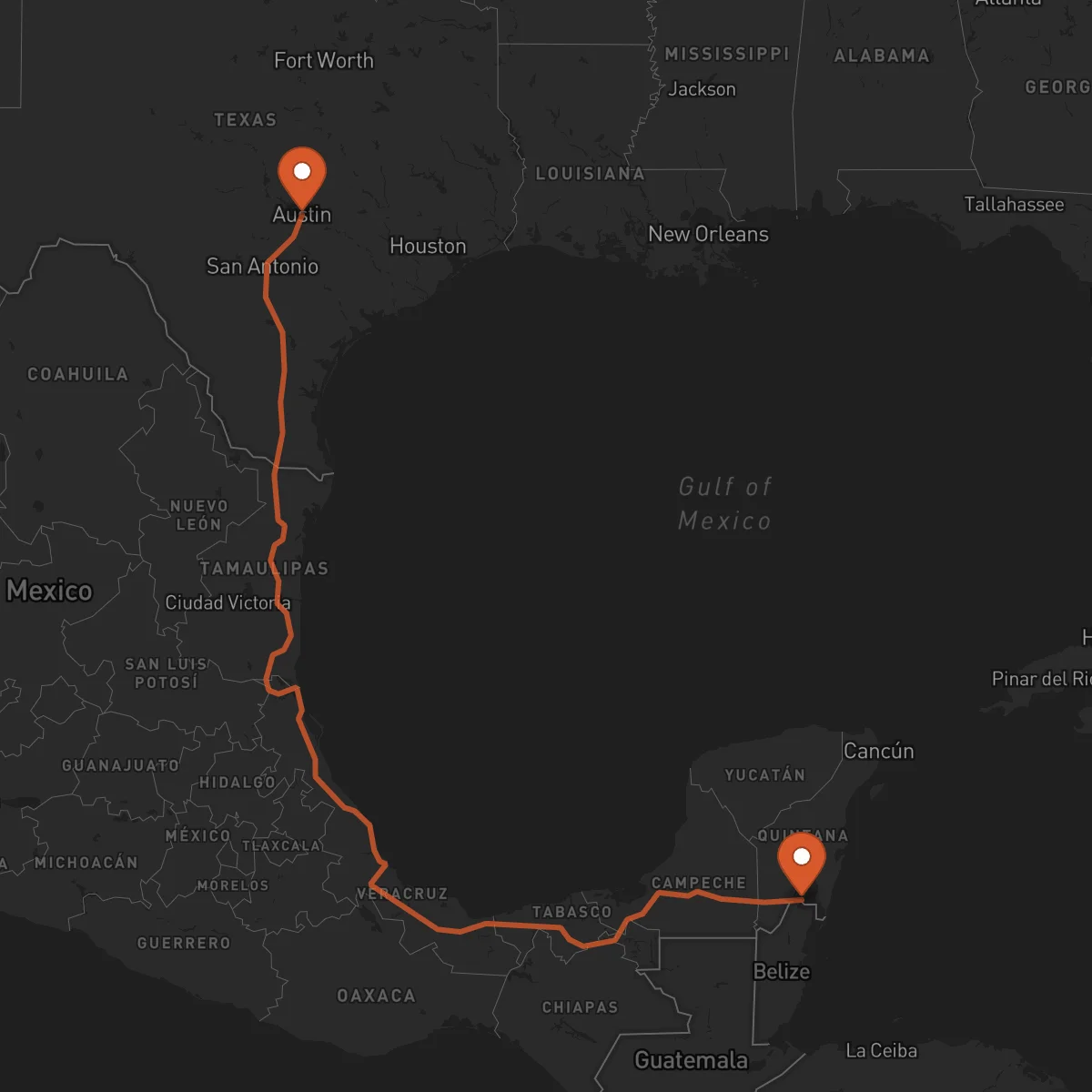
Austin to Chetumal
Chetumal → AustinFTL freight transportation service between Austin and Chetumal. Reliable logistics solutions for your business.
Route Description
Everything you need to know about the corridor Austin - Chetumal
The Austin to Chetumal corridor represents a vital logistics connection between the industrial heart of Texas and the emerging economic center of Mexico's Yucatán Peninsula. This 1,619-kilometer cross-border route links two dynamic regions through a network of major highways, including US-290, I-10, and Mexican Federal Highways 180 and 307. The corridor serves as a crucial supply chain artery for companies operating in both countries, facilitating the movement of goods between the United States and Mexico's growing southeastern markets.
The economic significance of this route extends beyond its geographic span. Austin, known for its technology and manufacturing sectors, produces high-value goods that require efficient transportation to reach markets in southern Mexico. Meanwhile, Chetumal's strategic position as Quintana Roo's capital and its proximity to Belize creates unique opportunities for regional trade and distribution. The corridor supports diverse industries including automotive, electronics, construction materials, and consumer goods, with particular emphasis on products destined for the Riviera Maya tourist corridor.
Transportation infrastructure along this route includes modern highways capable of handling heavy truck traffic, though seasonal weather patterns and border crossing procedures require careful planning. The corridor's busiest border crossing at Laredo/Nuevo Laredo serves as the primary gateway for freight moving between the two countries. Control Terrestre's expertise in cross-border logistics ensures seamless coordination through customs procedures, regulatory compliance, and efficient routing to optimize transit times and minimize delays for our clients' shipments.
Services for this Route
Available services for the corridor Austin - Chetumal
 Origin
Austin
Austin, Texas serves as a strategic logistics hub in the heart of the United States' southern region. The city's location provides excellent connectivity to major transportation networks, including interstate highways and rail systems that link to national distribution centers. Austin's diverse economy, anchored by technology, manufacturing, and research institutions, generates consistent freight volume requiring reliable transportation solutions. The city's proximity to major ports and border crossings makes it an ideal origin point for cross-border shipments, while its growing industrial base creates demand for efficient inbound logistics services.
 Destination
Chetumal
Chetumal, Quintana Roo represents a strategic gateway to Mexico's southeastern region and Central America. As the capital of Quintana Roo, the city serves as a crucial administrative and commercial center with growing importance in regional logistics. Chetumal's location near the Belize border and its position as a gateway to the Riviera Maya tourist corridor create unique distribution opportunities. The city's developing infrastructure, including its international airport and highway connections, supports expanding freight operations. Chetumal's role in connecting mainland Mexico with the Yucatán Peninsula's tourist destinations makes it a key node in regional supply chains.










