Austin to Cancún
Cancún → AustinFTL freight transportation service between Austin and Cancún. Reliable logistics solutions for your business.
Route Description
Everything you need to know about the corridor Austin - Cancún
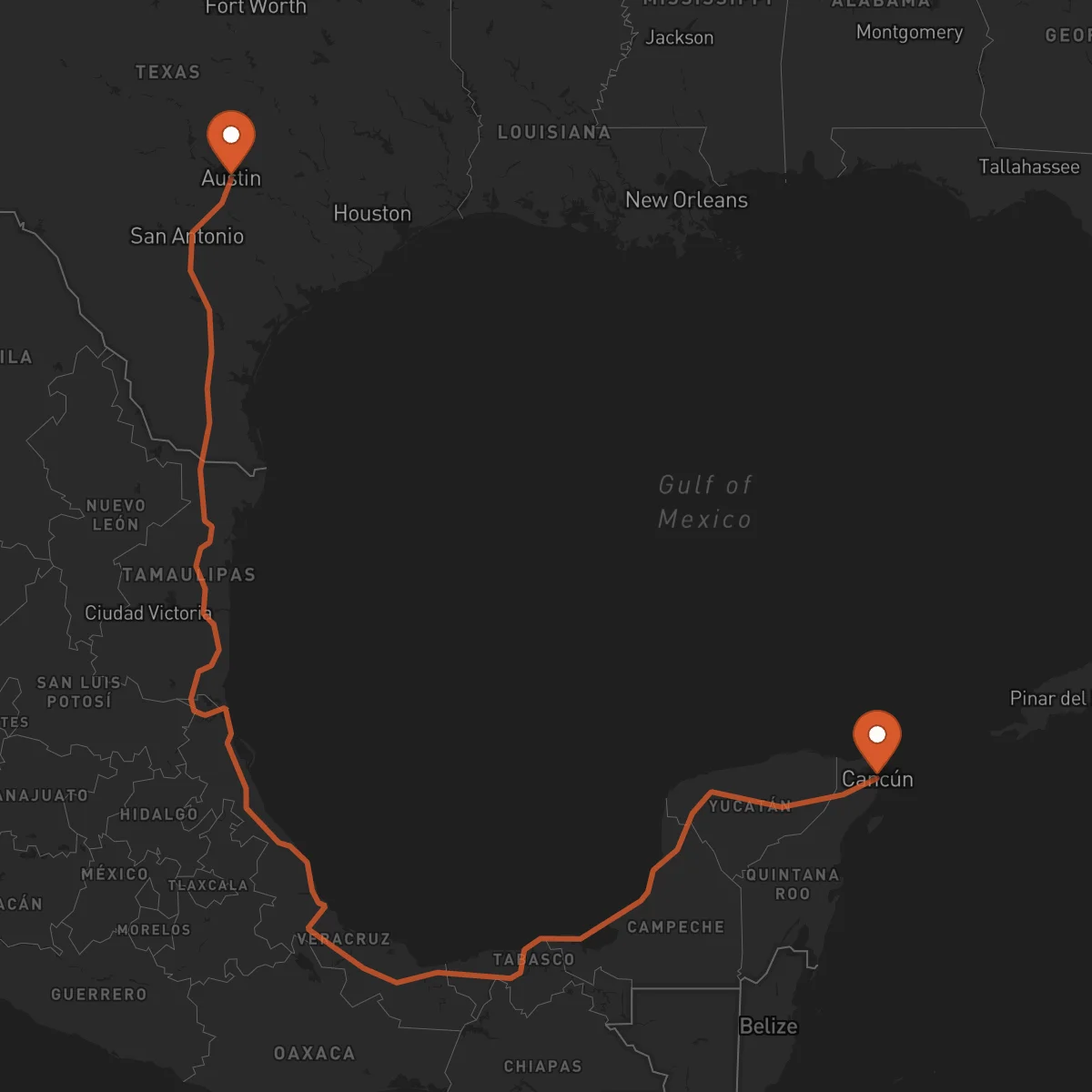
The logistics corridor between Austin, Texas, and Cancún, Quintana Roo, represents a vital trade route connecting the central United States with one of Mexico's most important tourist and industrial hubs. This cross-border corridor spans approximately 1,487 kilometers, traversing diverse terrain and crossing multiple state lines before reaching the Caribbean coast. The route serves as a critical link for businesses operating in both countries, facilitating the movement of goods between North America's economic powerhouse and Mexico's growing market.
The economic significance of this corridor is underscored by the complementary industrial strengths of both regions. Austin, known as a technology and innovation center, produces high-value electronics, medical devices, and advanced manufacturing components. Cancún, while famous for tourism, has developed a robust industrial base including aerospace manufacturing, automotive parts production, and pharmaceutical facilities. The corridor enables just-in-time delivery of components and finished goods between these complementary industries.
Transportation infrastructure along this route includes major highways such as US-77 South and Mexican Federal Highway 180, providing reliable connectivity. The corridor crosses the US-Mexico border at Laredo, utilizing the World Trade Bridge - one of North America's busiest commercial crossings. Control Terrestre's expertise in cross-border operations ensures seamless customs clearance and compliance with both US and Mexican regulations, minimizing delays and maintaining supply chain integrity throughout the journey.
Services for this Route
Available services for the corridor Austin - Cancún
 Origin
Austin
Austin, Texas, serves as a strategic logistics hub in the central United States, offering excellent connectivity through multiple transportation modes. The city's location provides access to major interstate highways including I-35, which runs north-south through the heart of Texas, connecting Austin to major markets like Dallas, Houston, and San Antonio. Austin-Bergstrom International Airport supports air cargo operations, while nearby ports of entry facilitate international trade. The region's robust infrastructure supports efficient distribution networks for businesses of all sizes.
The Austin metropolitan area is home to a diverse economic base dominated by technology, advanced manufacturing, and healthcare industries. The city has earned the nickname "Silicon Hills" due to its concentration of tech companies, semiconductor manufacturers, and innovative startups. Major employers include Dell Technologies, Apple, IBM, and numerous biotech firms. This industrial diversity creates substantial freight transportation demand, particularly for high-value, time-sensitive shipments requiring specialized handling and expedited delivery services.
 Destination
Cancún
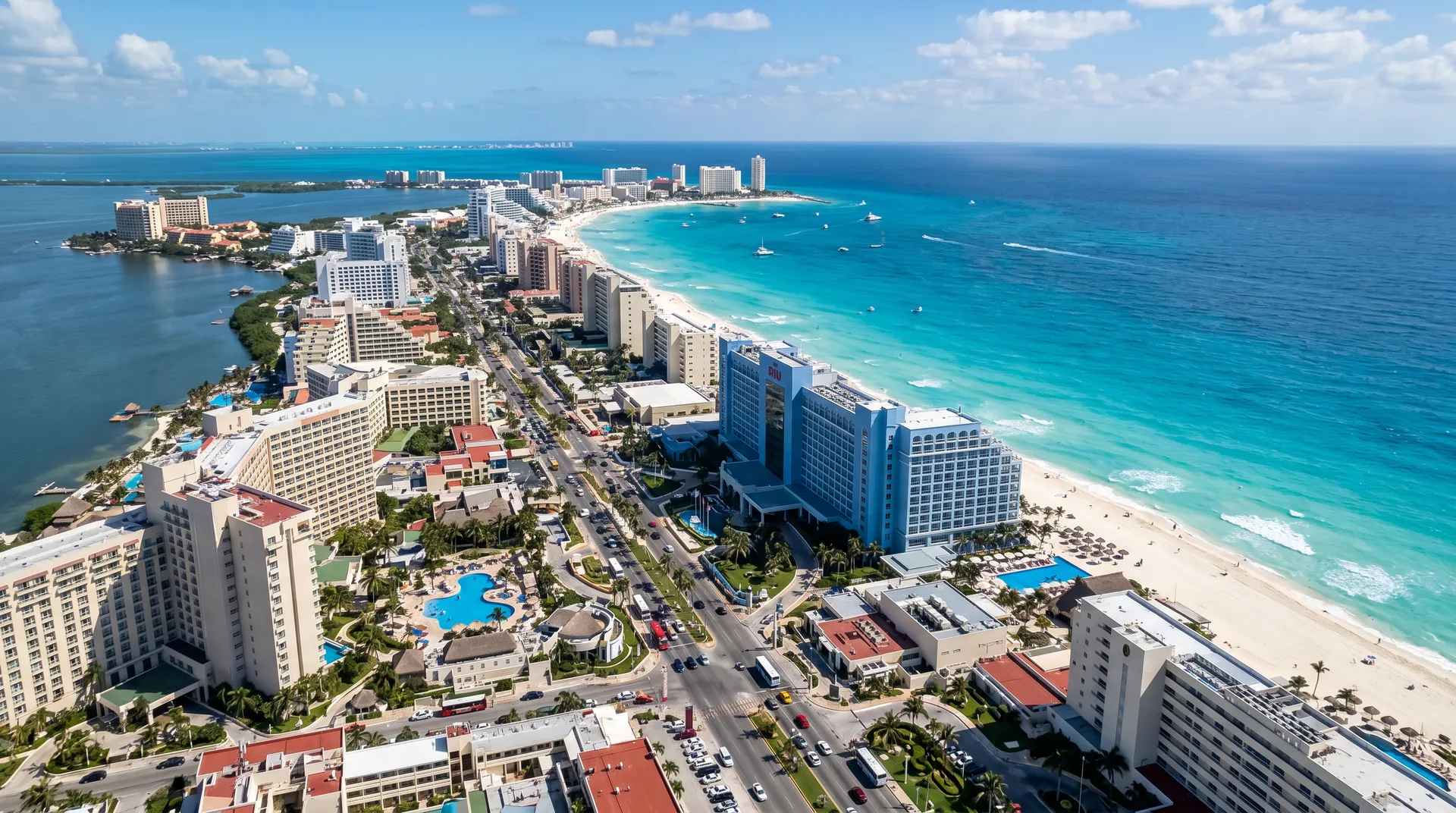
Cancún, Quintana Roo, occupies a strategic position on Mexico's Caribbean coast, serving as a gateway to the Yucatán Peninsula and beyond. The city's location provides access to maritime shipping routes and connects to an extensive network of Mexican federal highways. Cancún International Airport is Mexico's fourth busiest, handling significant cargo volumes alongside passenger traffic. The region's infrastructure supports both the tourism industry and growing industrial activities, with modern warehousing and distribution facilities available to support logistics operations.
While tourism remains the cornerstone of Cancún's economy, the city has diversified into manufacturing and industrial services. The region hosts aerospace manufacturing facilities, automotive parts suppliers, and pharmaceutical production plants. Cancún's free trade zone status and proximity to other industrial centers in the Yucatán Peninsula make it an attractive location for companies seeking to establish distribution hubs for the Mexican and Central American markets. The combination of tourism infrastructure and industrial capabilities creates unique logistics opportunities for cross-border freight movements.










