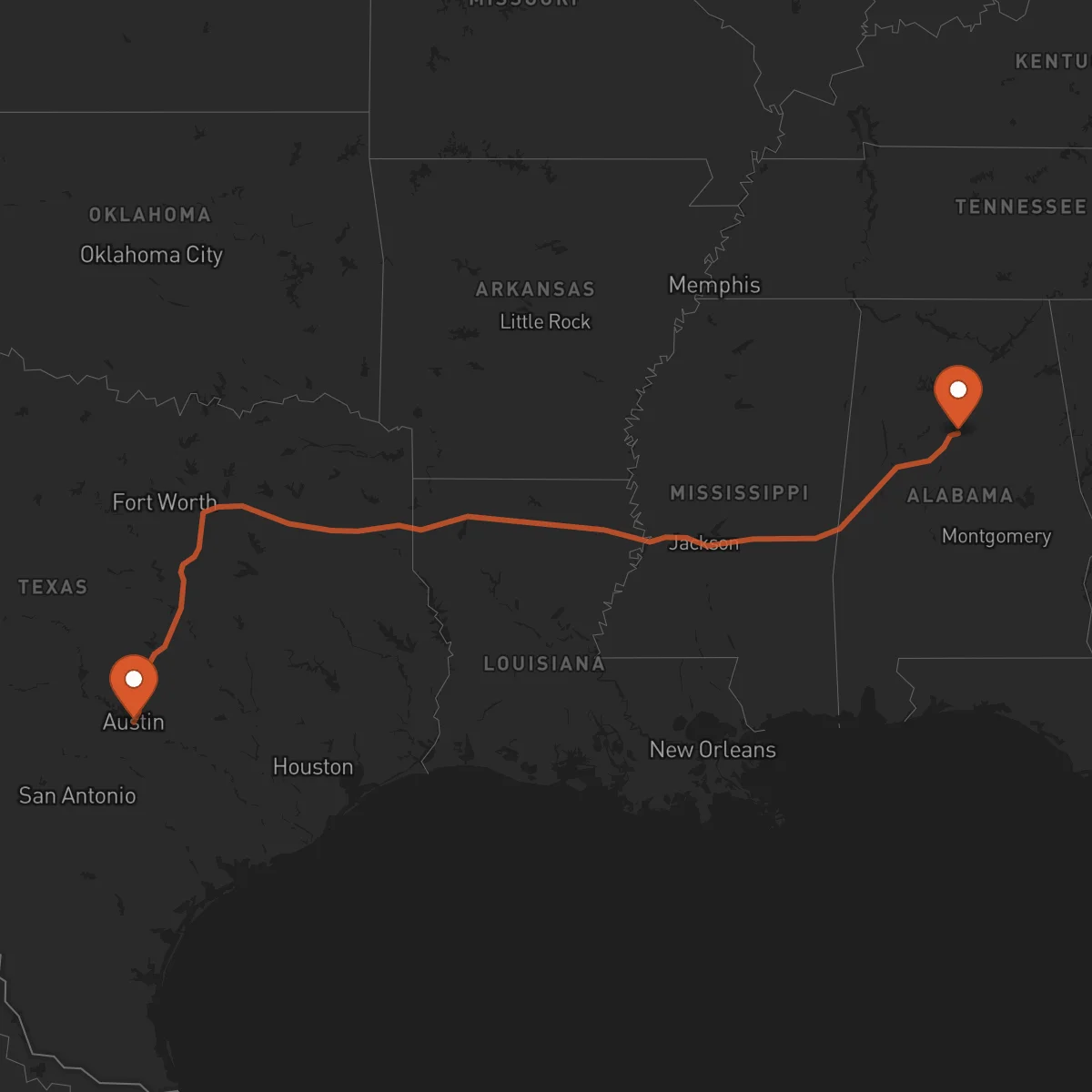
Austin to Birmingham
Birmingham → AustinFTL freight transportation service between Austin and Birmingham. Reliable logistics solutions for your business.
Route Description
Everything you need to know about the corridor Austin - Birmingham
The Austin to Birmingham corridor represents a vital logistics connection between Texas and Alabama, spanning approximately 1093 kilometers across the southern United States. This route links two major economic centers, facilitating the movement of goods through diverse industrial landscapes and connecting key transportation networks. The corridor traverses multiple states, passing through major cities and industrial zones that contribute to the regional economy.
The economic significance of this corridor extends beyond its geographical span. Austin serves as a technology and innovation hub, while Birmingham has established itself as an industrial powerhouse, particularly in manufacturing and automotive sectors. This complementary economic structure creates substantial freight demand, with technology products, industrial equipment, and manufactured goods flowing in both directions. The corridor supports numerous industries including technology, automotive, aerospace, and advanced manufacturing.
Transportation infrastructure along this route includes major interstate highways such as I-35, I-20, and I-65, providing reliable and efficient freight movement. These highways connect to extensive distribution networks, rail terminals, and intermodal facilities that enhance the corridor's logistics capabilities. The route's infrastructure supports various freight types, from standard palletized goods to specialized cargo requiring temperature control or secure handling.
Control Terrestre optimizes freight transportation along this corridor through our network of certified carriers and strategic partnerships. Our dedicated full truckload services ensure that your cargo moves efficiently between Austin and Birmingham, with real-time tracking and professional handling throughout the journey. We understand the specific requirements of this route and provide tailored solutions that address the unique challenges of cross-state freight movement.
Services for this Route
Available services for the corridor Austin - Birmingham
 Origin
Austin
Austin, Texas serves as a strategic logistics hub in the southwestern United States, offering exceptional connectivity for freight operations. The city's location provides access to major transportation corridors, including I-35, which connects to the broader interstate network. Austin's logistics infrastructure includes multiple freight terminals, warehousing facilities, and distribution centers that support the region's growing industrial base. The city's proximity to major ports and rail yards enhances its role in national freight movements.
The economic landscape of Austin is characterized by its technology sector, earning it the nickname "Silicon Hills," alongside a robust healthcare industry and expanding manufacturing base. The city hosts numerous tech companies, research institutions, and innovative startups that generate significant freight demand for specialized equipment, components, and finished products. Additionally, Austin's music and entertainment industry contributes to unique freight requirements for event logistics and specialized cargo handling.
 Destination
Birmingham
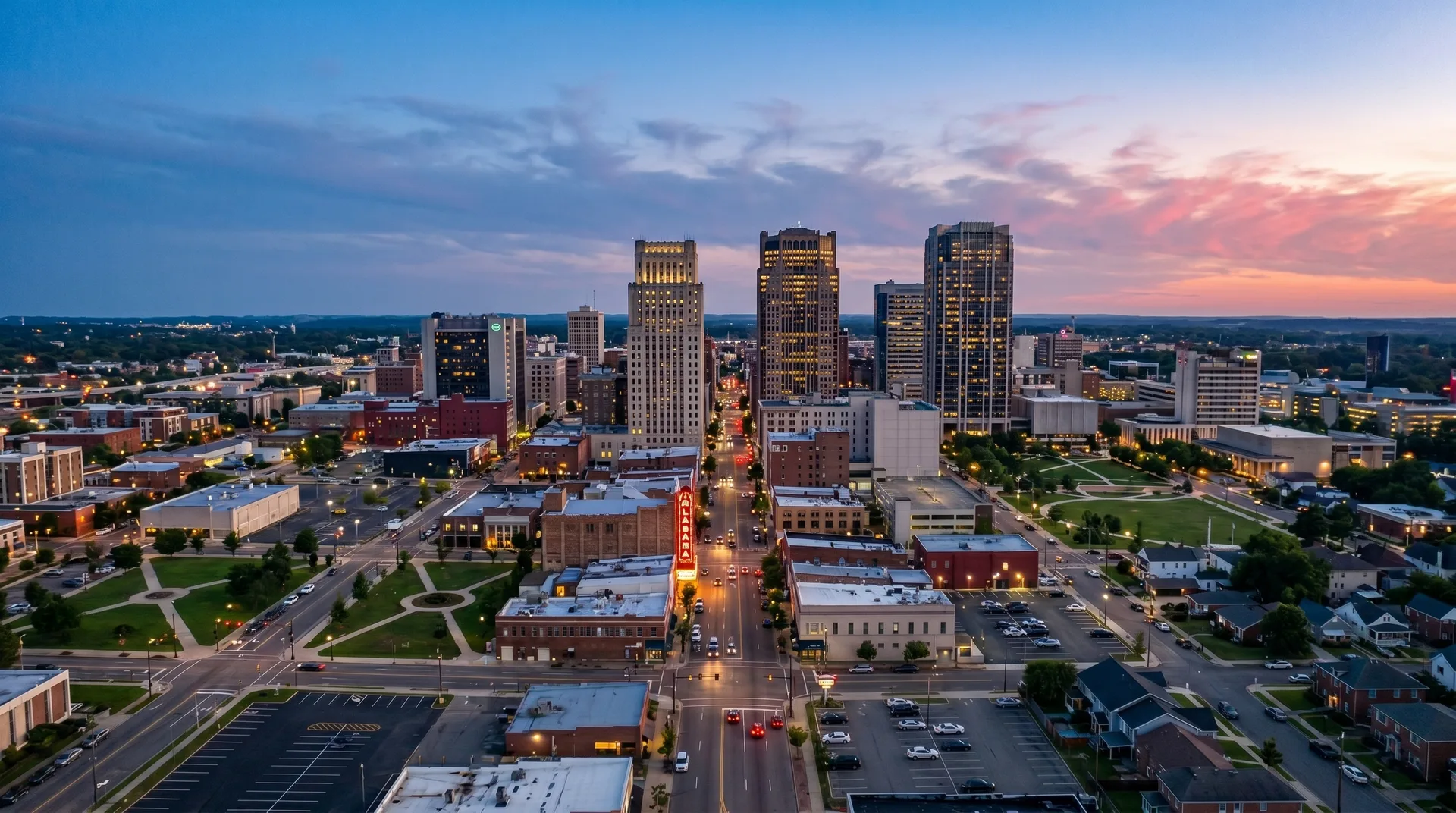
Birmingham, Alabama stands as a strategic logistics center in the southeastern United States, offering excellent connectivity and infrastructure for freight operations. The city's location provides access to major transportation routes, including I-65 and I-20, connecting to national freight networks. Birmingham's logistics infrastructure features multiple freight terminals, warehousing facilities, and distribution centers that support the region's industrial activities. The city's proximity to major rail yards and intermodal facilities enhances its freight handling capabilities.
The economic foundation of Birmingham is built on its strong manufacturing sector, particularly in automotive and steel industries, along with a growing healthcare and biomedical research presence. The city hosts major automotive manufacturers and suppliers, creating substantial freight demand for raw materials, components, and finished vehicles. Birmingham's industrial heritage, combined with its modern economic diversification, generates consistent freight movements across various cargo types, from heavy industrial equipment to specialized manufacturing components.










