March 11, 2026
There is a date marked on the calendar of everyone moving freight in Mexico: July 2026. That month marks the formal start of the review of the United States-Mexico-Canada Agreement (USMCA), the treaty that governs 83% of Mexican exports to the American market and channels more than 3.1 million dollars in goods between both countries every minute.
What is not always said is that this review does not only affect manufacturers and exporters. It directly affects freight transportation — trucking, border crossings, transit times, and the documents that travel with each truck.
Why should the trucking industry care about this?
The USMCA includes a cross-border services chapter that specifically regulates freight, warehousing, and carrier operations among the three countries. According to former Undersecretary of Foreign Trade Juan Carlos Baker, the United States could push for changes to that chapter during the review — from the elimination of annexes that currently allow relatively flexible operations, to new security, labor, or environmental requirements for freight transportation.
In simple terms: the rules that define how and under what conditions a Mexican truck can cross the border could change.
The North American bloc accounts for 30% of global manufacturing and moves 80% of its trade flows by road. Trucking is not a secondary player in this negotiation — it is the muscle that makes the treaty work in practice.
Rules of origin: the issue that will move supply chains the most
The issue that most concerns the industry is not tariffs, but rules of origin. When NAFTA became the USMCA, the regional content required for vehicles rose from 62.5% to 75%. If this review raises that percentage even further — or applies it to other sectors — many companies would have to reconfigure their supply chains to maintain preferential access to the U.S. market.
What does that mean in logistics terms? More movement of components within the region, more domestic routes, more traceability and documentation requirements for every shipment. IMECE warns that sectors operating under just-in-time schemes would be the most vulnerable: a delay in document review can break the entire production chain.
More inspections at the border, longer times
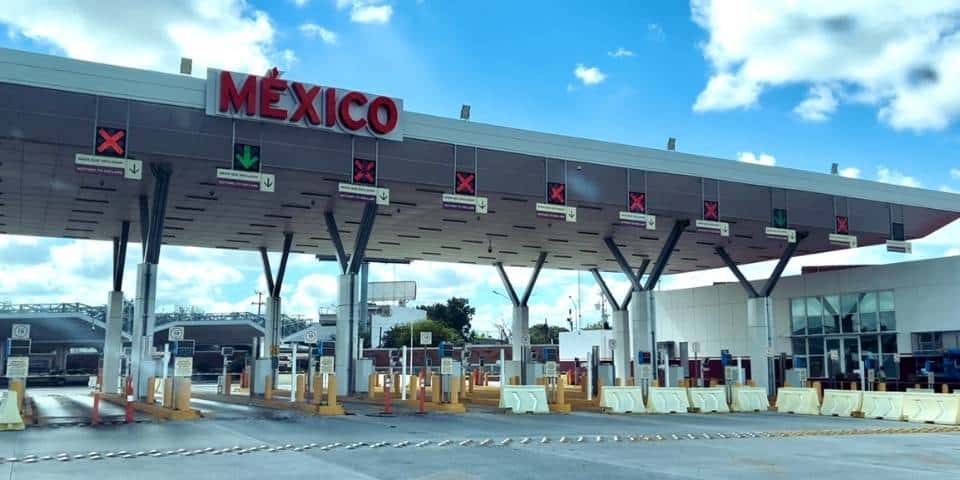
Another expected effect, regardless of the outcome of the negotiation, is a tightening of border controls. Pressures related to security, fentanyl, and migration are already generating more detailed inspections at major crossings. The director of Asociación Soy Logístico, David Martínez Rojas, put it clearly: customs review times can no longer be measured by the same parameters — they can range from 24 hours for ground transportation to seven days.
That has a real cost: warehousing, demurrage, perishable goods at risk, compromised cold chains.
What can companies do now?
The formal review is in July, but the effects are already being felt, and the decisions made today will determine how well-positioned companies will be when the changes become official.
Some concrete actions recommended by industry specialists:
Review the certification status of CTPAT and OEA for your logistics providers. Carriers with these certifications have greater agility at border crossings and a lower probability of random inspection.
Audit the documentation process for every shipment. The new Customs Law and Carta Porte 3.1 already transfers more responsibility to foreign trade actors — a documentation error today can cost up to $100,000 MXN in fines.
Plan ahead. Border transit times are more variable than a year ago. If your operation depends on tight delivery windows, that needs to be reflected in the times you give your logistics team.
The time to choose your logistics partners wisely
When the environment tightens, the difference between one carrier and another becomes more visible. Companies that arrive at this USMCA review process with certified suppliers, documentation in order, and well-planned routes will feel much less pressure than those that improvise.
Is your operation ready for what's coming? At Control Terrestre we operate with CTPAT certifications, verified documentation compliance, and coverage at the country's main border crossings. Request a quote here and let's discuss how to structure your logistics ahead of the USMCA review.
And if you want to receive content like this before it impacts your operation, subscribe to our newsletter.