This February 17, 2026, Mexico finds itself at the epicenter of a geopolitical storm that is redefining the trade routes of the 21st century. Following recent statements by President Claudia Sheinbaum on strengthening the Interoceanic Corridor and President Donald Trump's position regarding the "triangulation" of Chinese goods through Mexican soil, the logistics sector has received a clear message: commercial neutrality is no longer an option.
At Control Terrestre, we observe that today's news is not just political, it is purely operational. The announcement of stricter surveillance on Asian-origin components in products manufactured in Mexico is forcing companies to immediately redesign their supply chains. Today we analyze how this commercial "game of thrones" impacts cargo movement and why Mexico is launching its own logistics sovereignty strategy.
The News: Tightening Rules of Origin at the Border
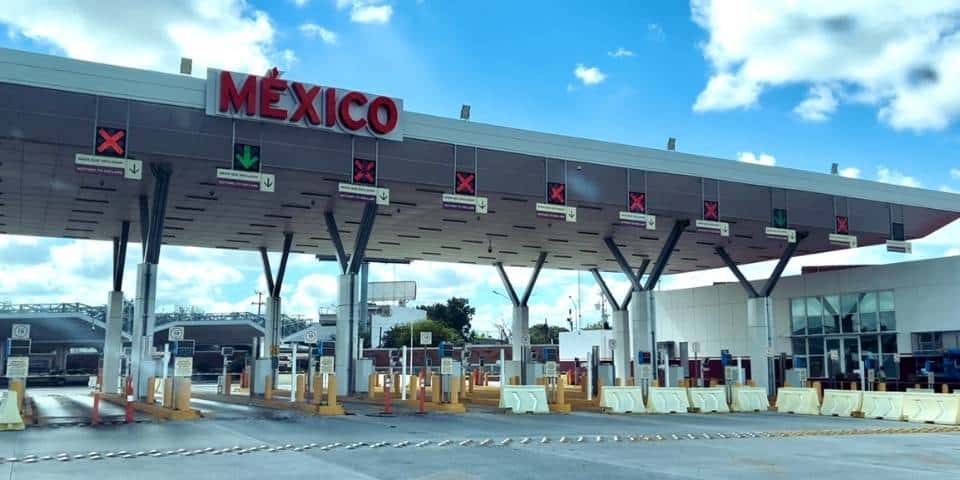
The Trump administration has been emphatic this week: any product crossing into the United States must demonstrate absolute traceability that rules out the use of subsidies or prohibited components from China. This measure, far from being a simple formality, has generated "administrative blockages" at key ports like Manzanillo and Lazaro Cardenas, where cargo is being inspected with unprecedented thoroughness.
For the cross-border transporter, this means that customs clearance no longer begins at the international bridge, but at the origin of the raw material. The news is that Mexico is accepting the challenge, seeking to turn these restrictions into an opportunity to attract even more investment from direct suppliers that previously operated in Asia.
Sheinbaum and the Interoceanic Corridor: Mexico's Response
Facing pressure from the north, President Sheinbaum has accelerated plans to convert the Isthmus of Tehuantepec into the true alternative to the Panama Canal. This February 17, new tax incentives have been announced for companies that establish critical component plants in the development hubs of the south. The strategy is clear: if the United States doesn't want Chinese components, Mexico will manufacture them at home.
This "Mexican Silk Road" seeks to balance the scales. By promoting the substitution of Asian imports with local production, Mexico shields its position within the USMCA. For land logistics, this represents a change in traditional flows. We no longer just move north to south; now we see an east-west and south-north axis with renewed strength. The networking between southern industrial parks and northern borders is now the number one priority of national infrastructure.
Logistics Blockages and Operational Resilience
We cannot ignore that changes in trade policies usually come accompanied by operational friction. This week, delays in the flow of electronic and automotive components have been reported due to the new origin audits. These information "blockages" are sometimes more damaging than a physical road closure.
The China Factor: Investment or Threat?
The relationship with China remains the elephant in the room. While the U.S. government pressures to close the door to Chinese investment in strategic sectors like electric vehicles, Asian companies desperately seek to "Mexicanize" themselves to maintain their access to the world's largest market. Today's news is that the Mexican government is being selective, prioritizing those investments that bring real technology transfer and not just final assembly.
This environment demands that logistics directors also be experts in legal compliance. Networking with customs experts and foreign trade consultants has become a daily operational necessity.
The Year of Logistics Sovereignty
What we are experiencing this February 17 is the birth of a new logistics order. Mexico is no longer just a bridge; it is a decision node. Our country's ability to mediate between Washington's demands and global production reality will determine our prosperity in the next decade.
Teamwork between the public and private sectors is vital. We need safer roads, faster customs, and a workforce capable of managing blockchain traceability technologies. The future of logistics in Mexico is not decided in a truck, but in the ability to connect every link in the chain with transparency and strategic agility.
The panorama of this February 17, 2026 is a reminder that logistics is the physical expression of geopolitics. Between Sheinbaum's statements and Trump's pressures, Mexico has the historic opportunity to consolidate itself as the logistics center of North America. At Control Terrestre, we are ready to be the partner that helps you cross these borders, not just with trucks, but with strategy and security.
Navigate Geopolitics with Control Terrestre
In a world of tariffs and international tensions, your cargo needs an expert guide who knows the rules of the game.
Questions about the new rules of origin? Consult with our customs compliance experts at controlterrestre.com.
Route optimization during blockages: Discover how our monitoring technology helps avoid bottlenecks generated by new border inspections.
Subscribe to our network: Stay informed with the coolest and most interesting analysis on the movements that really affect your profitability.
At Control Terrestre, we connect your business with the world, no matter how complex the chessboard. Together, we move strategy.