On April 29, 2026, the Mexican government signed an agreement that will move far more than steel. It will move routes, suppliers, supply chains, and the way industrial companies plan their procurement for the coming years.
What the steel pact is
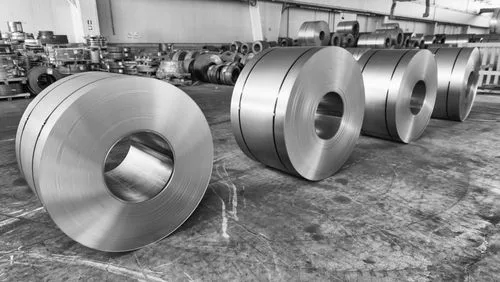
President Claudia Sheinbaum led the signing of the Agreement for the Promotion of the Mexican Steel Industry — already known as the "steel pact." The central idea is simple: the government will buy Mexican steel whenever it can. Milenio
The agreement involves 19 public institutions and three business chambers, which committed to strengthening Mexico's steel industry. Among the participating agencies, Pemex and the Federal Electricity Commission stand out, both of which will be required to incorporate domestic steel into their strategic projects. YouTube
The Ministry of Infrastructure, Communications and Transport will be responsible for ensuring that federal public works comply with the use of domestic steel, while the Ministry of Anticorruption and Good Government will verify that public procurement meets the domestic content criterion. Agenciaaduanal
The agreement has three pillars: public procurement with domestic preference, industrial policy with defense against unfair trade practices, and financing through development banking for projects that integrate Mexican steel.
The numbers that define the scale of the change
For 2026, the government has scheduled the use of 150,000 tons of reinforcing steel and approximately 50,000 tons of structural steel across various infrastructure projects. Americaretail-malls
The agreement could support 90,000 direct and indirect jobs in the steel sector, according to data shared by the president of Canacero during the signing of the agreement. The Logistics World
To put it in perspective: one million tons of steel over the six-year term is not a symbolic figure. It is physical infrastructure — trains, highways, housing, Pemex and CFE facilities — that will require transportation, distribution logistics, regional warehousing, and supply chain coordination across the entire country.
Why this matters for industrial logistics
Cargo flows are going to change
Before the pact, a significant share of the steel used in federal works came from abroad — from China, Brazil, and other countries with low-cost production. Those flows are going to decrease. What replaces it is steel produced at Mexican plants — in Monterrey, Coahuila, Tamaulipas, and Michoacán — that has to reach works distributed across the entire national territory.
That means more domestic heavy and industrial cargo movement. More trips between steel production centers and project sites. More demand for specialized steel cargo transport — flatbeds, rebar, structural profiles — which has specific equipment, securing, and handling requirements.
Industrial supply chains are going to be reorganized
Construction companies, infrastructure contractors, and suppliers to Pemex and CFE that currently have contracts based on imported steel will have to adjust their supply chains. That does not happen overnight — it involves renegotiating supplier contracts, recertifying materials, adjusting lead times, and in some cases changing material receiving points.
For logistics companies, this represents both opportunity and complexity at the same time. Opportunity because there is more domestic industrial cargo movement. Complexity because the volumes, routes, and handling requirements are different from those of general cargo.
Regional demand for industrial transport will grow unevenly
Not all regions of Mexico have nearby steel plants. The states with the highest concentration of steel production — Nuevo León, Coahuila, Tamaulipas, and Michoacán — will see an increase in outbound logistics activity. The states with the highest concentration of public infrastructure works — which under the Mexico Plan includes rail, highway, and social housing projects across the country — will see more inbound movement.
That creates industrial cargo corridors that are not fully served today, particularly on routes to the south and southeast of the country where highway infrastructure is more limited.
Lead times are going to be different
Imported steel arrived with globally negotiated lead times and strategically located distribution warehouses. Domestic steel operates under a different logic — made-to-order production in many cases, with rolling and delivery times that depend on each plant's installed capacity.
The private industry represented by the three business chambers committed to guaranteeing fair prices, timely supply, and the highest quality standards. The timely supply commitment is precisely the one that will stress the logistics chain the most — because public works have schedules, and material delays carry penalties. The Logistics World
What does not change — and it is important to understand it
The president clarified that steel imports will continue, since there are products that are not manufactured in Mexico. Only those that Mexico can already produce will be replaced by domestic output. Milenio
That means specialized steel — certain types of stainless steel, high-alloy steels for specific industries, products that require processes the domestic industry does not have — will continue to be imported. Mixed supply chains — part domestic, part imported — will be the operational reality for many companies.
Managing that duality has concrete logistics implications: different lead times, different points of origin, different documentation requirements for the imported component versus the domestic one.
What companies should be evaluating today
If you are a supplier to federal infrastructure projects: review your current contracts and the material commitments you have. If part of your supply chain depends on imported steel for projects that fall within the scope of the agreement, you need a transition plan — and that plan has logistics components that need to be resolved before the works move forward.
If you are a construction company or Pemex or CFE contractor: the question is not whether the agreement will affect you, but when and on which projects. Identifying what percentage of your current inputs can be replaced with domestic production and which cannot is the first step in knowing what you need to reorganize.
If you are a logistics operator or have your own fleet: the increase in domestic steel cargo movement is a real opportunity — but it requires adequate equipment, experience in heavy and industrial cargo handling, and knowledge of the corridors where activity will be concentrated.
The underlying takeaway
The steel pact is an industrial policy decision — but its most immediate effects are operational and logistical. When you change where a massive input comes from, you change the routes it moves on, the times it arrives, the actors participating in the chain, and the costs at each stage.
Mexico has the productive capacity to meet a significant share of this demand. The question the logistics market will have to answer in the coming months is whether it has the transportation and distribution infrastructure to get that production where it needs to be, when it needs to be there.
At Control Terrestre, we operate industrial corridors with experience in heavy and specialized cargo — because changes in the national supply chain move by truck. Request a quote or subscribe to our newsletter to receive practical content on industrial logistics and foreign trade every week.