WRITTEN BY: MARIA JOSE GAMBA | FEBRUARY 11, 2026
The logistics landscape in Mexico has begun this February 11, 2026 with a clear diagnosis from the main economic actors: the country has entered a new industrial cycle. However, this dynamism driven by the relocation of supply chains (Nearshoring) faces a critical obstacle today: the exhaustion of physical infrastructure.
The news from February 10 has brought an undeniable reality to the table: it is not enough to attract manufacturing investment if the circulatory system of commerce—highways, ports, and customs—does not evolve at the same pace. Yesterday, the report from INEGI on the heavy-duty automotive industry revealed a figure that has set off alarms in the sector: a 51% plunge in cargo vehicle production during January. This data is not an isolated event, but a symptom of the operational challenges and uncertainty in fleet renewal that mark the beginning of this year.
1. THE IMPACT OF THE PLUNGE IN HEAVY VEHICLE PRODUCTION
The decline in the manufacturing and export of semi-trucks reported on February 10 reflects a strategic pause in the industry. This phenomenon responds to a combination of factors, including the saturation of component supply chains and caution regarding new environmental and tariff regulations in the North American region under the USMCA framework.
For the logistics sector, this decrease in the availability of new equipment represents an efficiency challenge. Faced with a lower supply of fresh units, transportation companies are forced to maximize the operational availability of their current fleets through predictive maintenance and much more precise route management. The resilience of cross-border transport today depends less on the number of trucks and more on the intelligence with which they move.
2. THE INDUSTRIAL PETITION: INFRASTRUCTURE FOR COMPETITIVENESS
Parallel to the production data, this Tuesday an urgent call from the Mexican Chamber of the Construction Industry (CMIC) to federal authorities was made public. The demand is clear: increase investment in logistics infrastructure to avoid a stranglehold on foreign trade.
The projected growth requires Mexico not only to maintain but to expand its vital arteries. Critical points identified for immediate intervention by organizations such as the Ministry of Infrastructure, Communications and Transportation (SICT) include:
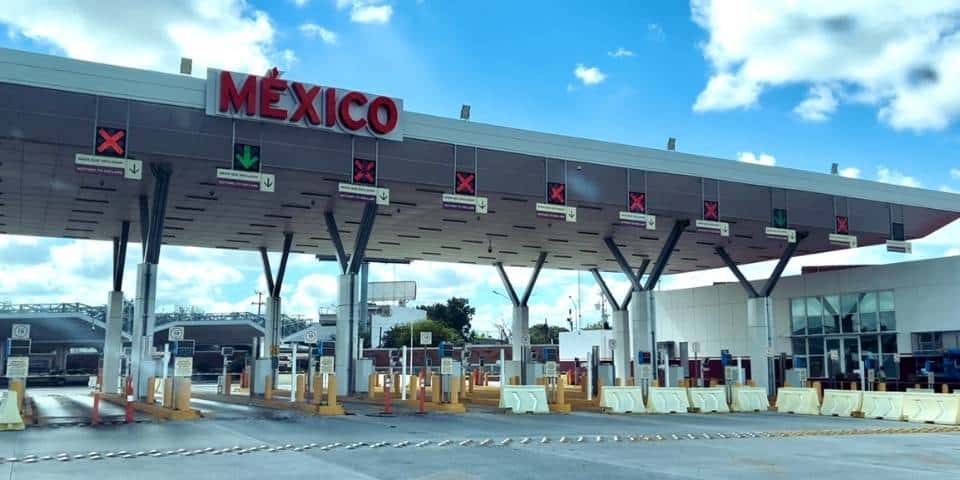
Modernization of Border Crossings: Expansion of technological and physical capacity at key ports to absorb the growing flow of goods.
Dry Port Connectivity: Strengthening of intermodal terminals in the Bajio and Northern regions to decongest major highways.
Highway Security: Implementation of secure corridors with technological surveillance to reduce theft incidents.
3. IMPORT SUBSTITUTION AND NEW INTERNAL ROUTES
A trend that has gained momentum in the news over the last 24 hours is the plan to boost strategic import substitution. This movement seeks for Mexico to not only assemble products but manufacture the components that today travel from Asia, integrating more deeply into the North American value chain.
This structural change has a direct impact on internal logistics. The flow of cargo is no longer linear but has become a complex network where raw materials move between states before reaching the final consumer. Logistics thus becomes the glue that allows this new regional value chain to function with the speed demanded by the global market.
4. STRATEGIC VALUE AMID VOLATILITY
Despite the noise generated by this week's economic fluctuations, Mexico's industrial logic remains solid. Trade with the United States acts as a gravitational force that maintains stability despite the bumps in heavy production.
The key for logistics companies this year lies in specialization and compliance with international safety standards such as C-TPAT. In 2026, the ability to navigate bottlenecks through technology and route knowledge is the differentiator that guarantees business continuity.
The news from February 10, 2026 is a reminder that Mexico is at a defining moment. The success of this industrial cycle is not guaranteed solely by geography, but by the capacity to respond to the lack of infrastructure.
STAY INFORMED WITH CONTROL TERRESTRE
In an environment of constant changes and infrastructure challenges, having accurate information and a reliable logistics partner is essential.
Want to delve deeper into how these changes affect your specific route? Visit our news and analysis section on the official Control Terrestre website.
Follow our daily coverage: Stay up to date with border updates and Nearshoring trends that impact your business.
Connect with us: We are ready to help you navigate the logistics complexity of 2026 with smart and secure solutions.
Tomorrow's infrastructure is planned today. Let's move Mexico together.