Ten years ago, knowing where your truck was a luxury. Today it's a basic expectation — and companies still operating without real-time visibility are paying a cost that doesn't appear on any invoice.
The problem with "the truck is already on its way"
For years, that phrase was enough. The shipper called the carrier, the carrier called the driver, the driver said he was halfway there, and that information reached the customer two hours late with no real certainty.
The model worked because customers had no other reference. Today they do. Amazon, Mercado Libre, and any basic parcel service offer real-time tracking with automatic updates. That standard has already migrated to B2B logistics. If your transportation operation can't tell your customer exactly where their load is right now, you're at a competitive disadvantage — regardless of how much your freight costs or how good your business relationship is.
What in-transit visibility really is
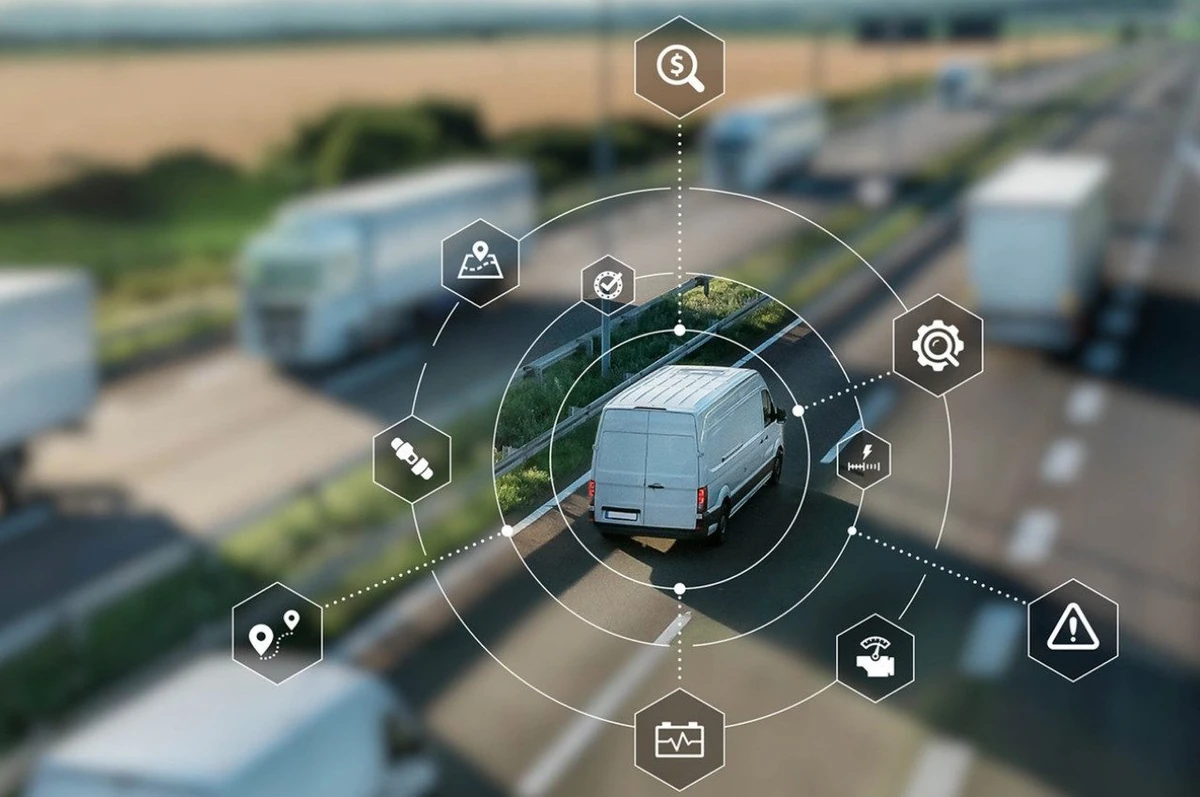
In-transit visibility isn't just knowing the truck left. It's having continuous access to the unit's location, trip status, route deviation alerts, updated estimated arrival times, and any incident that occurs during the journey — all in real time, without having to make a phone call.
In its most complete form, it includes:
Continuous GPS geolocation of the unit, accessible from any device at any point during the journey.
Automatic alerts for unscheduled stops, route deviations, speeding, or prolonged inactivity.
Dynamic ETA that recalculates based on actual traffic and route conditions, not based on the estimated schedule at the time of departure.
Historical record of every trip, with times for each stage, stops made, and any events during the journey.
Direct communication between the driver, the shipper's logistics team, and the consignee, without intermediaries.
Why visibility reduces real costs
Fewer calls, less wasted time
Without visibility, the logistics team spends hours a day tracking trucks by phone — calling the carrier, the driver, the customs broker. Every call is time not spent on something else. With real-time visibility, that information is available without having to ask.
Immediate response to incidents
When a truck stops outside the planned route, every minute of reaction counts. Without visibility, you might find out hours later. With active monitoring, the alert arrives within minutes and you can activate protocols — notify the customer, coordinate with the carrier, manage a contingency — before the problem escalates.
Better delivery window management
In operations with scheduled appointments, time-sensitive receiving, or production lines that depend on the punctual arrival of inputs, real-time ETA allows you to adjust receiving logistics in advance. That reduces dock wait times, optimizes resources, and avoids penalties for out-of-window deliveries.
Evidence in disputes
When there's a discrepancy — the customer says the load arrived late, the carrier says it didn't — the trip's historical record is objective evidence. Departure times, stops, arrival at destination: everything is documented and indisputable.
The argument that no longer works: "we communicate well"
Many companies justify the lack of technological visibility with the quality of their communication. "We have a good relationship with the carrier, they always let us know." The problem is that it doesn't scale, it's not consistent, and it provides no real value to the customer.
Human communication has latency, depends on someone remembering to give notice, varies by shift and person, and leaves no verifiable record. Technological visibility is automatic, consistent, available 24/7, and generates data that can be analyzed to improve operations.
They're not mutually exclusive — but one doesn't replace the other.
What you should demand from your carrier today
Before renewing or signing a transportation contract, these are the questions that should have a clear answer:
Do they have active GPS on all their units? Not just some. On all the ones that are going to move your freight.
Can I access real-time location from my end? Not just the carrier. You, as the shipper, should have direct access — not mediated by a phone call.
Do they generate trip reports? Departure times, arrival, stops, incidents. That history is yours and you should be able to consult it.
Do they have an alert protocol? What happens when the truck stops off-route? Who receives the alert, how quickly, and what actions are triggered?
Do they integrate with your systems? In more sophisticated operations, the carrier's visibility should be able to connect with your ERP or supply chain management platform.
If your current carrier can't answer these questions clearly, that's relevant information for your next purchasing decision.
Visibility as a competitive advantage for the shipper
In-transit visibility isn't just an operational tool. It's a sales argument.
If you're the one moving your customers' goods — whether as a distributor, manufacturer, or service provider — being able to tell them in real time where their order is a real differentiator. Not all your competitors offer it. Those who do win contracts precisely because of it.
In a market where prices are already very tight and product quality is similar among competitors, logistics service — and the visibility that comes with it — is one of the few areas where you can still gain ground.
The visibility you don't see also has a cost
Every time a truck arrives late without prior notice, there's a cost. Every time your team loses an hour tracking a unit by phone, there's a cost. Every time a customer makes a bad decision because they didn't know where their load was, there's a cost.
None of those costs appear on a freight invoice. But they accumulate, affect the business relationship, and eventually become the argument a competitor uses to take a customer away from you.
At Control Terrestre we offer real-time monitoring on all our operations — because visibility isn't an add-on, it's part of the service. Request a quote or subscribe to our newsletter to receive practical content on ground logistics every week.