Victoria to Richmond
Richmond → VictoriaFTL freight transportation service between Victoria and Richmond. Reliable logistics solutions for your business.
Route Description
Everything you need to know about the corridor Victoria - Richmond
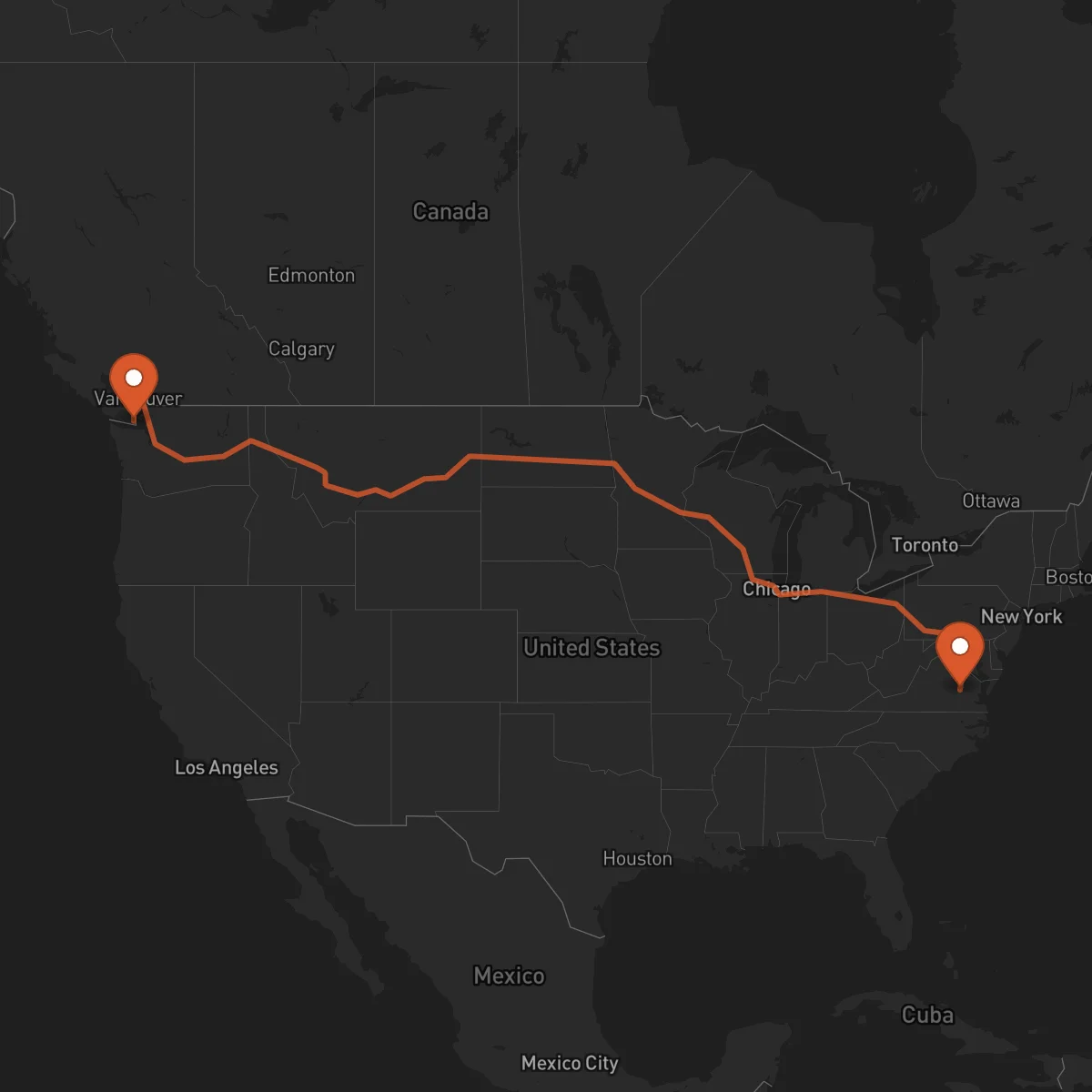
The Victoria, British Columbia to Richmond, Virginia corridor represents a strategic cross-border connection between Canada and the United States, spanning approximately 3,862 kilometers. This route links the Pacific Northwest with the Mid-Atlantic region, traversing diverse landscapes and crossing multiple state and provincial lines. The corridor serves as a vital link for businesses requiring reliable freight transportation between these two significant North American markets.
The economic significance of this corridor is substantial, connecting British Columbia's technology and natural resource sectors with Virginia's manufacturing, government, and logistics industries. Major industries utilizing this route include aerospace components, forestry products, agricultural goods, and high-tech equipment. The corridor facilitates trade in both directions, supporting the growing economic relationship between Western Canada and the Eastern United States.
Key transportation infrastructure along this corridor includes major highways such as I-5, I-84, I-80, and I-64, providing efficient north-south and east-west connectivity. The route involves crossing the U.S.-Canada border, requiring careful coordination of customs documentation and compliance with both Canadian and U.S. regulations. Control Terrestre's expertise in cross-border logistics ensures seamless operations, handling all necessary paperwork and providing real-time tracking throughout the journey. Our network of certified carriers and strategic partnerships enable us to offer reliable, full truckload (FTL) services that meet the specific requirements of this complex international route.
Services for this Route
Available services for the corridor Victoria - Richmond
 Origin
Victoria
Victoria, located on Vancouver Island in British Columbia, serves as a strategic gateway for logistics operations to the United States. As the capital city of British Columbia, Victoria benefits from its proximity to major ports and transportation hubs on the mainland. The city's economy is driven by technology, tourism, government services, and a growing marine industry. Victoria's location provides access to the Port of Vancouver and other key facilities, making it an ideal origin point for cross-border freight shipments. The region's infrastructure includes well-maintained highways connecting to ferry terminals, which link Vancouver Island to the mainland transportation network.
 Destination
Richmond
Richmond, Virginia, strategically positioned in the Mid-Atlantic region, serves as a crucial logistics hub for the Eastern United States. The city's location at the intersection of major interstates (I-95, I-64, and I-85) provides excellent connectivity to key markets along the East Coast. Richmond's economy is diverse, with strong presence in manufacturing, government services, technology, and distribution. The region benefits from the Port of Virginia, one of the largest container ports on the East Coast, and Richmond International Airport, which supports air cargo operations. The city's robust infrastructure and central location make it an ideal destination for freight shipments from Western Canada, offering efficient distribution capabilities throughout the Eastern Seaboard.










