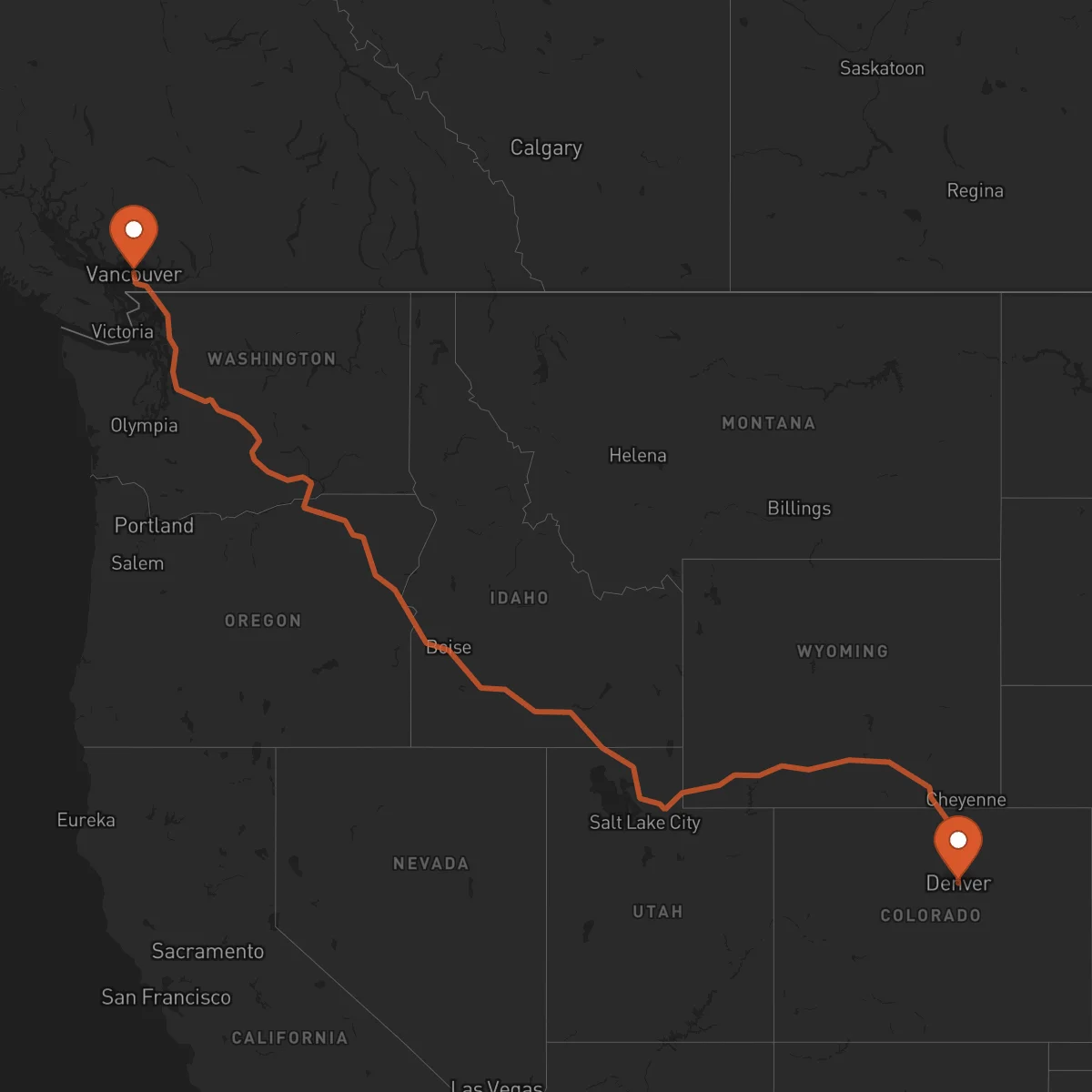
Vancouver to Denver
Denver → VancouverFTL freight transportation service between Vancouver and Denver. Reliable logistics solutions for your business.
Route Description
Everything you need to know about the corridor Vancouver - Denver
The Vancouver-Denver corridor represents a vital cross-border logistics route connecting Canada's Pacific gateway with the strategic heart of the Rocky Mountain region. This 1,779 km transportation artery facilitates the movement of goods between British Columbia's coastal ports and Colorado's inland distribution centers, serving as a critical link in North American supply chains. The corridor traverses diverse terrain, from Vancouver's port facilities through the Canadian Rockies, across the international border at various points, and through the mountain states before reaching Denver's industrial corridors.
The economic significance of this route cannot be overstated. Vancouver serves as Canada's largest port on the Pacific, handling millions of TEUs annually and connecting Asian markets with North American consumers. Denver, positioned at the intersection of major interstate highways, functions as a crucial distribution hub for the central United States. This corridor supports industries ranging from technology and aerospace to agriculture and manufacturing, with particular emphasis on time-sensitive shipments requiring temperature-controlled transportation.
Key industries utilizing this corridor include electronics manufacturing, aerospace components, agricultural products, retail distribution, and automotive parts. The route accommodates both import-export activities through Vancouver's port facilities and domestic distribution needs within the United States. Control Terrestre's expertise in cross-border operations ensures seamless customs clearance, compliance with both Canadian and U.S. regulations, and efficient transit times for full truckload shipments moving between these strategic locations.
The primary transportation infrastructure includes major highways such as I-5, I-15, and I-25, with key border crossings at locations like Blaine-Huntingdon and other Pacific Northwest entry points. Control Terrestre's network of certified carriers and strategic partnerships enables reliable service across this corridor, with specialized equipment options including refrigerated units for temperature-sensitive cargo and dedicated services for high-value shipments.
Services for this Route
Available services for the corridor Vancouver - Denver
 Origin
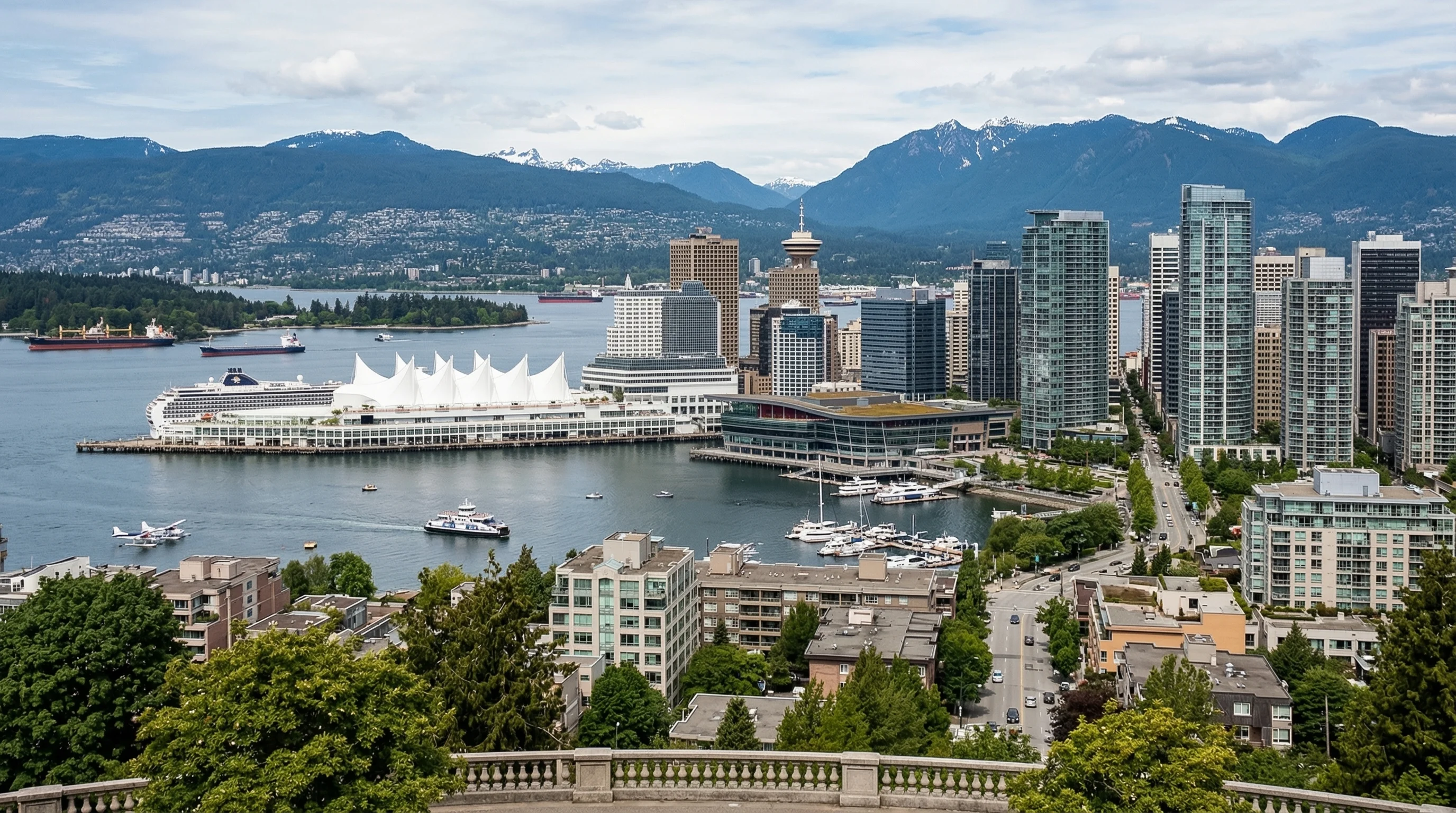
Vancouver
Vancouver stands as Canada's primary Pacific gateway, strategically positioned to serve as the country's largest port and a crucial logistics hub for trans-Pacific trade. The Port of Vancouver handles over 3.5 million TEUs annually, connecting Asian manufacturing centers with North American markets. The city's robust infrastructure includes multiple container terminals, extensive rail connections, and direct highway access to the United States. Vancouver's economy thrives on international trade, with strong sectors in technology, film production, natural resources, and advanced manufacturing. The metropolitan area's sophisticated logistics network, including the Vancouver International Airport and extensive warehousing facilities, positions it as an ideal origin point for cross-border freight movements to destinations throughout the United States.
 Destination
Denver
Denver occupies a strategic position as the largest city in the Rocky Mountain region and a critical logistics hub for the central United States. Located at the intersection of I-25, I-70, and I-76, Denver provides unparalleled access to major markets including Salt Lake City, Kansas City, Dallas, and Chicago. The city's elevation of 5,280 feet and central location make it an ideal distribution point for reaching both coastal regions and inland destinations. Denver's economy encompasses aerospace and defense, technology, healthcare, and renewable energy sectors, supported by a robust industrial base and proximity to major research institutions. The Denver International Airport, one of the largest by land area globally, enhances the region's multimodal transportation capabilities, while extensive warehousing and distribution facilities cater to e-commerce and traditional retail supply chains.










