Tulsa to Toronto
Toronto → TulsaFTL freight transportation service between Tulsa and Toronto. Reliable logistics solutions for your business.
Route Description
Everything you need to know about the corridor Tulsa - Toronto
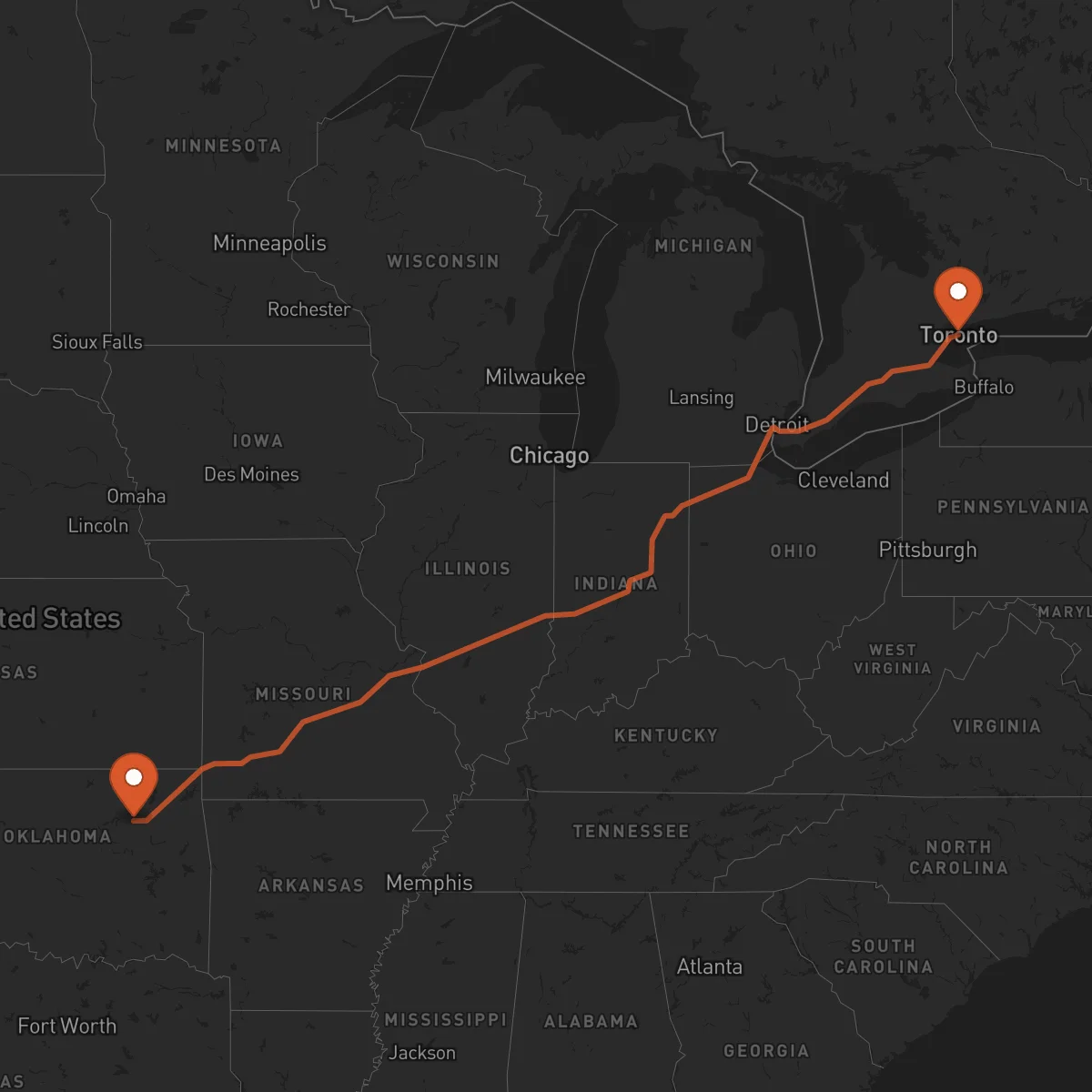
The Tulsa to Toronto corridor represents a vital cross-border freight route connecting the heart of the United States with Canada's largest economic center. This 1639 km corridor traverses diverse terrain and crosses international boundaries, making it a critical link in North American supply chains. The route facilitates the movement of goods between Oklahoma's industrial base and Ontario's manufacturing and distribution hubs, supporting billions in annual trade between the two nations.
The corridor's economic significance stems from Tulsa's role as an energy and logistics center and Toronto's position as a financial and industrial powerhouse. Major industries utilizing this route include automotive parts, machinery, petroleum products, agricultural commodities, and manufactured goods. The automotive sector particularly benefits from this corridor, with numerous parts suppliers in Oklahoma feeding assembly plants throughout Ontario.
Transportation infrastructure along this corridor includes major interstate highways such as I-44, I-70, and I-69, connecting to Canadian routes through Detroit or Buffalo. The corridor primarily utilizes the Detroit-Windsor crossing, the busiest commercial border crossing between the US and Canada, or alternatively the Peace Bridge at Buffalo-Fort Erie. Control Terrestre's expertise in cross-border operations ensures seamless customs clearance, compliance with both US and Canadian regulations, and efficient transit through these critical border points.
Services for this Route
Available services for the corridor Tulsa - Toronto
 Origin
Tulsa
Tulsa, Oklahoma serves as a strategic logistics hub in the southern United States, positioned at the crossroads of major freight routes. The city's location provides excellent access to the central US market, with proximity to major highways including I-44, which connects directly to St. Louis and beyond. Tulsa's logistics infrastructure includes the Tulsa Port of Catoosa, the most inland river port in the US, providing multimodal transportation options through connections to the Mississippi River system. The city's economy is anchored by the energy sector, aerospace manufacturing, and logistics services, with numerous warehouses and distribution centers supporting regional distribution networks.
 Destination
Toronto, Ontario stands as Canada's premier logistics and economic center, offering unparalleled access to the North American market. The Greater Toronto Area hosts Canada's busiest international airport, Pearson International, and serves as a major rail hub with connections to both Canadian and US networks. Toronto's strategic location provides access to over 150 million consumers within a day's drive, making it a critical distribution point for goods entering Canada. The city's economy spans financial services, technology, manufacturing, and automotive industries, with extensive warehousing and logistics infrastructure supporting both domestic and international trade. Toronto's port facilities on Lake Ontario further enhance its multimodal transportation capabilities.










