Tulsa to Tepic
Tepic → TulsaFTL freight transportation service between Tulsa and Tepic. Reliable logistics solutions for your business.
Route Description
Everything you need to know about the corridor Tulsa - Tepic
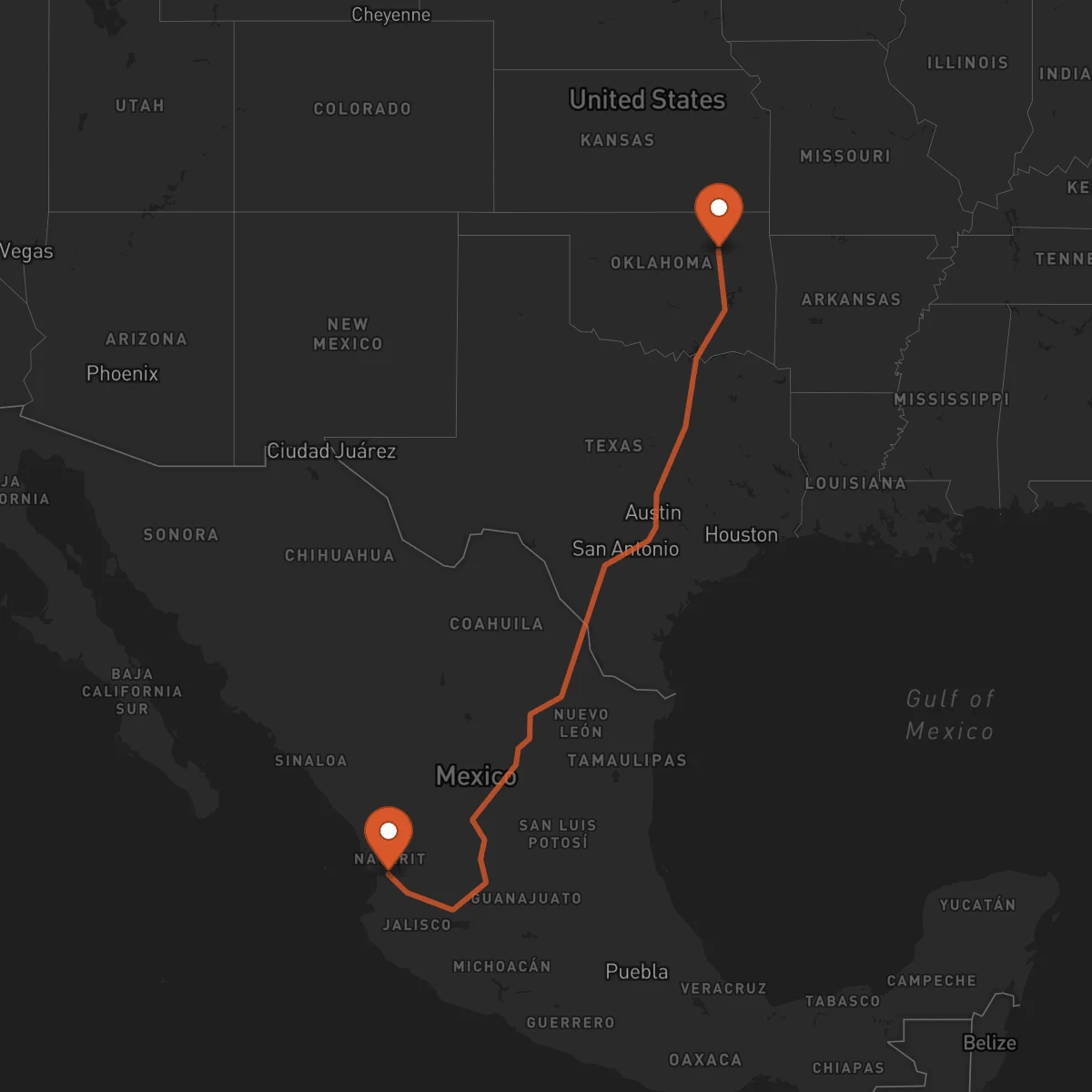
The Tulsa to Tepic corridor represents a vital cross-border freight transportation route connecting the industrial heartland of Oklahoma with the growing manufacturing hub of Nayarit, Mexico. This 1,843 km route traverses diverse terrain and crosses multiple states, facilitating the movement of goods between two dynamic economic regions. The corridor serves as a critical link in North American supply chains, enabling companies to efficiently transport full truckload (FTL) freight between the United States and Mexico.
The economic significance of this route is underscored by the complementary industrial strengths of both regions. Tulsa, situated in Oklahoma's Green Country, serves as a logistics and energy sector powerhouse, while Tepic has emerged as a key manufacturing and agricultural center in western Mexico. This corridor particularly benefits companies engaged in automotive parts manufacturing, electronics, agricultural products, and industrial equipment distribution. The route connects major transportation hubs and manufacturing centers, creating a seamless flow of goods across the border.
Transportation infrastructure along this corridor includes major highways such as I-35, I-40, and Mexican Federal Highways 45 and 15, providing reliable and efficient freight movement. The route typically crosses at Laredo/Nuevo Laredo or El Paso/Ciudad Juárez, two of North America's busiest commercial border crossings. Control Terrestre's expertise in cross-border logistics ensures smooth customs clearance and compliance with all regulatory requirements, minimizing delays and optimizing transit times for our clients' full truckload shipments.
Services for this Route
Available services for the corridor Tulsa - Tepic
 Origin
Tulsa
Tulsa, Oklahoma stands as a strategic logistics hub in the central United States, offering exceptional connectivity and infrastructure for freight transportation. Located in the northeastern part of Oklahoma, Tulsa benefits from its position at the crossroads of major interstate highways, including I-44 and I-35, providing direct access to national freight networks. The city's logistics infrastructure includes the Tulsa Port of Catoosa, the most inland river port in the United States, offering barge transportation via the McClellan-Kerr Arkansas River Navigation System.
The economic landscape of Tulsa is diverse, with strong presence in energy, aerospace, manufacturing, and logistics sectors. The region is home to numerous corporate headquarters and distribution centers, making it a natural origin point for freight shipments. Tulsa's proximity to major markets in the Midwest and South, combined with its skilled workforce and business-friendly environment, makes it an ideal location for companies seeking efficient distribution solutions. The city's transportation infrastructure includes multiple rail connections, a major international airport, and extensive warehousing facilities, all of which support robust freight movement capabilities.
 Destination
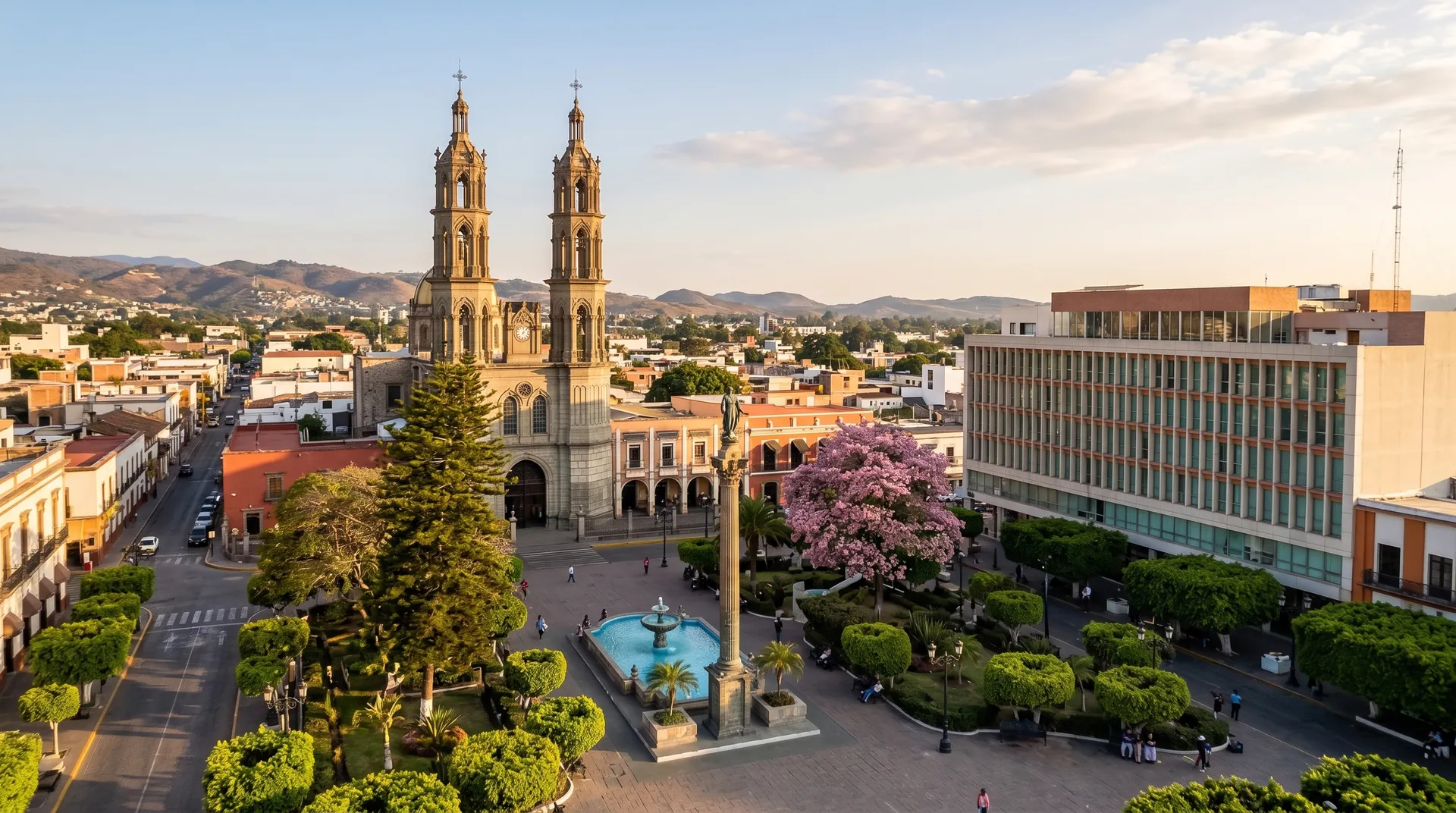
Tepic, the capital city of Nayarit, Mexico, serves as a strategic logistics gateway to Mexico's western Pacific region. Located in the western part of Mexico, Tepic benefits from its proximity to major ports and its position along key transportation corridors connecting central Mexico with the Pacific coast. The city's infrastructure includes access to Mexican Federal Highway 15, which provides direct connections to major industrial centers and ports, facilitating efficient freight movement throughout the region.
The economic profile of Tepic and the surrounding Nayarit region is characterized by growing manufacturing, agriculture, and technology sectors. The area has attracted significant foreign investment, particularly in electronics manufacturing and automotive components. Tepic's strategic location near the Pacific coast provides companies with access to international shipping routes, while its inland position offers cost advantages for distribution throughout central and northern Mexico. The region's infrastructure continues to develop, with improvements in highway systems and logistics facilities supporting the growing demand for cross-border freight transportation and domestic distribution services.










