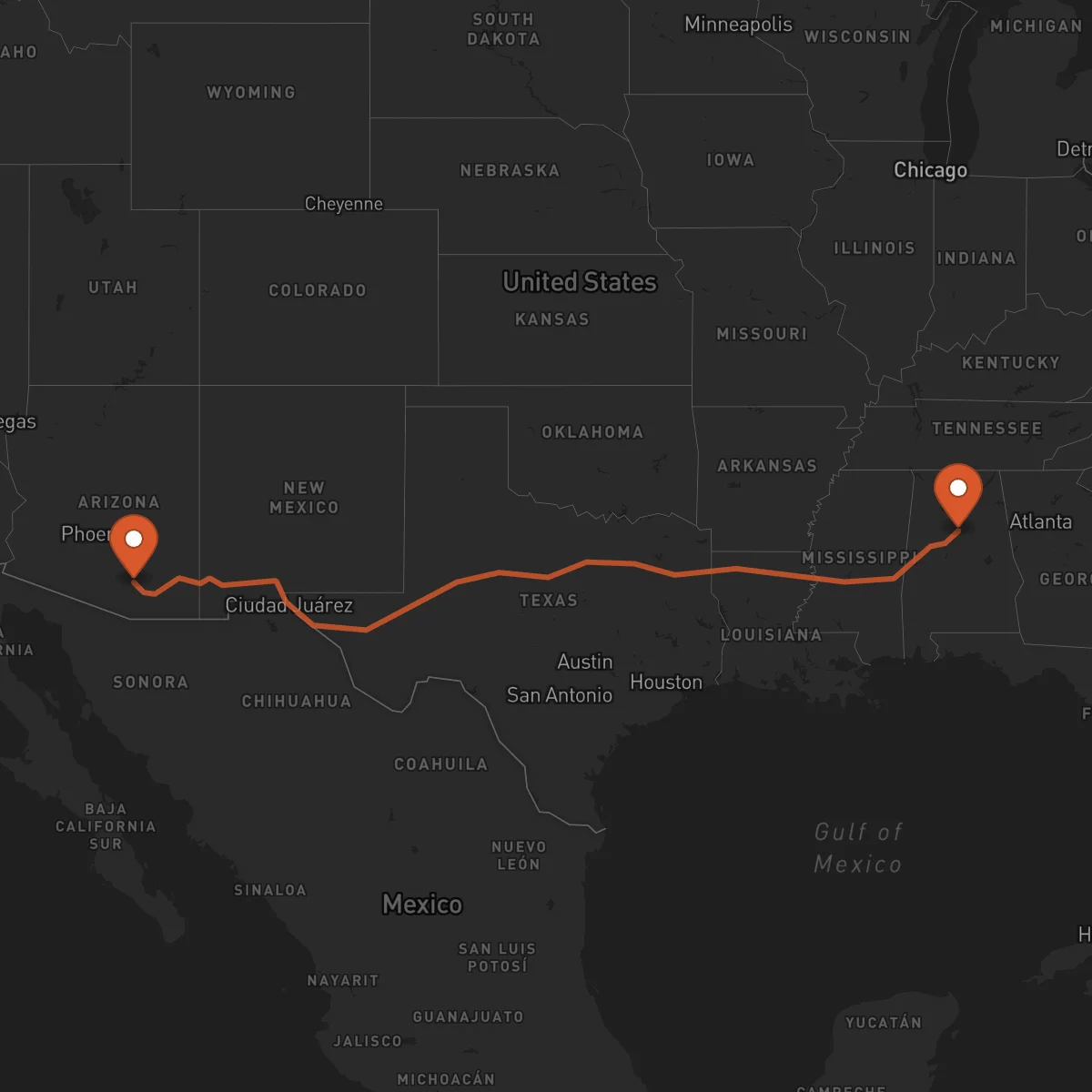
Tucson to Birmingham
Birmingham → TucsonFTL freight transportation service between Tucson and Birmingham. Reliable logistics solutions for your business.
Route Description
Everything you need to know about the corridor Tucson - Birmingham
The Tucson to Birmingham corridor represents a vital domestic transportation route connecting the southwestern United States with the southeastern industrial heartland. This 2,256-kilometer journey traverses diverse landscapes and economic regions, serving as a crucial link for freight moving between Arizona's growing logistics hubs and Alabama's manufacturing centers. The corridor primarily follows Interstate 10 East and Interstate 20 East, providing reliable access through major cities including El Paso, San Antonio, Houston, and Atlanta before reaching Birmingham.
The economic significance of this route cannot be overstated. Tucson serves as a strategic gateway for goods entering the southwestern United States, while Birmingham stands as a major industrial and distribution center in the Southeast. This corridor facilitates the movement of goods between two distinct economic regions: the technology and aerospace-focused economy of Arizona and the automotive, steel, and manufacturing powerhouse of Alabama. The route supports critical supply chains for industries including automotive parts, aerospace components, consumer goods, and industrial equipment.
Control Terrestre specializes in optimizing transportation along this corridor through our extensive network of certified carriers and strategic partnerships. Our full truckload (FTL) services ensure that your cargo moves efficiently and securely from origin to destination. We leverage our expertise in cross-country transportation to provide reliable scheduling, real-time tracking, and dedicated support for shipments traversing this important domestic route. Our team understands the unique challenges of long-haul transportation and implements best practices to maintain cargo integrity throughout the journey.
Whether you're shipping automotive components from Tucson's growing manufacturing sector to Birmingham's assembly plants, or moving industrial equipment between these economic centers, Control Terrestre offers the expertise and resources needed for successful transportation. Our commitment to safety, reliability, and customer service makes us the preferred partner for companies operating along this crucial domestic corridor.
Services for this Route
Available services for the corridor Tucson - Birmingham
 Origin
Tucson
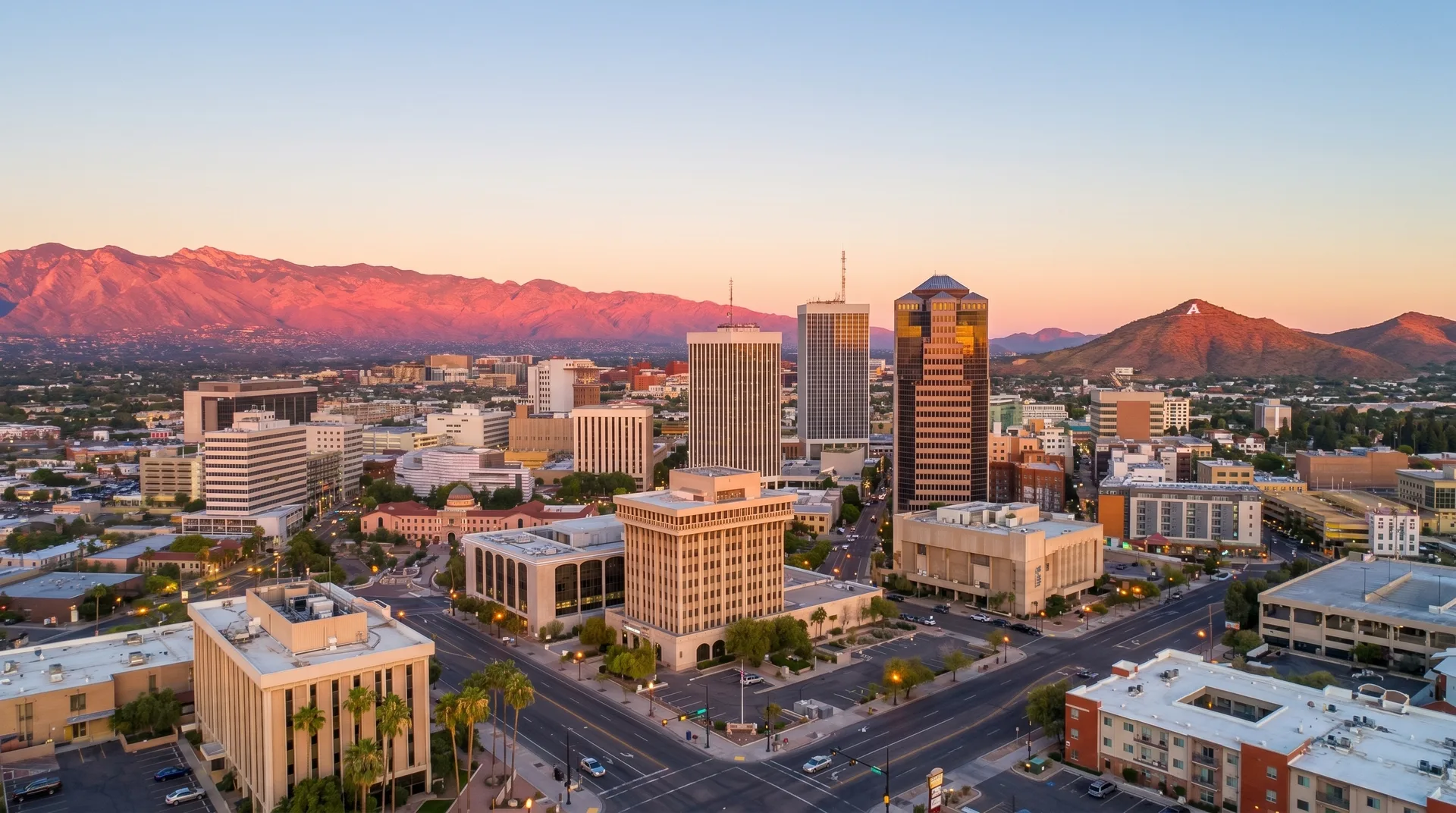
Tucson, Arizona serves as a strategic logistics hub in the southwestern United States, offering unique advantages for freight transportation. Located in the Sonoran Desert, Tucson provides access to major transportation corridors including Interstate 10, which connects the city to both the Pacific Coast and the eastern United States. The city's proximity to the Mexican border and its position as a gateway to the Southwest make it an ideal origin point for domestic and cross-border shipments. Tucson's infrastructure includes the Tucson International Airport, the Port of Tucson (a Foreign Trade Zone), and extensive warehousing facilities that support the region's logistics operations.
The economic landscape of Tucson is diverse and growing, with strong presence in aerospace and defense, technology, healthcare, and manufacturing sectors. The city is home to major employers including Raytheon Missiles & Defense, Honeywell Aerospace, and the University of Arizona, which drive demand for specialized freight services. Tucson's location also makes it a key distribution point for goods moving throughout the Southwest, serving markets in Arizona, New Mexico, and beyond. The region's focus on technology and advanced manufacturing creates consistent demand for reliable transportation services to major industrial centers across the country.
 Destination
Birmingham
Birmingham, Alabama stands as a major industrial and logistics center in the southeastern United States, strategically positioned to serve the region's manufacturing and distribution needs. The city's location in north-central Alabama provides excellent access to major transportation networks, including Interstate 20, Interstate 65, and the extensive rail infrastructure that has historically made Birmingham an industrial powerhouse. The Birmingham-Shuttlesworth International Airport and the Port of Birmingham on the Black Warrior River complement the city's robust ground transportation options, creating a multimodal logistics environment.
The economic foundation of Birmingham is built on manufacturing, particularly in automotive, steel, and heavy industry sectors. The region hosts major automotive assembly plants, including those operated by Honda, Mercedes-Benz, and Hyundai, along with numerous automotive suppliers that create substantial freight movement. Birmingham's industrial heritage in steel production continues to influence its economic character, while healthcare, education, and technology sectors have emerged as growing components of the local economy. The city's central location in the Southeast makes it a natural distribution point for goods moving throughout the region, with strong connections to Atlanta, Nashville, and other major southeastern markets.










