Birmingham to Tucson
Tucson → BirminghamFTL freight transportation service between Birmingham and Tucson. Reliable logistics solutions for your business.
Route Description
Everything you need to know about the corridor Birmingham - Tucson
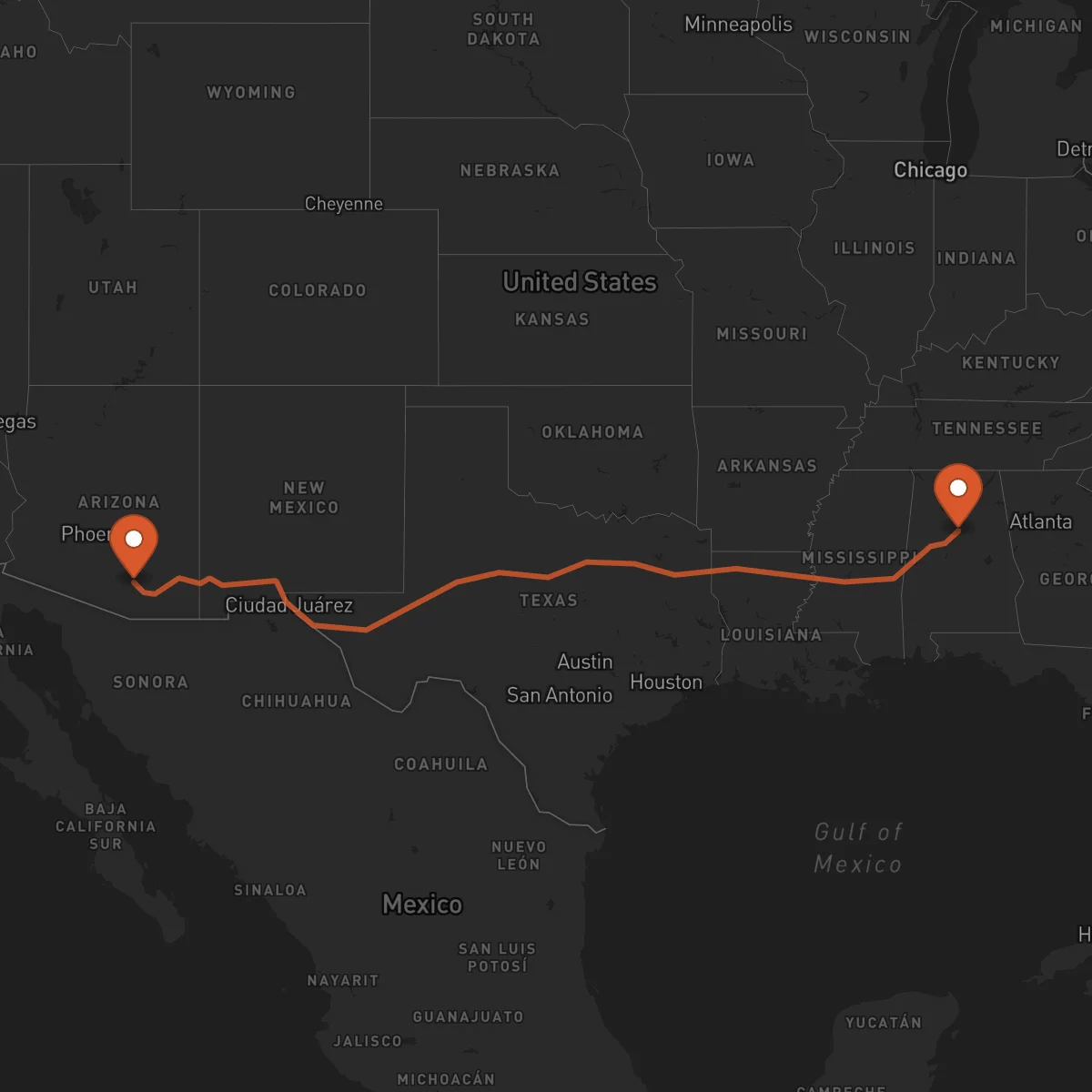
The logistics corridor between Birmingham, Alabama and Tucson, Arizona represents a vital freight transportation route connecting the southeastern United States with the southwestern region. This 2,256-kilometer domestic corridor traverses diverse landscapes and connects major economic hubs, facilitating the movement of goods between two strategically important cities. Birmingham, known as the "Pittsburgh of the South," serves as an industrial powerhouse with its strong manufacturing and logistics sectors, while Tucson represents a growing southwestern market with significant aerospace, defense, and technology industries.
The corridor primarily utilizes Interstate 20 and Interstate 10, two of America's most important freight arteries. I-20 provides efficient east-west connectivity through the southern states, while I-10 serves as the major transcontinental route linking the southeastern and southwestern United States. This infrastructure enables reliable and timely freight transportation, supporting the supply chain needs of businesses operating along this extensive route.
Control Terrestre specializes in optimizing freight operations along this corridor through our network of certified transportation providers. We understand the unique challenges of this long-haul route, including varying terrain, weather conditions, and regulatory requirements across multiple states. Our dedicated FTL services ensure that your cargo moves efficiently and securely from origin to destination, with real-time tracking and professional handling throughout the journey.
Services for this Route
Available services for the corridor Birmingham - Tucson
 Origin
Birmingham
Birmingham, Alabama stands as a strategic logistics hub in the southeastern United States, leveraging its central location and robust infrastructure. The city benefits from its position at the intersection of major transportation networks, including Interstate 20, Interstate 65, and Interstate 59, providing excellent connectivity to regional and national markets. Birmingham-Shuttlesworth International Airport and the Port of Birmingham on the Black Warrior River further enhance the city's multimodal transportation capabilities.
The Birmingham metropolitan area hosts a diverse industrial base, with manufacturing, automotive, aerospace, and healthcare sectors driving economic activity. The region is home to major companies and distribution centers, making it a critical origin point for freight shipments. The city's logistics infrastructure includes numerous warehousing facilities, cross-docking operations, and specialized handling capabilities for various cargo types, supporting efficient freight consolidation and distribution.
 Destination
Tucson
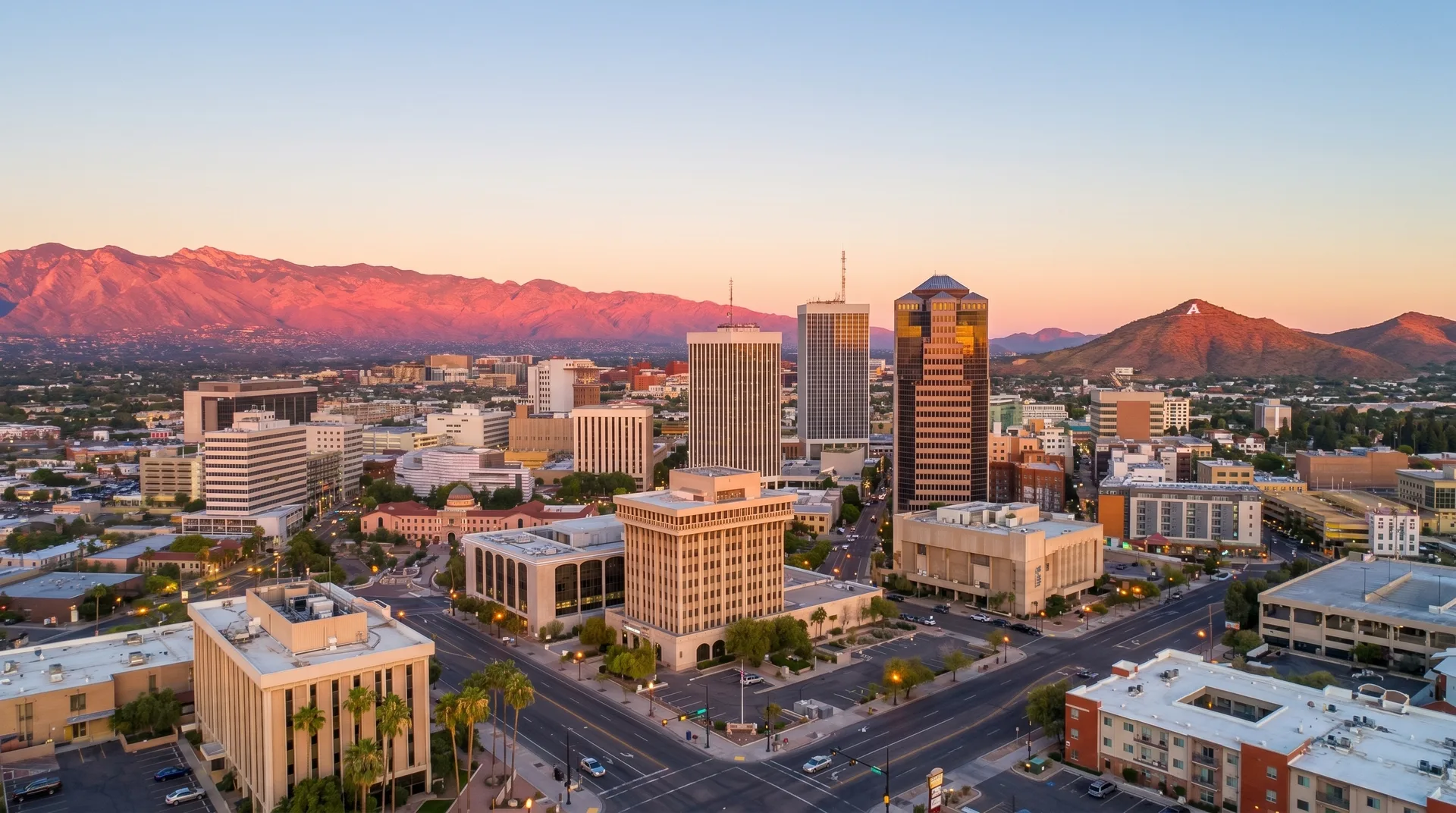
Tucson, Arizona serves as a strategic logistics gateway to the southwestern United States and Mexico, offering unique advantages for freight transportation. Located in the Sonoran Desert, Tucson provides access to major markets in Arizona, New Mexico, and the broader southwestern region. The city's logistics infrastructure includes Tucson International Airport, Union Pacific rail facilities, and excellent highway connectivity via Interstate 10, which links directly to major southwestern markets.
The Tucson metropolitan area has experienced significant growth in aerospace and defense industries, with major employers including Raytheon Missiles & Defense and Davis-Monthan Air Force Base. The region also supports technology, healthcare, and tourism sectors, creating diverse freight transportation needs. Tucson's proximity to the U.S.-Mexico border and its role as a distribution center for the southwestern states make it an increasingly important destination for freight shipments from across the country.










