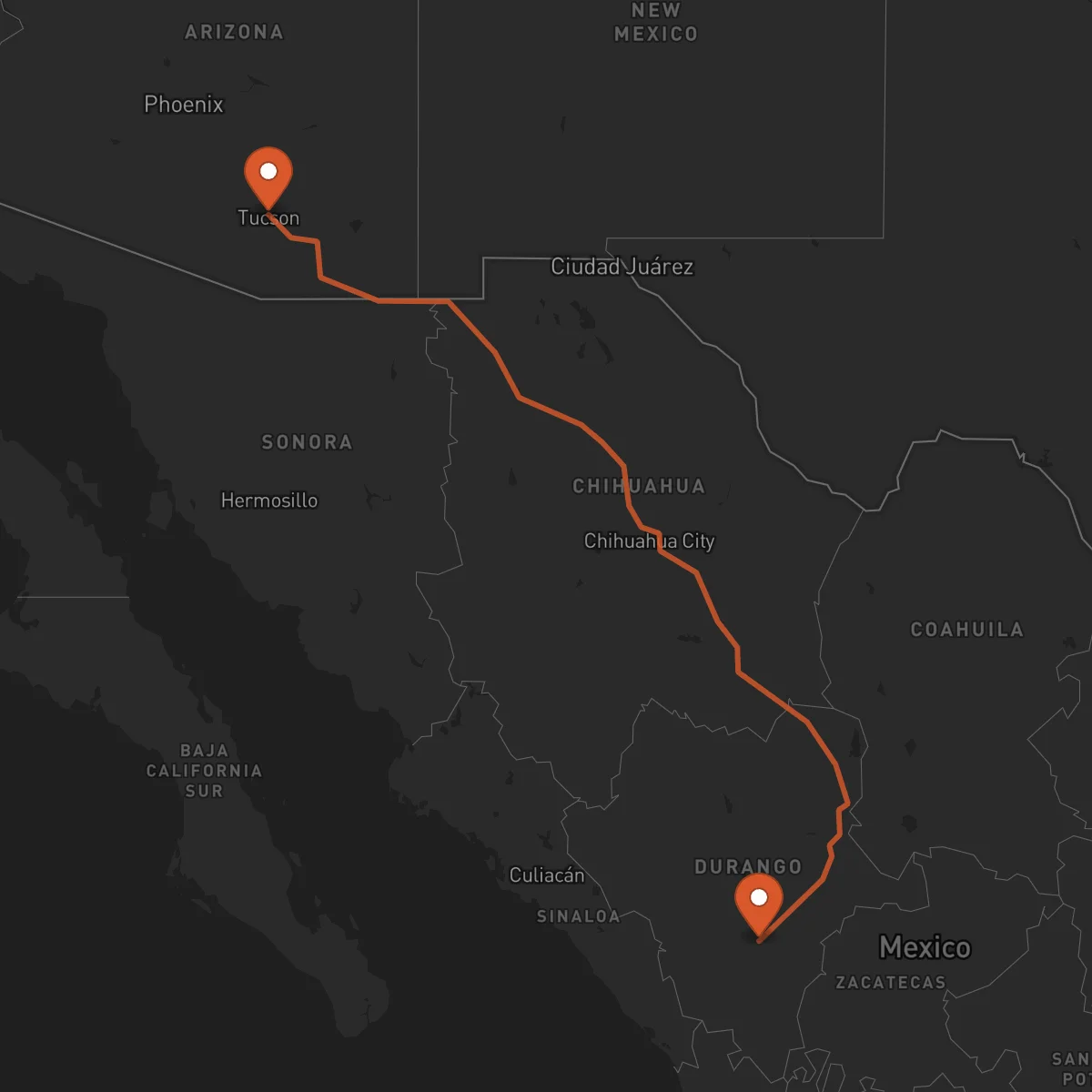
Tucson to Durango
Durango → TucsonFTL freight transportation service between Tucson and Durango. Reliable logistics solutions for your business.
Route Description
Everything you need to know about the corridor Tucson - Durango
The Tucson-Durango corridor represents a vital cross-border logistics connection between the United States and Mexico, spanning approximately 1,104 kilometers. This strategic route links the industrial hub of Tucson, Arizona, with the manufacturing center of Durango, Mexico, facilitating the movement of goods between two dynamic economies. The corridor primarily utilizes Interstate 10 (I-10) in the United States, transitioning to Mexican Federal Highway 45 (Carretera Federal 45) upon crossing the border at Nogales, before continuing south to Durango.
The economic significance of this corridor is substantial, supporting trade between the aerospace, automotive, and electronics industries of Arizona with Durango's growing manufacturing and mining sectors. Tucson serves as a major distribution point for goods destined for various Mexican states, while Durango has developed into an important industrial center with strengths in mining, metallurgy, and automotive component manufacturing.
Control Terrestre specializes in full truckload (FTL) transportation along this corridor, ensuring efficient and reliable cross-border freight movement. Our experienced team navigates the complexities of international shipping, including customs clearance at the Mariposa Port of Entry in Nogales, Arizona. We provide comprehensive door-to-door service, leveraging our C-TPAT certification and strategic partnerships to streamline border crossing procedures and minimize transit times for our clients' cargo.
Services for this Route
Available services for the corridor Tucson - Durango
 Origin
Tucson
Tucson, Arizona, serves as a crucial logistics gateway to Mexico, strategically positioned just 100 kilometers from the U.S.-Mexico border. The city's location at the intersection of Interstate 10 and Interstate 19 makes it an ideal distribution hub for goods moving between the United States and Mexico. Tucson's economy is diverse, with strong aerospace and defense industries, supported by major employers such as Raytheon Missiles & Defense and the Davis-Monthan Air Force Base. The region also boasts a growing technology sector and serves as a key agricultural producer, particularly in cotton and various vegetables.
The city's transportation infrastructure is well-developed, featuring the Tucson International Airport, which handles both passenger and cargo traffic, and the Union Pacific Railroad for intermodal freight services. Tucson's proximity to major Mexican markets, combined with its robust transportation network, makes it an essential origin point for cross-border freight movements, particularly for industries requiring efficient access to northern and central Mexican markets.
 Destination
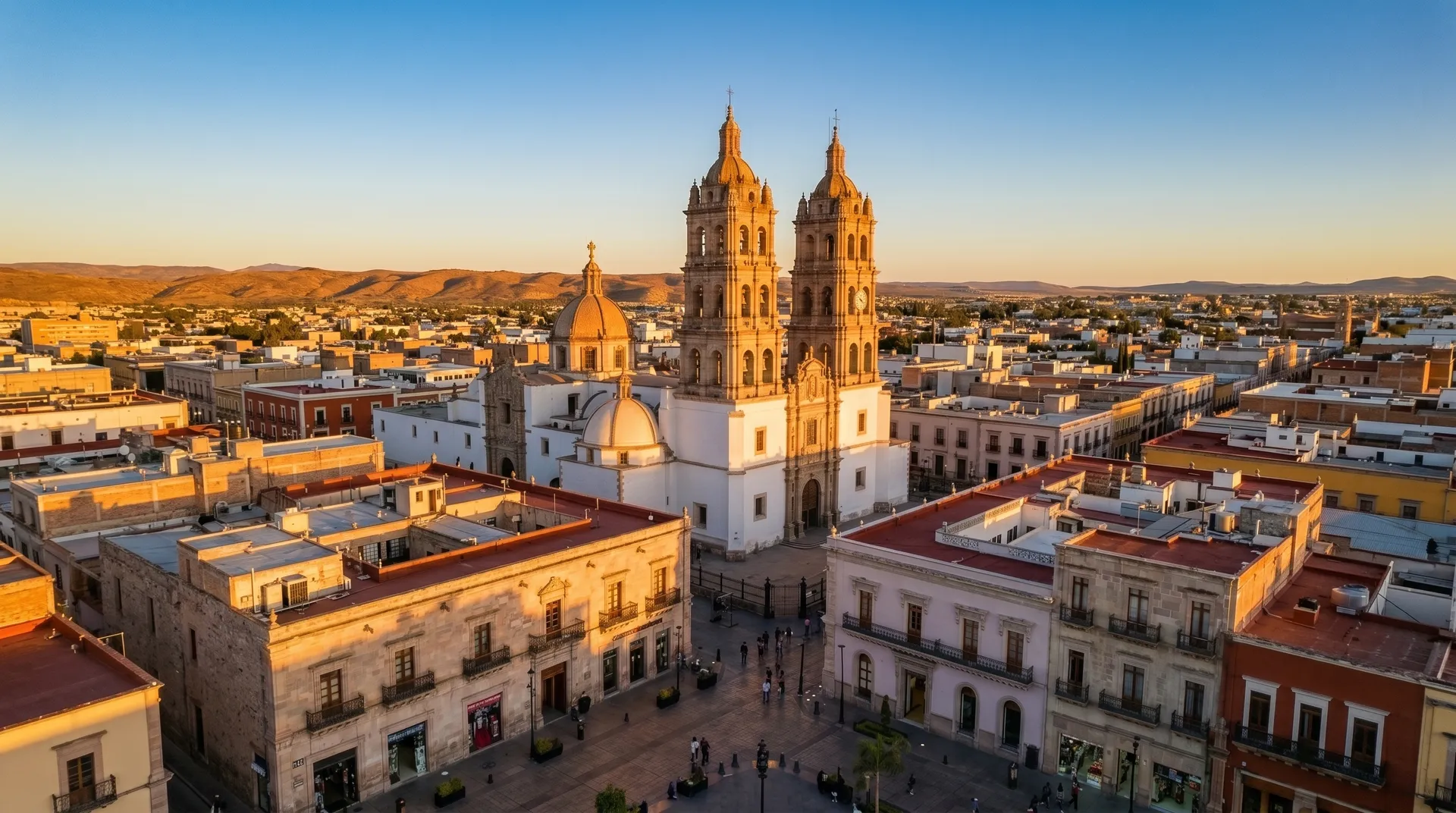
Durango, the capital city of the state of Durango in Mexico, is strategically located in the central-western part of the country, serving as an important industrial and commercial center. The city's economy is primarily driven by manufacturing, mining, and agriculture, with a particular focus on the production of automotive components, mining equipment, and various consumer goods. Durango's central location within Mexico provides excellent access to major industrial centers such as Monterrey, Guadalajara, and Mexico City, making it an ideal destination for cross-border freight.
The city is well-connected by a network of federal highways, including Highway 45, which links Durango to the U.S. border and other major Mexican cities. Durango also benefits from the Durango-Mazatlán highway, a modern toll road that significantly reduces travel times to the Pacific coast. The local airport, Durango International Airport, supports both passenger and limited cargo operations, further enhancing the region's logistics capabilities. Durango's growing industrial base and strategic location make it an increasingly important destination for full truckload freight services, particularly for companies looking to establish or expand their presence in central Mexico.










