Toronto to Monterrey
Monterrey → TorontoFTL freight transportation service between Toronto and Monterrey. Reliable logistics solutions for your business.
Route Description
Everything you need to know about the corridor Toronto - Monterrey
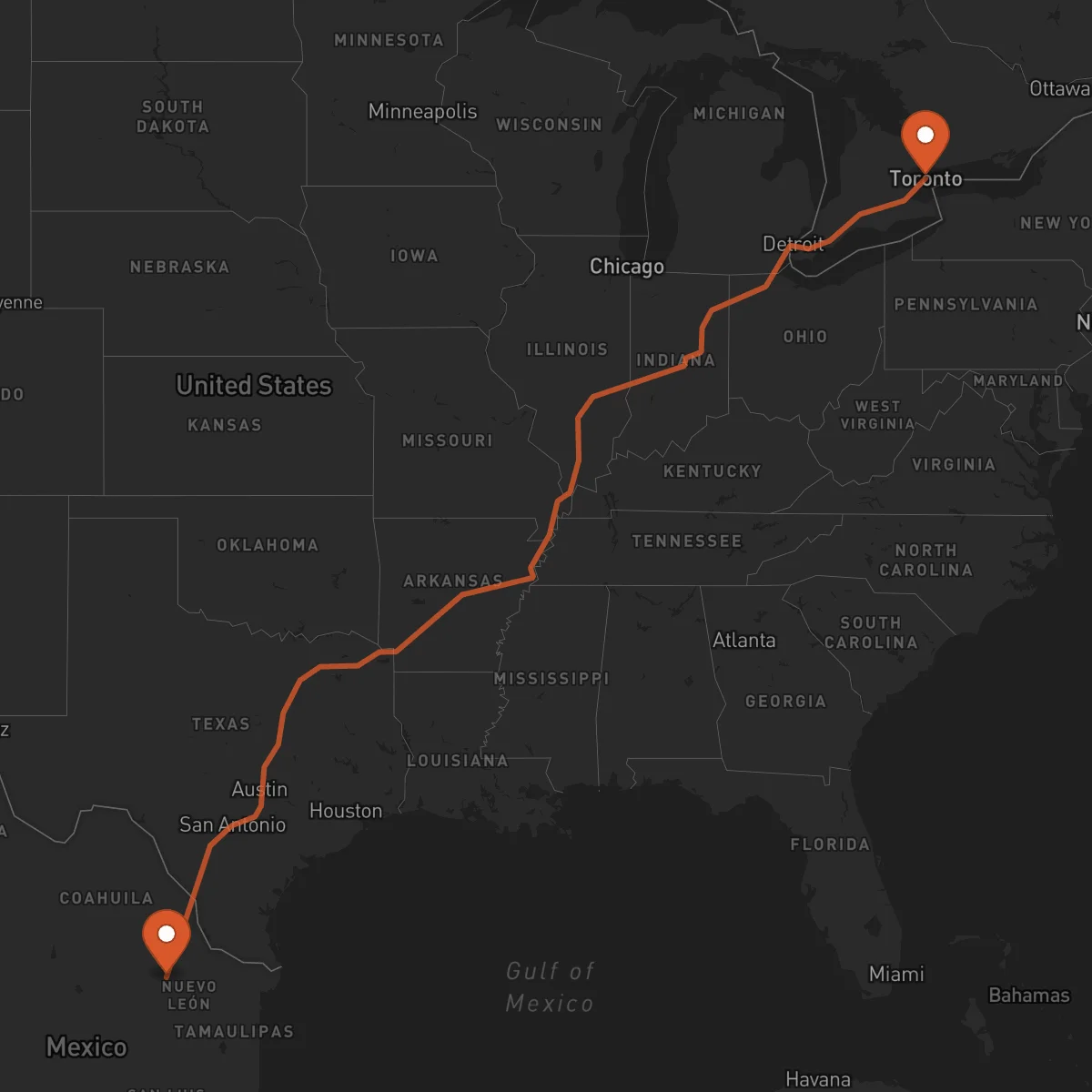
The Toronto-Monterrey corridor represents one of the most vital cross-border freight transportation routes between Canada and Mexico, spanning approximately 2,751 kilometers through the heart of North America. This strategic connection links two major industrial hubs, facilitating the movement of goods between the automotive, manufacturing, and technology sectors. The corridor traverses diverse terrain and crosses multiple states and provinces, making it essential for companies operating within the United States-Mexico-Canada Agreement (USMCA) framework.
The route primarily utilizes major transportation infrastructure including Ontario's Highway 401, Michigan's I-75 and I-69, Indiana and Illinois interstates, and Texas's I-35 corridor before crossing at Laredo-Nuevo Laredo. This well-established transportation network ensures reliable transit times and connects seamlessly with Monterrey's industrial zones. The corridor serves as a backbone for automotive parts supply chains, industrial equipment, and consumer goods distribution between the three North American countries.
Control Terrestre specializes in managing cross-border operations along this corridor, offering dedicated FTL services that ensure cargo moves efficiently through customs and border procedures. Our expertise in handling documentation, compliance requirements, and cross-border regulations minimizes delays and provides our clients with reliable transportation solutions. We understand the unique challenges of this route and maintain strategic partnerships to ensure smooth operations from origin to destination.
Services for this Route
Available services for the corridor Toronto - Monterrey
 Origin
Toronto serves as a major logistics hub in eastern Canada, strategically positioned with access to multiple transportation modes including Pearson International Airport, extensive rail networks, and the 400-series highways. The city's location provides excellent connectivity to both Canadian and U.S. markets, making it an ideal origin point for cross-border freight operations. Toronto's robust infrastructure and proximity to major manufacturing centers in southern Ontario enhance its importance in North American supply chains.
The Greater Toronto Area is home to diverse industries including automotive manufacturing, aerospace, technology, and advanced manufacturing. Major automotive assembly plants and parts suppliers in the region create significant demand for reliable freight transportation services. The area's strong economic base, skilled workforce, and concentration of multinational corporations make it a critical origin point for goods destined for Mexican markets and beyond.
 Destination
Monterrey
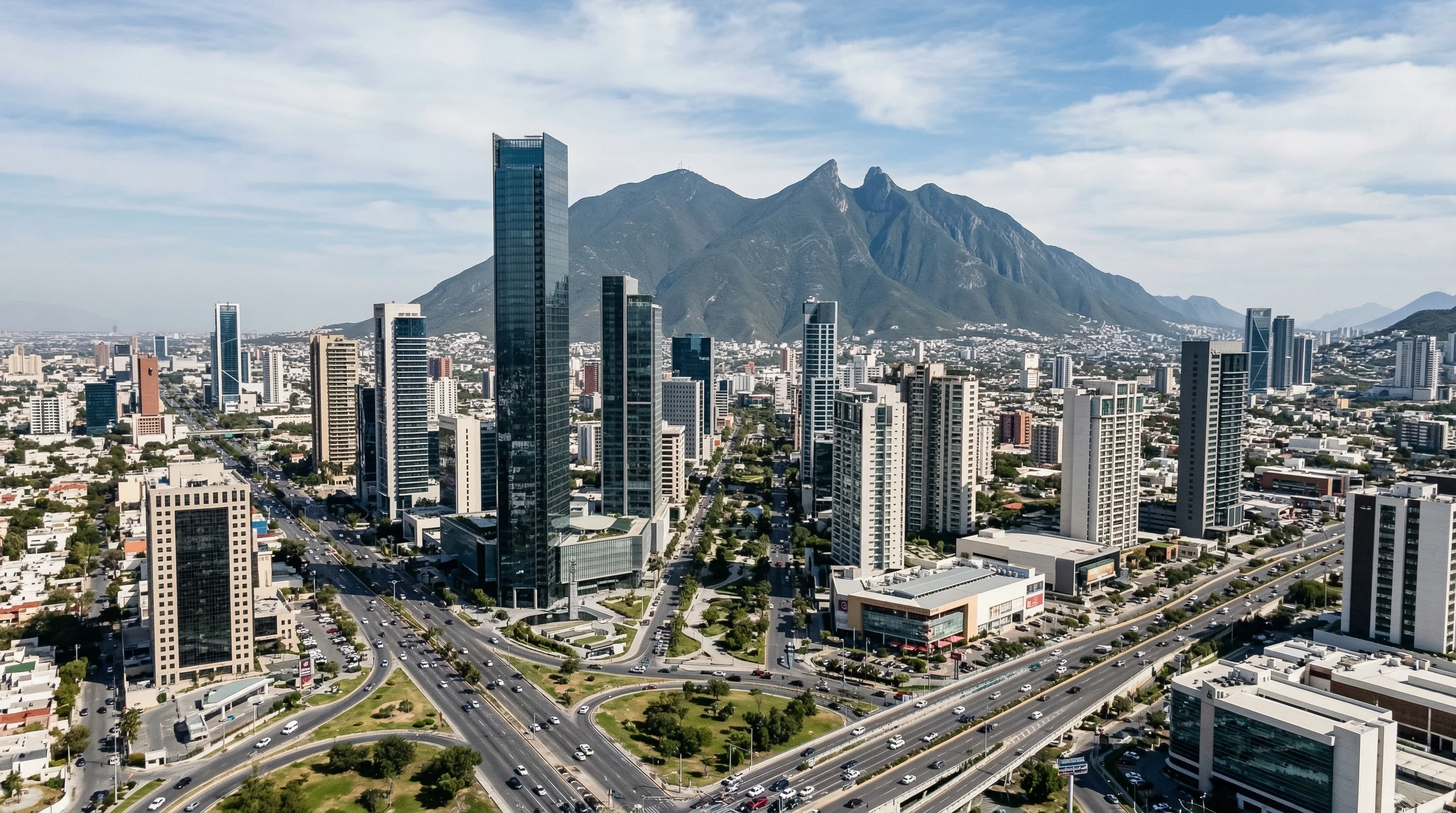
Monterrey stands as Mexico's industrial powerhouse, strategically located in northeastern Mexico with excellent connectivity to both U.S. and Mexican markets. The city's position near the Texas border and its proximity to major ports like Lázaro Cárdenas make it a crucial logistics hub for North American trade. Monterrey's well-developed transportation infrastructure includes modern highways, an international airport, and rail connections that facilitate efficient freight movement throughout the region.
The Monterrey metropolitan area is the heart of Mexico's manufacturing sector, hosting major automotive assembly plants, aerospace manufacturing facilities, and a thriving technology industry. Known as the industrial capital of Mexico, the region specializes in steel production, electronics, and machinery manufacturing. The city's strong industrial base, skilled technical workforce, and proximity to the U.S. border create substantial demand for cross-border freight services, particularly for just-in-time manufacturing operations.










