Monterrey to Toronto
Toronto → MonterreyFTL freight transportation service between Monterrey and Toronto. Reliable logistics solutions for your business.
Route Description
Everything you need to know about the corridor Monterrey - Toronto
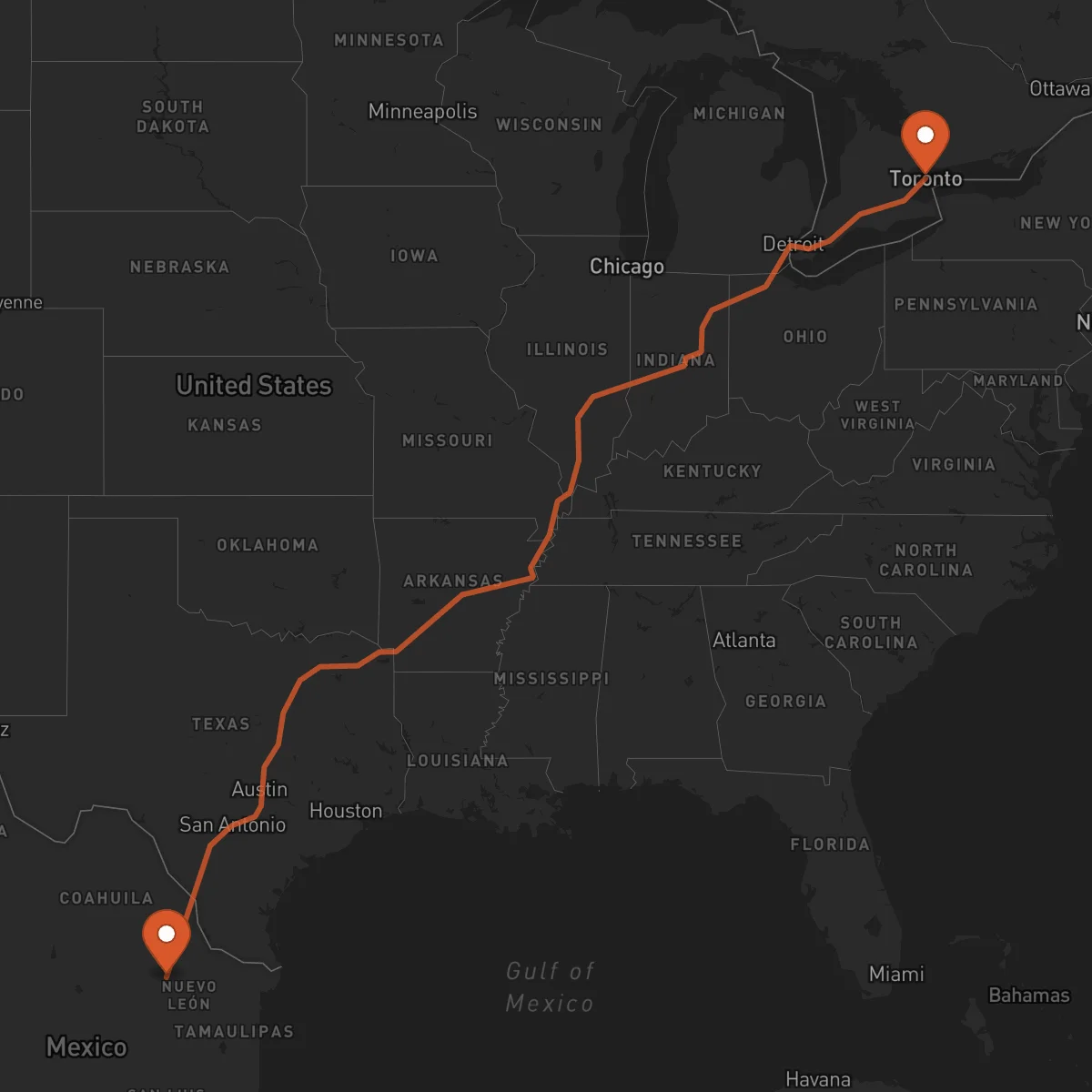
The freight corridor between Monterrey, Nuevo León, Mexico, and Toronto, Ontario, Canada, is one of the most strategic cross-border routes in North America. Spanning approximately 2,751 kilometers, this corridor connects two of the region's most dynamic industrial and logistics hubs, facilitating the flow of goods between Mexico's manufacturing heartland and Canada's largest metropolitan market. As companies increasingly integrate their supply chains across the three NAFTA/USMCA partner nations, this route has become essential for businesses seeking reliable full truckload transportation solutions.
Monterrey stands as Mexico's leading industrial center, home to major manufacturing operations in automotive, aerospace, steel, electronics, and appliance production. Toronto, meanwhile, represents Canada's economic engine, with a diverse economy spanning automotive assembly, food processing, technology, pharmaceuticals, and retail distribution. The corridor between these two cities supports a high volume of bilateral trade, with goods moving in both directions—raw materials and components heading north, finished products and consumer goods flowing south.
The primary highway infrastructure supporting this corridor includes Mexican Federal Highways 40 and 85, connecting Monterrey to the border at Nuevo Laredo, Texas, followed by Interstate 35 and Interstate 94 through the United States into Ontario, and finally Highway 401 leading into the Greater Toronto Area. Key border crossings include the Laredo–Colombia Solidarity International Bridge and the Ambassador Bridge or Blue Water Bridge at the U.S.–Canada border. Control Terrestre manages these cross-border transitions through experienced carriers with FAST and C-TPAT certifications, ensuring efficient customs clearance and compliance with all regulatory requirements across three countries.
At Control Terrestre, we facilitate full truckload operations along this corridor by coordinating with our alliance of trusted transportation providers. Our carriers are equipped to handle dry van, refrigerated, and specialized cargo, ensuring your freight moves seamlessly from origin to destination. With dedicated service options and real-time visibility, we help companies optimize their supply chain performance on this critical cross-border route.
Services for this Route
Available services for the corridor Monterrey - Toronto
 Origin
Monterrey
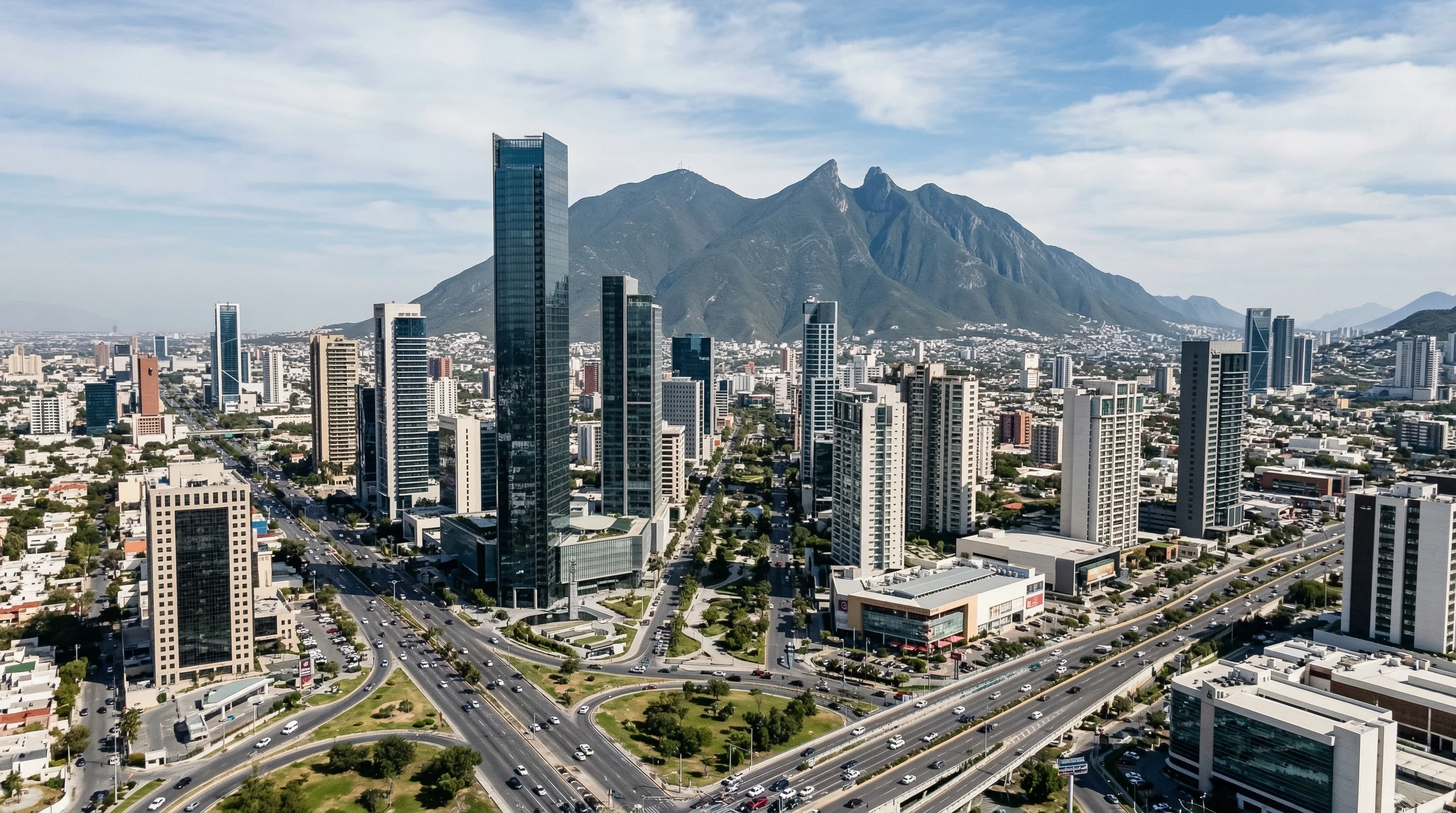
Monterrey, the capital of Nuevo León, is Mexico's foremost industrial and logistics hub, strategically positioned just 240 kilometers south of the U.S. border at Nuevo Laredo. The city anchors one of the most productive manufacturing regions in Latin America, with dominant industries including automotive assembly, steel production, cement manufacturing, electronics, aerospace components, and household appliances. Major multinational corporations operate large-scale facilities in the metropolitan area, generating substantial freight volumes that require efficient ground transportation solutions. Monterrey's transportation infrastructure is robust, with direct access to Mexican Federal Highways 40 and 85, multiple intermodal rail connections, and proximity to the Nuevo Laredo border crossing—one of the busiest commercial ports of entry between Mexico and the United States. The city's industrial parks and logistics zones are well-equipped to handle full truckload operations, making it an ideal origin point for cross-border freight shipments.
 Destination
Toronto, Ontario, is Canada's largest city and primary economic center, serving as a critical destination and distribution hub for freight arriving from across North America. The Greater Toronto Area is home to major industries including automotive manufacturing, food and beverage processing, pharmaceuticals, technology, financial services, and retail distribution. Its strategic location along the Highway 401 corridor—one of the busiest highways in North America—provides direct access to markets across Ontario, Quebec, and the northeastern United States. Toronto's logistics infrastructure includes extensive warehousing capacity, intermodal rail terminals, and proximity to the Ambassador Bridge and Blue Water Bridge border crossings. As Canada's most populous metropolitan area, Toronto represents a high-demand market for imported goods and a key node in cross-border supply chains.










