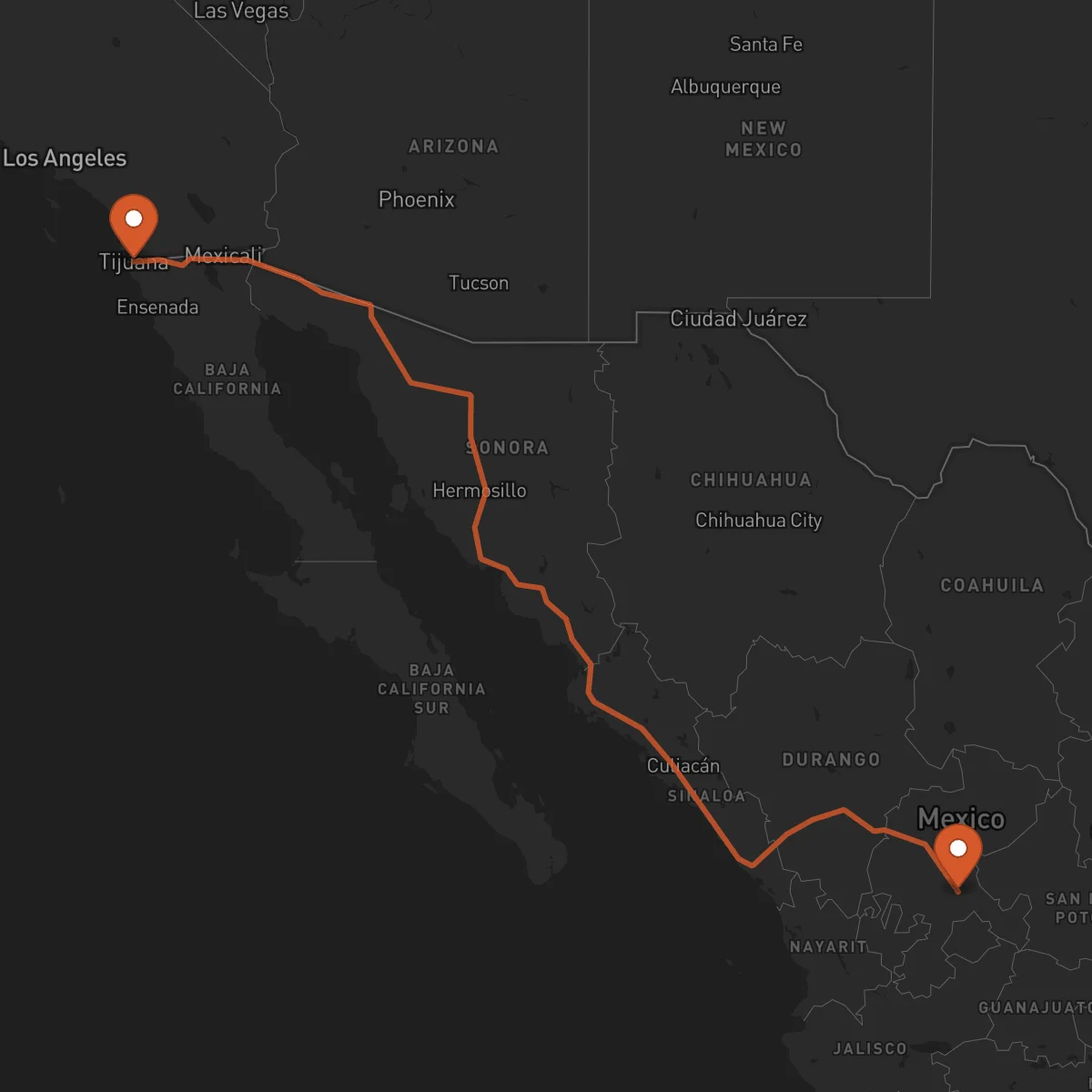
Tijuana to Zacatecas
Zacatecas → TijuanaFTL freight transportation service between Tijuana and Zacatecas. Reliable logistics solutions for your business.
Route Description
Everything you need to know about the corridor Tijuana - Zacatecas
The Tijuana to Zacatecas corridor represents a vital logistics connection in Mexico, spanning approximately 1,786 kilometers through the heart of the country. This route links Mexico's northwestern border region with the central state of Zacatecas, facilitating the movement of goods between the Pacific coast and the Mexican interior. The corridor traverses diverse terrain and crosses multiple states, making it a strategic artery for national commerce.
The economic significance of this corridor is substantial, connecting Tijuana's manufacturing and export-oriented economy with Zacatecas's mining, agricultural, and industrial sectors. Tijuana serves as a gateway for international trade, while Zacatecas contributes significantly to Mexico's mineral production, particularly silver, and has developed a growing manufacturing base. This complementary economic relationship drives substantial freight traffic along this route.
Key industries utilizing this corridor include automotive manufacturing, electronics, aerospace components, mining equipment, agricultural products, and consumer goods. The route primarily follows major highways including Mexico Federal Highway 45D (La Laguna-Torreon-Zacatecas) and connects with other arterial routes. These modern toll roads provide efficient transportation infrastructure for freight movement.
Control Terrestre specializes in full truckload (FTL) freight transportation along this corridor, offering dedicated services that ensure your cargo moves efficiently from origin to destination. Our experienced carrier network understands the specific requirements of this route, providing reliable transportation solutions for businesses operating between Tijuana and Zacatecas.
Services for this Route
Available services for the corridor Tijuana - Zacatecas
 Origin
Tijuana
Tijuana stands as a strategic logistics hub on Mexico's northern border, directly adjacent to California, USA. This location provides unparalleled access to North American supply chains and international markets. The city serves as a critical entry point for goods entering and exiting Mexico, with multiple border crossing options and extensive customs infrastructure. Tijuana's proximity to major US ports and transportation networks makes it an ideal origin point for freight distribution throughout Mexico and beyond.
The region's economy is dominated by manufacturing, particularly in the aerospace, automotive, and electronics sectors. Tijuana hosts numerous maquiladoras and has developed a strong presence in medical device manufacturing. The city also serves as a major tourist destination and has a growing technology sector. These diverse economic activities generate substantial freight volume requiring reliable transportation solutions.
Transportation infrastructure in Tijuana includes the Tijuana International Airport, the Port of Ensenada for maritime cargo, and an extensive network of highways connecting to the US Interstate system. The city is served by Federal Highways 1 and 2, providing connections to other Mexican states. The comprehensive infrastructure supports efficient freight movement and positions Tijuana as a strategic origin point for domestic and international logistics operations.
 Destination
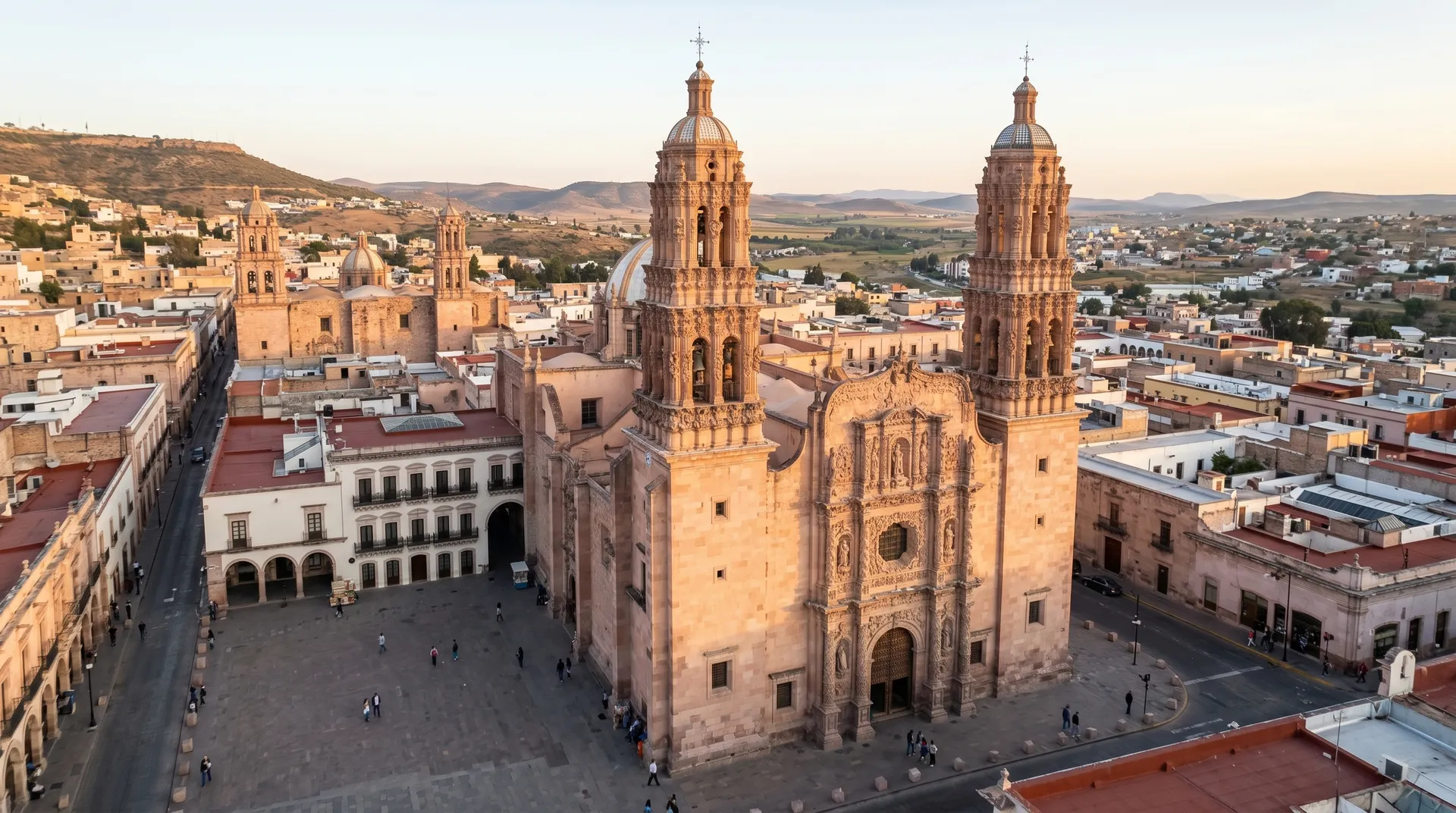
Zacatecas occupies a strategic central location in Mexico, serving as a key distribution point for goods moving throughout the country's interior. The state's position connects northern industrial centers with central and southern Mexico, making it an important logistics node. Zacatecas benefits from its central plateau location, providing relatively efficient access to major markets across multiple regions. The state's capital, also named Zacatecas, has developed infrastructure to support growing commercial activities.
The economy of Zacatecas is anchored by mining, particularly silver extraction, which has historically been the state's primary economic activity. The region has diversified into agriculture, including extensive vineyards and wine production, as well as manufacturing in automotive components and electronics. Recent industrial development has attracted investment in various sectors, creating demand for reliable freight transportation services. The combination of traditional and emerging industries generates diverse cargo requirements along this corridor.
Transportation infrastructure in Zacatecas includes Federal Highway 45, a major north-south artery connecting to cities like Torreon and Guadalajara. The Zacatecas International Airport provides air cargo services, while the state's road network continues to be upgraded to support growing commercial traffic. The city of Zacatecas has developed industrial parks and logistics facilities to accommodate expanding business needs. This infrastructure supports efficient freight movement and positions Zacatecas as a strategic destination for goods distribution throughout central Mexico.










