Tijuana to Wichita
Wichita → TijuanaFTL freight transportation service between Tijuana and Wichita. Reliable logistics solutions for your business.
Route Description
Everything you need to know about the corridor Tijuana - Wichita
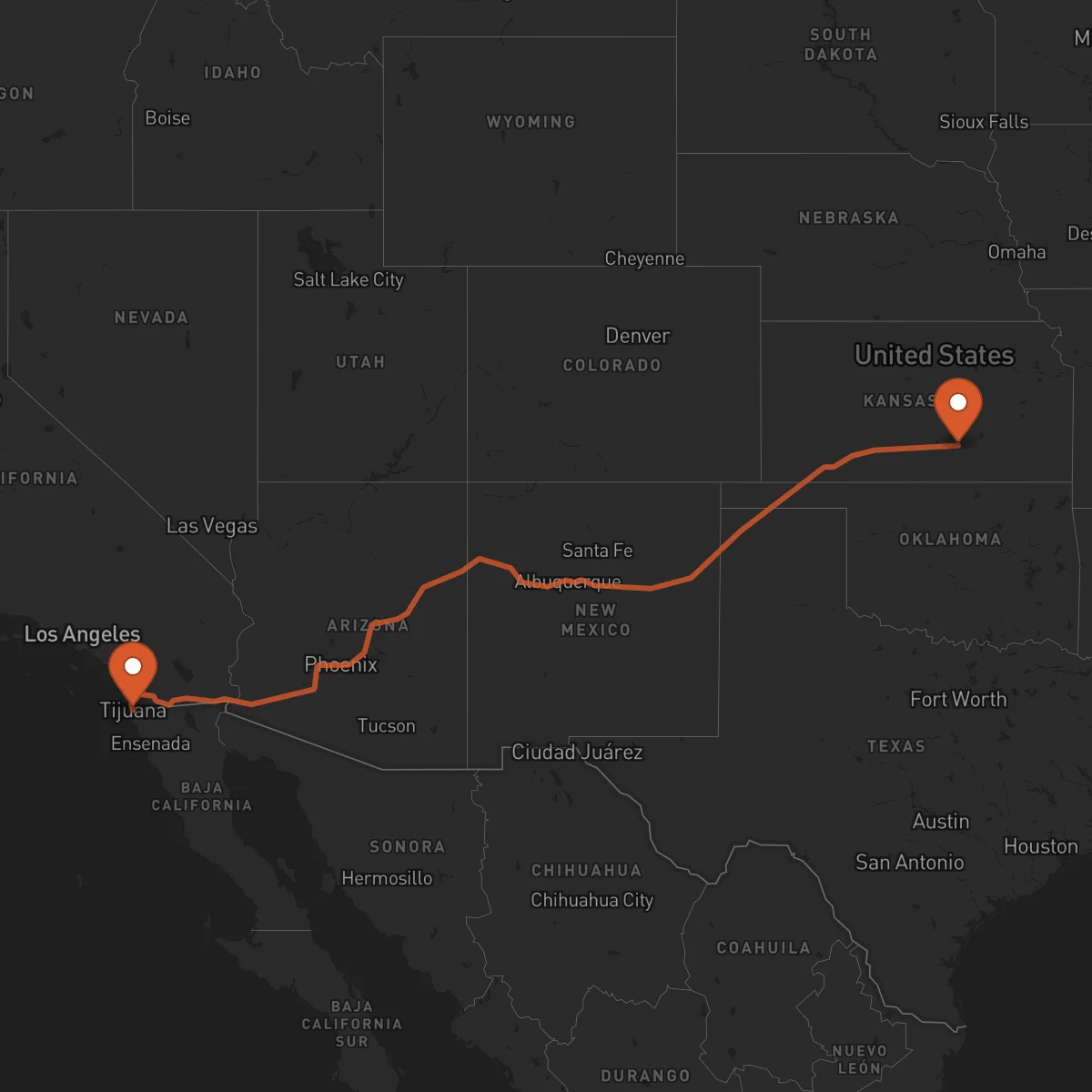
The logistics corridor between Tijuana, Baja California, and Wichita, Kansas, represents a vital trade link between Mexico and the United States. This 1,876 km route connects the dynamic industrial hub of northwestern Mexico with the manufacturing and aerospace center of the Midwest. The corridor traverses key economic regions, facilitating the movement of goods between the Pacific coast and the central United States.
The Tijuana-Wichita corridor serves industries including aerospace, automotive, electronics, and agricultural products. Tijuana's strategic location near the U.S. border and its established manufacturing sector create strong demand for reliable freight transportation to major U.S. markets. Wichita, known as the "Air Capital of the World," hosts major aerospace manufacturers and their extensive supply chains, requiring consistent and specialized logistics services.
Transportation infrastructure along this corridor includes major highways such as Interstate 8 and Interstate 35, providing efficient connectivity through key states. The Otay Mesa border crossing near Tijuana offers modern facilities for commercial traffic, while multiple highway options allow for route optimization based on cargo requirements and delivery schedules. Control Terrestre leverages this infrastructure through our network of certified carriers, ensuring seamless cross-border operations with proper customs documentation and compliance with all regulatory requirements.
Services for this Route
Available services for the corridor Tijuana - Wichita
 Origin
Tijuana
Tijuana stands as a strategic logistics hub on Mexico's northern border, offering direct access to major U.S. markets through multiple border crossings. The city's location in Baja California positions it as a gateway for international trade, with proximity to California's major ports and distribution centers. Tijuana's transportation infrastructure includes the Tijuana International Airport, the San Ysidro and Otay Mesa border crossings, and connections to Mexico's Federal Highway 2D and Federal Highway 1D.
The region's economy thrives on diverse industries including aerospace manufacturing, medical device production, electronics assembly, and automotive components. The presence of numerous maquiladoras (manufacturing plants) creates consistent demand for cross-border freight services. Tijuana's industrial parks and free trade zones are equipped with modern facilities that support efficient cargo handling and preparation for international shipment.
 Destination
Wichita
Wichita, Kansas, serves as a strategic logistics center in the American Midwest, offering excellent connectivity to major U.S. markets through its central location. The city's position provides access to an extensive network of interstate highways, including I-35, I-135, and I-235, facilitating efficient distribution throughout the central United States. Wichita's Dwight D. Eisenhower National Airport and the nearby Wichita Mid-Continent Airport support air cargo operations, while the city's rail connections complement its ground transportation capabilities.
The Wichita metropolitan area is renowned for its aerospace industry, hosting major manufacturers such as Boeing, Spirit AeroSystems, and Textron Aviation. This industrial concentration creates a robust demand for specialized freight services, particularly for oversized and sensitive aerospace components. The region's economy also includes significant agricultural processing, energy equipment manufacturing, and healthcare sectors, all requiring reliable logistics solutions to support their supply chains.










